

Is Forex Trading Haram or Halal? Islamic Insights
Explore if forex trading is halal or haram in Islam 🇵🇰. Understand scholars’ views, key issues, and practical advice for Muslim traders in Pakistan. 📈💰
Edited By
Amelia Brooks
Forex trading involves exchanging one currency for another with the goal of profiting from changes in exchange rates. This practice is popular among investors and traders worldwide, including Pakistan. However, its compatibility with Islamic finance principles remains a debated topic.
Islamic finance restricts certain transactions based on Shariah law, particularly those involving interest (riba), excessive uncertainty (gharar), and gambling (maysir). To determine if forex trading is halal (permissible) or haram (forbidden), these Islamic concepts must be applied carefully.

Forex trading itself falls under currency exchange, which Islam permits when conducted fairly and without deceit. The Prophet Muhammad explicitly allowed currency exchange (sarf) but emphasised immediate settlement of both currency amounts during the transaction. This condition seeks to avoid delay, which can lead to interest or unfair advantage.
In practical terms, forex trading becomes questionable when it involves:
Speculation: High-risk bets on currency movements resemble gambling, which Islam forbids.
Overnight positions: Some brokers charge swaps or interest fees for holding positions overnight, which count as riba.
Leverage: Using borrowed money magnifies risk and may involve interest payments.
That said, many scholars agree that forex trading without interest and speculation, following immediate exchange, is generally acceptable. For example, spot forex trades settled instantly or within the same session align better with Shariah. Islamic brokers offering swap-free accounts cater to Muslim traders by removing interest charges.
Traders must carefully assess their forex activities against Islamic guidelines, focusing on immediate settlement, avoidance of interest, and limiting gambling-like speculation.
Several Pakistani traders rely on transparent, Shariah-compliant platforms and consult local scholars to ensure their trading remains halal. Understanding the nuances of contract types and broker terms proves vital before committing funds.
In summary, forex trading is neither outright haram nor automatically halal. It depends on how it is conducted. Educated, cautious approaches respecting Islamic finance principles help Pakistani investors participate without compromising religious obligations.
Understanding forex trading is the first step for anyone wanting to evaluate its position in Islamic finance. Forex, or foreign exchange, involves buying and selling currencies, which has direct implications on financial ethics, risk, and adherence to Islamic principles. Knowing the basics helps Pakistani traders and investors recognise when forex trading aligns or conflicts with Islamic law, especially given the popularity of forex among retail investors in cities like Karachi and Lahore.
Forex trading operates in a global marketplace where currencies are exchanged. Unlike stock markets, forex runs 24 hours, five days a week, connecting banks, governments, corporations, and individual traders worldwide. For example, a Pakistani exporter receiving dollars may want to convert them into rupees immediately to avoid losses from exchange rate fluctuations. This constant buying and selling keeps the forex market highly liquid and accessible.
Currencies in forex are quoted in pairs, like USD/PKR or EUR/USD, expressing how much of one currency you need to buy a unit of another. If USD/PKR is 280, it means it costs 280 rupees to buy one US dollar. Exchange rates fluctuate based on supply, demand, and economic news. Traders watch these fluctuations for profit opportunities or to hedge risks, for instance, a Pakistani importer anticipating dollar price rise might buy USD in advance to avoid higher costs later.
Spot trading involves exchanging currencies immediately, usually settling within two business days. In contrast, derivatives like futures and options are contracts based on currency values but involve delayed settlement or speculation on price movement. Spot trading reflects actual currency delivery, often seen as more straightforward and less risky, while derivatives may carry higher risk and are often linked to speculative market play.
Leverage allows traders to control large positions with a small amount of capital, known as margin. For example, with 1:100 leverage, a trader can manage $100,000 with just $1,000 of their own money. Although leverage can amplify profits, it also increases losses. This feature appeals to speculative traders but raises ethical and financial risks, especially when it encourages oversize bets without sufficient capital buffer. Pakistani traders should be careful, as misuse of leverage can rapidly wipe out investments.
Understanding these fundamentals equips traders to make informed decisions about forex's compatibility with Islamic finance principles, focusing on actual currency exchange rather than speculative practices.
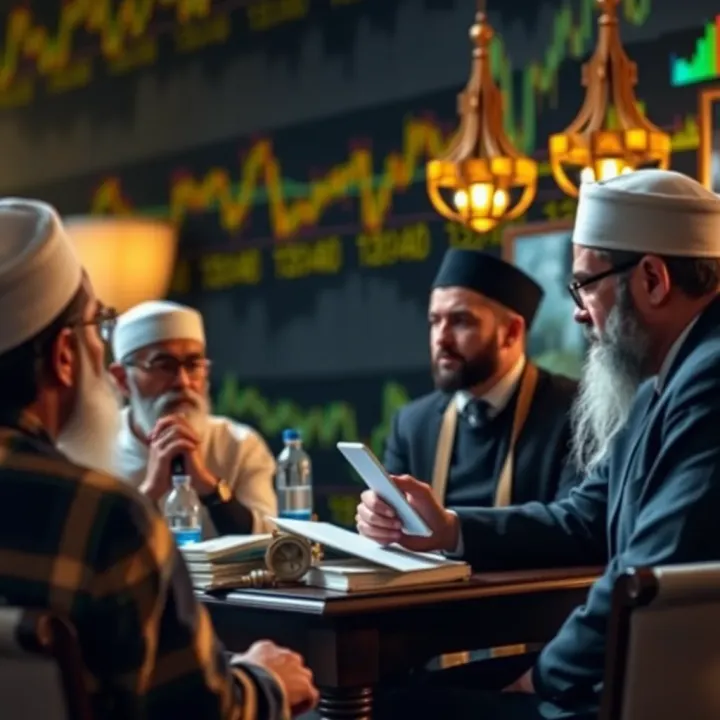
Understanding Islamic financial principles is essential when evaluating forex trading from a Shariah perspective. These principles provide clear guidelines to ensure financial activities comply with Islamic law, promoting ethical investing and protecting individuals from unfair practices. In the context of forex trading, the focus is mainly on concepts such as riba (interest), gharar (excessive uncertainty), and the necessity for fairness and transparency.
Riba refers to any guaranteed interest on loaned money, which Islam strictly forbids. A simple example is a conventional savings account offering fixed interest, as it generates income without real effort or risk. In forex trading, riba often appears in the form of overnight swap or rollover charges, where the trader pays or earns interest for holding a position overnight. This practice contradicts the prohibition on unjust gain.
Gharar means excessive uncertainty or ambiguity in transactions. For instance, selling goods without specifying their quantity or quality leads to gharar. Similarly, highly speculative forex trades with uncertain outcomes or deferred settlement fall under this category. The element of gharar creates unfairness and disputes, which Islamic law seeks to prevent.
Islam forbids riba and gharar largely because these elements can exploit traders, leading to injustice and harm. Without clear terms and genuine exchange, financial dealings tend to cause imbalance and grievances. This prohibition ensures that all parties deal honestly and share risks and rewards fairly.
Fairness and transparency are key to halal trading. Each party must fully understand the terms, with no hidden conditions or deceit. For example, in currency exchange, both currencies should be transferred immediately to avoid deferred payment, ensuring the contract is fulfilled clearly and promptly.
Ethical considerations also extend to avoiding unfair advantages or manipulative tactics. Traders are encouraged to engage in genuine trade, avoiding speculative or gambling-like behaviour. This protects the market’s integrity and promotes stable economic activity.
Islamic finance aims to create a balanced market where wealth circulates justly, benefiting individuals and society alike.
In practice, these principles mean that forex trading should avoid deceit, uncertainty, and interest-based earnings. Trading that respects these rules aligns better with Islamic values and supports responsible financial behaviour for Pakistani investors and traders.
Understanding why many scholars and traders consider forex trading haram is vital for Pakistani investors navigating Islamic finance principles. This section highlights key concerns tied to speculation, interest, and risk that often clash with Shariah rules.
Speculative forex activities involve predicting currency movements to make quick profits without underlying economic transactions. Traders might buy and sell currencies repeatedly within minutes or hours, trying to capitalise on tiny price swings. This practice often resembles gambling rather than genuine trade because profits depend more on chance or market rumours than on real commercial needs.
For example, a trader entering multiple trades daily to exploit short-term fluctuations is less involved in actual currency exchange and more in betting on market direction. This speculative behaviour increases market volatility and invites excessive risk, which Islamic finance discourages.
Islam expressly prohibits gambling (maysir) because it hinges on chance and unjust gain. Forex speculation shares this nature since it can lead to arbitrary gains or losses, undermining fairness and ethical trading. Muslims engaging in such activities risk transactions being classified as haram due to this similarity.
A notable problem in conventional forex trading is overnight interest charges, known as swaps or rollovers. When traders hold positions beyond trading hours, brokers often levy these fees based on interest rate differentials between currencies. Since charging or paying interest (riba) is forbidden in Islam, this aspect puts many forex trades outside halal boundaries.
To illustrate, a Pakistani trader holding USD/PKR overnight might pay or receive swap depending on interest differences but this accrual of interest contradicts Shariah rules. That is why Islamic forex accounts without swaps have become popular to avoid this conflict.
Short-term trading with an eye on quick profits often encourages excessive risk-taking. Traders committing large leverage and entering high-frequency trades chase unpredictable gains, ignoring market fundamentals. This behaviour can resemble gambling and exposes individuals to severe financial loss, contrary to the Islamic emphasis on responsible wealth management.
This risk-heavy approach lacks the fairness and transparency Islamic law demands, as many trades hinge on guessing market moves rather than exchanging value. It also increases speculation, which, as explained, is associated with haram practices.
Assessing these common arguments helps Pakistani traders align their forex activities with Islamic ethics and avoid unintentional violations. Being aware of risks like speculation, interest involvement, and short-term trading pitfalls ensures more informed and compliant financial decisions.
Muslims involved in forex trading often ask when such activities comply with Shariah law. Understanding specific conditions under which forex trading may be halal is essential, especially for Pakistani traders who want to avoid religious concerns. These conditions primarily focus on ensuring that the transactions reflect genuine currency exchange without elements of riba (interest) and avoid excessive risk or gambling-like speculation.
Ensuring real currency exchange means that the trade must involve the actual exchange of currencies on the spot, usually settled immediately or within the same trading day. This ensures the trader actually buys or sells physical currency rather than just making paper-based bets on price fluctuations. For example, if you exchange Rs 100,000 for US dollars and receive the dollars in your account right away, that counts as real currency exchange.
This practice aligns with Islamic principles because it avoids delays that create uncertainty or risk not supported by a tangible transaction. Pakistani traders using platforms that support immediate settlement help maintain the halal status, as delays, such as settling transactions after a few days, may bring in gharar (excessive uncertainty), which Islam forbids.
Avoiding deferred or credit transactions is another key factor. Islam prohibits trading currency on credit or delay; both parties should own the exchanged currency fully at the point of transaction. For instance, buying dollars today but settling payment after two days is not permissible because it reflects a deferred payment contract.
In practical terms, traders must avoid practices like margin trading without actual transfer of ownership, which some brokers might offer. Pakistani forex traders should ensure their contracts clearly state immediate payment and receipt to satisfy this condition.
Using Islamic forex accounts without swaps provides a way around interest-related problems. Swaps or rollover charges are interest fees applied to overnight positions in conventional forex accounts, which constitute riba and are forbidden in Islam.
Many brokers now offer Islamic forex accounts that waive these overnight interest fees. Pakistani traders opting for such accounts can continue trading without worrying about interest charges violating Islamic rules. Platforms like this often require the trader to maintain positions only during market hours, further reducing speculation risks.
Focusing on genuine trade rather than speculation means participating in forex markets aiming for actual currency exchange or business needs, not gambling on price movements. Genuine trading involves decisions based on economic factors like trade flows, political stability, or economic indicators, rather than quick flips or risky bets hoping for fast profit.
For example, a Pakistani export business converting earnings from dollars to rupees is engaging in legitimate forex trading. However, frequent short-term trades with high leverage, aiming for quick gains, resemble gambling and likely to be considered haram.
Successful halal forex trading depends on meeting these conditions: immediate settlement, no interest charges, and genuine currency exchange rather than speculative gambling. Pakistani traders should verify their broker’s compliance and focus on transparent, ethical trading practices.
In summary, while many view forex trading with scepticism, those who follow these conditions can participate in forex markets in line with Islamic finance principles, balancing religious obligations with financial opportunities.
Scholarly opinions and fatwas play a significant role in guiding Muslims, especially in Pakistan, about the permissibility of forex trading under Islamic law. These rulings help clarify complex financial issues by interpreting Shariah principles in the context of modern markets. For traders and investors, such guidance provides a religious framework that influences their decisions, ensuring their activities remain compliant with Islamic ethics.
Islamic scholars offer diverse views on forex trading based on specific trading practices and conditions. Some scholars deem spot forex trading halal if it involves immediate settlement—meaning currencies are exchanged on the spot without delay, thus avoiding elements of interest (riba) and excessive uncertainty (gharar). Others warn against practices involving swaps or rollover fees, which usually carry interest and are considered impermissible.
The practical relevance of these distinctions is clear: traders who stick to spot trading with immediate delivery can align their activities closer to Islamic principles. Those engaging in leveraged trading with interest-based fees may inadvertently cross into prohibited territory based on these scholarly views.
Several recognised institutions in Pakistan, like the Federal Shariat Court and organisations under the Council of Islamic Ideology, have issued fatwas reflecting such nuanced stances. International bodies like the Islamic Fiqh Academy have also weighed in, often emphasising transparency, real asset backing, and avoidance of speculative risks. These fatwas serve as reference points for Pakistani traders, providing religious legitimacy when complying with outlined conditions.
Religious guidance greatly influences participation in forex markets across Pakistan. Many traders consult local scholars or follow rulings from recognised Islamic bodies before engaging in forex trading. This has led some to choose brokers offering Islamic or swap-free accounts to avoid prohibited interest charges.
Common practices among Pakistani forex traders include focusing on genuine currency exchange without involvement in unfair speculation or deferred payments. Traders increasingly prefer platforms that allow spot trading with immediate settlement, which aligns with Islamic guidelines and reduces doubts over permissibility. The impact is noticeable in the demand for Shariah-compliant financial products adapted to Pakistan’s trading environment.
Understanding and following scholarly opinions not only helps maintain religious compliance but can also protect traders from unethical or high-risk market behaviour.
These practical considerations shape how forex trading evolves within Pakistan, blending financial ambition with religious responsibility for many market participants.
Explore if forex trading is halal or haram in Islam 🇵🇰. Understand scholars’ views, key issues, and practical advice for Muslim traders in Pakistan. 📈💰
Is forex trading halal? Learn about Islamic rules on currency trading, riba, gharar, and speculation, plus tips for Shariah-compliant forex trading in Pakistan 🇵🇰📈
Explore halal forex trading in line with Islamic principles 🕌, swap-free accounts, and practical tips for Muslims in Pakistan seeking Shariah-compliant currency trading.
Is crypto trading halal? 📈 This article examines Islamic views on cryptocurrencies, covering Shariah rules like Riba & Gharar with insights for Pakistani investors.
Based on 5 reviews