
Best Forex Trading Platforms for Pakistani Traders
Find the best forex trading platform for Pakistani traders 🇵🇰. Learn about features, costs, regulations, usability & tools to make smarter trades! 💹
Edited By
Thomas White
Forex trading involves buying and selling foreign currencies on the international market to make a profit from price fluctuations. For Muslim traders in Pakistan, understanding whether this practice is halal (permissible) or haram (forbidden) according to Islamic law is fundamental. Islamic finance principles emphasise fairness, transparency, and the avoidance of interest (riba) and excessive uncertainty (gharar).
The debate around forex trading often centres on whether the transactions comply with Shariah rules. Many Islamic scholars focus on factors such as immediate exchange of currencies, absence of speculation, and no involvement of interest. If forex trading meets these criteria, it may be considered halal; otherwise, it leans towards haram.

To clarify, certain forex transactions involving spot trading—where currencies are exchanged instantly—are generally accepted by scholars. However, margin trading or deals with delayed settlement can incur riba or greater uncertainty, raising concerns about their permissibility.
Islamic traders should prioritise platforms that support spot trading without interest-bearing accounts or swaps, often labelled as 'Islamic accounts'. These accounts avoid overnight charges that resemble interest.
Understanding the key issues requires recognising why some scholars view forex trading skeptically:
Interest (Riba): Earning or paying interest violates Islamic principles.
Uncertainty (Gharar): Excessive risk or ambiguity about the contract’s terms is discouraged.
Speculation: Treating forex purely like gambling conflicts with ethical trading.
For Pakistani Muslim traders, following scholar guidance ensures both religious compliance and financial prudence. Practical steps include using Shariah-compliant brokers, avoiding high-risk leverage, and ensuring transactions settle immediately.
The rest of this article explores these points in detail, shedding light on how forex trading fits into Islamic finance and offering actionable advice for those keen to trade within Islamic guidelines in Pakistan.
Grasping the workings of forex trading is essential before assessing its compatibility with Islamic principles. Without understanding how currencies are exchanged and traded globally, it becomes difficult to judge whether the practice aligns with Shariah law. This knowledge also helps traders make informed decisions, reducing risks linked to uncertainty and speculation.
Forex trading involves swapping one currency for another at a determined rate. This exchange is the backbone of international trade and travel. For example, when a Pakistani exporter sells goods in the US, they receive payment in US dollars but need Pakistani rupees to cover local expenses. This results in currency conversion at the current exchange rate.
The practical relevance lies in how everyday economies run on these conversions. Rates constantly change due to supply and demand, geopolitical events, and economic indicators, making the forex market highly dynamic.
The forex market is the world’s largest financial market, operating 24 hours a day across different time zones—from Asia to Europe and the Americas. It is decentralised, meaning no single exchange or central clearinghouse controls it.
Currency pairs are traded by banks, financial institutions, corporations, and individual traders. Prices fluctuate based on global economic news, interest rate changes, and political developments. For instance, if the Federal Reserve signals a rate hike, the US dollar often strengthens versus other currencies.
Spot trading means buying or selling currencies for immediate delivery, usually settled within two business days. This straightforward buying and selling reflects actual currency exchange.
On the other hand, derivatives like futures, options, and contracts for difference (CFDs) are agreements to buy or sell currencies at a future date or price. Traders use them mainly for hedging risks or speculating without owning the actual currency.
Understanding this distinction is crucial, especially from an Islamic viewpoint. Spot trades with immediate exchange are generally more aligned with Shariah, whereas derivatives can involve uncertainty (gharar) and speculative elements.
Leverage allows traders to control a large position with a relatively small amount of capital, known as margin. For example, with 1:100 leverage, investing Rs 10,000 could control Rs 1,000,000 worth of currency.
While leverage increases potential gains, it also magnifies losses, making it a double-edged sword. It often involves borrowed money, which may accrue interest, a critical concern regarding riba (interest) in Islamic finance.
For this reason, many Muslim traders seek Islamic or swap-free accounts that do not charge overnight interest, allowing compliance with Islamic finance rules.
Understanding these mechanisms forms the basis for evaluating whether forex trading fits within Islamic ethics and law. Without this, it’s easy to misjudge or misunderstand the nature of forex activities.
This section provides a solid foundation about what forex trading entails and the main methods used, which helps in studying its permissibility from a Shariah perspective.
Islamic finance offers specific principles that guide acceptable trading and investment practices for Muslims. Understanding these principles is essential in evaluating forex trading's Islamic compliance. Islamic finance strictly prohibits activities involving unjust enrichment, uncertainty, or unethical conduct, shaping the rules around permissible market transactions.
Riba refers to any guaranteed interest on loaned money, which Islam forbids. This rule stems from the idea that money in itself should not multiply without productive effort or risk-sharing. For a trader in Pakistan, paying or receiving interest on forex trades, such as through overnight swap charges on leveraged positions, raises concerns about riba. The challenge lies in ensuring that forex trading does not involve hidden or explicit interest, as this would make the transaction impermissible.
In practice, many Muslim traders avoid conventional forex accounts that charge interest and instead opt for Islamic or swap-free accounts. These accounts remove overnight interest but allow trading to continue, aligning better with Islamic principles.
Gharar means excessive uncertainty or ambiguity in a contract, which Islamic law aims to prevent to avoid injustice. In forex, gharar applies if the transaction involves unclear terms, uncertain delivery, or high risk of loss based on speculation. For example, trading currency contracts that settle far in the future with unknown conditions can be problematic.
To stay within Islamic guidelines, transactions must have well-defined terms and minimal ambiguity. This ensures fairness and reduces the chance of dispute or unjust gain. Any trading relying heavily on speculation or unpredictable price swings risks crossing the gharar boundary.
Not all trading is haram; Islam allows transactions that meet its ethical and legal standards. Permissible forex transactions typically require clear ownership transfer without involving interest or gambling-like speculation. For instance, spot trading where two parties immediately exchange currencies at an agreed rate is generally accepted.
On the other hand, transactions involving leveraged positions resulting in interest payments, or speculative trades based purely on price swings without real economic need, may be non-permissible. Traders must differentiate genuine currency needs from speculative practices to comply with Islamic finance.
Immediate exchange, known as hand-to-hand (yad bi yad) transfer, is crucial in Islamic trading rules. Delayed delivery or deferred payment in currency exchange often violates Shariah because it introduces uncertainty and risk.
Therefore, for forex trading to be halal, the exchange of currencies must occur instantly or very close to the transaction time. This practice eliminates the gharar issue tied to delayed settlements and ensures the transaction remains transparent and fair.
Islamic finance emphasises trading based on real economic activity with clear terms—avoiding interest and uncertainty protects traders from unethical gains and undue risks.
Together, these principles shape how Muslim traders should approach forex, balancing their financial goals with religious obligations in Pakistan's growing forex market.
In the discussion about whether forex trading is halal or haram, it is essential to examine the arguments against its permissibility. Several features of forex trading may clash with Islamic finance principles, particularly regarding the involvement of interest (riba) and speculative practices. Understanding these concerns helps Muslim traders make informed decisions and avoid religious conflicts.
Swap charges are fees applied when a forex position is kept open overnight. Essentially, these represent interest payments or receipts based on the difference in interest rates between the currencies traded. In conventional forex accounts, if you hold a position past a specific cutoff time, the broker charges or pays you this swap, which is effectively dealing in riba — strictly prohibited under Islamic law.
For example, if a trader buys USD/PKR and holds it overnight, they might pay or receive swap fees reflecting the interest rate gap between US dollars and Pakistani rupees. Since riba involves any guaranteed, fixed return on lending or borrowing money, these swaps closely resemble such constructs, making them questionable for Muslim traders.
Leverage allows traders to control larger positions with a relatively small deposit, borrowing the difference from the broker. While leverage enhances profit potential, it also increases the risk and often comes with interest charges on the borrowed amount if positions remain open overnight.
The use of leverage and paying interest on borrowed funds conflicts with Islamic prohibitions against riba. Many brokers offer high leverage—sometimes up to 1:500—which considerably magnifies risk and potential interest costs. This practice is risky and may not align with Islamic ethics requiring transactions based on fairness and without unjust gains.
Islamic finance discourages transactions involving excessive uncertainty (gharar). Forex trading often involves rapid market movements, causing substantial unpredictability. Traders may risk significant capital on bets that resemble gambling more than genuine investment, which Islam forbids.
For instance, inexperienced traders can lose hefty sums overnight due to sudden geopolitical events or economic announcements affecting currency prices. This uncertainty complicates the notion of legitimate trading and raises questions about the ethical dimensions of such risk-taking.
Short-term forex trades, common among day traders and scalpers, tend to be highly speculative. These trades often seek quick profits from minor price fluctuations without regard to any real underlying economic activity, relying mostly on guesswork.
Such speculation is problematic because Islam promotes trade based on tangible assets and real economic value rather than gambling on price movements. This type of quick-turnaround trading may violate principles encouraging economic stability and social responsibility.
To sum up, the presence of riba through swap charges and borrowing, combined with high uncertainty and speculation, form the main Islamic concerns about forex trading. Muslim traders should weigh these factors carefully when considering participation in forex markets.
Forex trading is often debated in Islamic finance, but under certain conditions, it can align with Islamic principles. Understanding these conditions helps Muslim traders in Pakistan engage in forex markets without contradicting Shariah law. The focus is primarily on avoiding interest (riba), eliminating excessive uncertainty (gharar), and ensuring transactions honour immediacy and fairness.
Spot trading involves the immediate exchange of currencies, which is central to halal forex trading. Islamic scholars generally agree that for forex trading to be permissible, the transaction should avoid deferred settlements. This means the currencies must be exchanged on the spot, physically or electronically, without delay. For example, if a trader in Karachi buys US dollars using Pakistani rupees, both sides must complete the exchange instantly. This practice prevents the contract from resembling interest-based or speculative dealings.
Immediate exchange ensures the trade is an actual swap rather than a promise to deliver later. Many forex platforms now offer spot trading accounts designed to respect this principle. Spot trades, settled within two business days at most, meet the requirement by ensuring no time lag introduces ambiguity or profit from time-based speculation.
Avoiding delayed settlement is crucial. When settlement delays happen, trading shifts toward uncertainty and potential riba, which Islam prohibits. For instance, if a trader buys currency today but pays or receives it days later, it invites risks and additional charges that may involve interest.
In Pakistan, many brokers offer accounts where settlement happens on the same day or within 48 hours. Traders should prefer these because any delay can lead to forbidden elements like swap charges. Platforms that guarantee immediate settlement reduce the chances of gharar and make trading comply better with Shariah.
Most forex brokers in Pakistan now offer Islamic or swap-free accounts. These accounts do not charge or pay interest for holding positions overnight, eliminating the issue of riba entirely. Traders using these accounts avoid the controversial swap fees that conventional forex accounts impose.
For example, a Muslim trader on an Islamic account with a broker like IG or XM pays no overnight interest regardless of how long a position is held. This feature aligns clearly with Islamic finance principles, making forex trading halal by removing interest-based profits or losses.
Forex trading becomes more acceptable when carried out for legitimate currency requirements—such as businesses importing goods, travellers exchanging money, or investors managing foreign assets—rather than pure speculation. This usage reflects a genuine necessity instead of gambling on price movements.
For instance, a Pakistani firm securing dollars to pay suppliers abroad engages in halal forex activity because this covers real economic needs. Conversely, repeatedly buying and selling currency purely for quick profits resembles speculation and is generally discouraged in Islamic finance.
Trading forex can be halal if it avoids riba and gharar by focusing on immediate exchange, using swap-free accounts, and engaging in genuine currency transactions rather than speculative trades.
Ultimately, clear understanding and cautious implementation of these conditions allow Muslim traders to benefit from forex markets without conflicting with Islamic values. Choosing the right account type and ensuring immediate settlement are practical steps Pakistani traders can take to meet Shariah guidelines while accessing global financial opportunities.
Understanding the opinions of Islamic scholars and official bodies is essential when assessing whether forex trading aligns with Islamic law. These views provide clarity and guidance, especially given the complexity of modern financial instruments and practices. Traders benefit from knowing the stances of credible Shariah authorities to ensure their activities comply with religious principles while also navigating Pakistan’s specific regulatory framework.
In Pakistan, several Shariah boards within Islamic banks and financial institutions have issued fatwas addressing forex trading. Generally, these rulings highlight that forex trading can be permissible if conducted on a spot basis with immediate exchange, avoiding elements like interest (riba), excessive uncertainty (gharar), and speculation. For instance, the Shariah board of Meezan Bank emphasises using swap-free accounts to sidestep overnight interest charges, which are considered haram.
Such guidelines ensure traders in Pakistan engage in forex trading within a Halal framework. By adhering to these fatwas, traders avoid religious complications and can maintain clean financial dealings. Traders should verify whether their brokers adhere to recommendations set by credible Pakistani Shariah boards.
Globally, Islamic finance bodies such as the Accounting and Auditing Organisation for Islamic Financial Institutions (AAOIFI) offer more detailed standards on forex trading. AAOIFI’s guidelines generally allow spot forex trading when immediate settlement occurs, and no riba or excessive speculation is involved. These international standards help maintain uniformity and provide a benchmark beyond national borders.
For Pakistani traders working with international brokers, AAOIFI’s rulings serve as a useful reference. They can compare brokers’ Islamic account offerings with these global requirements to confirm compliance. This aids in selecting platforms that respect Islamic ethics on a broader scale.
Not all scholars agree on what counts as halal in forex trading, leading to varied opinions. Some scholars argue that because currencies are intangible and fluctuating assets, trading them involves gharar and is thus impermissible. Others focus on the actual transaction mechanism, allowing spot trading with immediate exchange as halal.
These differences matter practically because they affect a trader’s choice of instruments and methods. Some traders might avoid leveraged or derivative forex products due to their speculative nature, while others restrict themselves to spot trades verified by Shariah boards.
Scholars generally assess forex trading based on core Islamic finance principles: absence of riba, certainty of contract and exchange, and avoidance of excessive risk or speculation. They look for immediate delivery and clear ownership transfer in the transactions. If these conditions are met, trading tends to be considered permissible.
These criteria guide traders on what to look for in broker terms, such as swap-free (no interest) accounts and real-time settlement options. Understanding this helps traders make informed decisions that align with Islamic law without compromising on market opportunities.
Clarity on scholarly views enables Muslim traders to confidently engage in forex, balancing religious adherence and financial goals.
Verify that brokers follow recognised Shariah standards
Prefer spot trading over derivatives or leveraged trades
Use swap-free accounts to avoid forbidden interest
Stay updated on fatwas issued by Pakistan’s Shariah boards and international Islamic authorities
This approach helps maintain Islamic ethics while navigating modern forex markets effectively.
Muslim traders in Pakistan face unique challenges when entering the forex market, mainly due to the need to ensure that their trading practices comply with Islamic law. Following practical advice helps avoid transactions involving interest (riba) or excessive uncertainty (gharar), both prohibited in Islam. More importantly, it safeguards traders from unethical practices common in the forex industry, especially when brokers operate without Shariah compliance.
Islamic trading accounts, often called swap-free accounts, remove interest charges on overnight positions, addressing the riba issue directly. These accounts also typically restrict certain speculative activities discouraged in Islamic finance. For instance, a Pakistani trader using an Islamic account won’t be charged swap fees, which are otherwise common in conventional accounts. This setup keeps trading aligned with Islamic principles, promoting ethical investment.
Selecting a credible broker is crucial to avoid scams or unethical behaviour. Traders should check for broker registration with recognised authorities and seek out brokers authorised by Pakistan's Securities and Exchange Commission (SECP) or having ties with Shariah boards. Additionally, traders should review the broker's transparency in fees, execution policies, and customer support. A broker offering detailed information on compliance and enforcing immediate settlement aligns better with Islamic guidelines and offers peace of mind.
Islamic ethics discourage trading purely on speculative grounds that resemble gambling. Instead, trading should be based on genuine economic needs or hedging. Traders should avoid rapid, high-risk trades aimed only at quick profits. For example, instead of frequent scalping, a more patient approach assessing market fundamentals can ensure trading remains ethical. This reduces unnecessary risk and aligns with the Islamic value of preserving wealth.
Sound knowledge and patience are cornerstones of ethical trading in Islam. Traders in Pakistan must invest time to understand market dynamics and the impact of geopolitical events on currency pairs before entering trades. Rash decisions can lead to losses and cause undue anxiety. Patience allows traders to wait for opportunities that meet both financial and Shariah criteria. Familiarity with Islamic finance principles and real market conditions helps traders stay disciplined and avoid pitfalls.
A responsible Muslim trader reviews brokers carefully, applies Islamic risk principles, and approaches forex trading as a mindful activity—not mere speculation. This mindset supports both faith and financial success.
By following these guidelines, Muslim traders in Pakistan can better navigate forex trading without compromising their religious values.
When deciding if forex trading is halal or haram, you need a balanced approach that respects Islamic principles and real-world financial opportunities. This conclusion ties together what you’ve learned about forex mechanisms, Islamic finance rules, and practical considerations. It encourages thoughtful judgement rather than jumping to conclusions based on incomplete information or hearsay. For example, a Muslim trader in Karachi might find an Islamic forex account suitable but must still avoid risky speculation to stay compliant.
Assessing personal intentions is key in determining whether forex trading fits within Islamic law. Islam stresses actions align with sincere intentions, meaning your trading should aim for lawful earnings, not quick gains through unfair or forbidden means. If your focus is genuine economic activity—such as facilitating currency exchange for business or travel needs—it leans towards being halal. But if it’s purely speculative without proper knowledge and control, it raises red flags. Reflecting on why you trade shapes whether your approach respects Islamic ethics.
Seeking scholarly guidance is essential because Islamic opinions on forex trading vary widely. Pakistan’s Shariah boards and international scholars often offer detailed fatwas that explain what counts as halal trading practices. Consulting qualified scholars familiar with your specific circumstances is practical; they can help you spot brokers compliant with Islamic laws or identify risk areas. For instance, you might learn that swap-free (no overnight interest) accounts help avoid riba, though you must also check other contract terms. Scholarly advice bridges the gap between religious teachings and modern financial realities, helping you trade confidently.
The right decision depends on balancing strict religious principles with everyday financial needs—personal intention and expert guidance go hand in hand.
In short, your path in forex trading should combine clear understanding, honest self-assessment, and respect for Islamic jurisprudence. With this balance, Pakistani Muslim traders can engage in forex in a way that aligns with their faith while managing financial risks wisely.
Find the best forex trading platform for Pakistani traders 🇵🇰. Learn about features, costs, regulations, usability & tools to make smarter trades! 💹
Looking for the best forex trading broker in Pakistan? Learn to evaluate regulation, fees, platforms & customer support to trade smartly. 💹💼
Discover key tips for Pakistani traders on choosing forex platforms 🌐 Compare fees, usability, currency options, and tools to fit your trading style ✔️
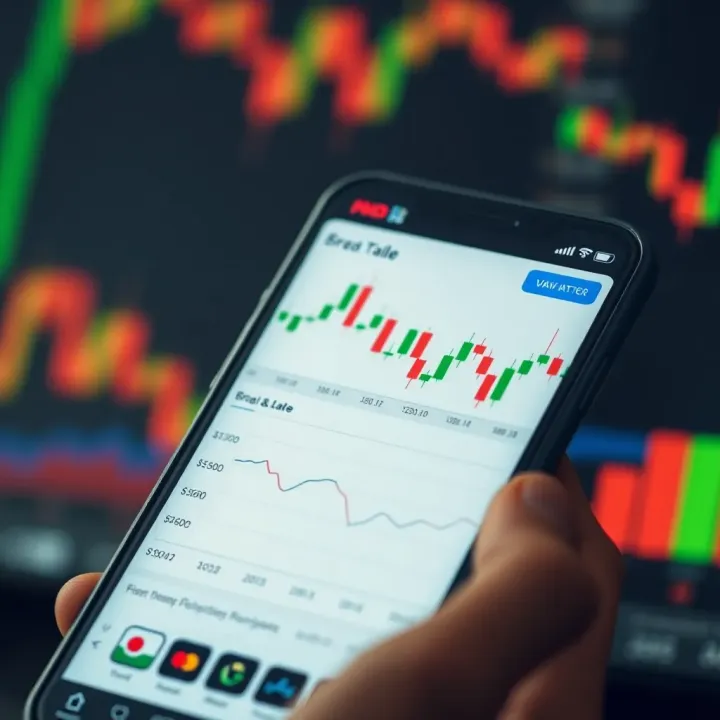
Discover the best forex trading apps in Pakistan 📈. Compare features, security, costs & usability to pick the perfect app for your trading needs!
Based on 12 reviews