

Binary to Decimal Conversion Methods Explained
Learn binary to decimal conversion methods step-by-step 💡 Simple techniques, practical examples, and clear explanations to master this essential skill for tech and academics.
Edited By
James Edwards
In March 2022, the U.S. dollar experienced notable fluctuations driven by a mix of domestic and international factors. Traders and investors closely watched inflation figures, Federal Reserve signals, and geopolitical tensions that all played key roles in shaping the currency's value.

Inflation reached multi-decade highs early that year, with consumer prices rising faster than expected. This put pressure on market expectations for the Federal Reserve's monetary policy. A higher inflation rate often pushes the Fed toward raising interest rates, a move that generally strengthens the dollar as it increases yields on dollar-denominated assets.
For example, if inflation hits 7%, bond investors will demand higher interest rates to compensate, making dollar assets more attractive globally. This dynamic was evident in March as markets priced in more aggressive rate hikes.
In March 2022, the Fed signaled a shift from its pandemic-era accommodative stance by starting its rate hike cycle. The Fed raised interest rates by 0.25%, the first increase since 2018, indicating their focus on curbing inflation.
This move bolstered the dollar against several currencies, especially those from economies still navigating slower tightening cycles or with less aggressive inflation control.
The ongoing conflict in Ukraine during March 2022 added a layer of uncertainty affecting currency markets. Investors turned to the U.S. dollar as a safe haven amid rising geopolitical risks, which supported dollar strength despite volatile conditions.
Oil prices also surged, influenced by supply fears. Higher energy prices can pressure inflation globally but tend to benefit oil-producing countries’ currencies, sometimes weakening others versus the dollar.
Monitor inflation data: Rising inflation usually means a stronger dollar if the Fed responds with rate hikes.
Watch Fed announcements: Policy changes directly impact dollar demand.
Stay aware of geopolitical risks: Crises often push investors toward the dollar as a refuge.
Compare currency fundamentals: Emerging market currencies may suffer if their central banks lag behind the Fed in rate adjustments.
Understanding these drivers helps navigate forex markets and guides decisions in hedging currency risk or timing trades involving the dollar.
By keeping an eye on these factors, finance professionals can better forecast the dollar's behavior amid the complex economic landscape of early 2022.
March 2022 was a significant month for the US dollar, reflecting shifting economic forces and global dynamics. Understanding its movement offers traders and investors valuable context for currency strategies and risk assessment. This overview breaks down the key patterns and sets the stage for analyzing the factors behind these changes.
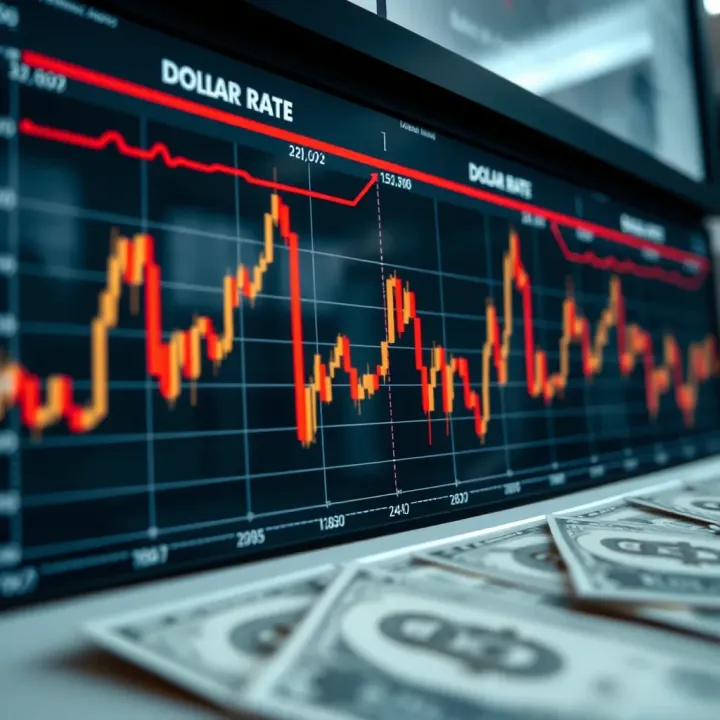
During March, the dollar showed notable volatility but mostly strengthened against many major currencies. Early in the month, the dollar index climbed by around 3%, hitting a two-year high by mid-March. This rise stemmed largely from investor concerns over inflation, which was running near 7.9% year-over-year—the highest in decades. Investors flocked to the dollar as a safe haven amid uncertainty around inflation and the Federal Reserve’s plans for interest rate hikes.
For example, the dollar gained almost 4% against the euro, moving from roughly $1.14 per euro to about $1.10 at month-end. The dollar’s rise also pressured emerging market currencies, which tend to weaken when the dollar strengthens because of dollar-denominated debt. On the other hand, commodity prices like oil and gold saw mixed reactions alongside these currency swings, affecting dollar demand in complex ways.
Compared to the months leading up to March, the dollar made a clear jump. In January and February 2022, the dollar index hovered around stable levels near 95–96, but March broke this pattern with increased momentum. This shift reflected growing market anticipation that the Fed would accelerate its tightening policies faster than initially expected.
Moreover, geopolitical tensions—especially Russia's invasion of Ukraine in late February—added fuel to the dollar's strength by boosting demand for safer assets. In contrast, previous months showed a more balanced dollar performance influenced by steady economic recovery signs and gradual monetary normalization.
The sharp change in March underscored how quickly market sentiment and external shocks can push the dollar in new directions, making timely insight crucial for investors and businesses.
This snapshot provides a foundation to dig deeper into what drove these movements and how they compare historically. By keeping an eye on these patterns, traders can better position themselves amid ongoing economic shifts.
March 2022 saw the US dollar's value swaying in response to economic factors that traders and investors closely monitor. Among these, inflation trends and the Federal Reserve's policies stood out as key influences shaping the currency's trajectory.
Inflation movements in early 2022 played a vital role in driving dollar fluctuations. With the Consumer Price Index (CPI) showing persistent increases, worries over rising prices pressured the Federal Reserve to signal changes in monetary policy. For instance, inflation hitting 7.9% in February 2022—the highest since 1982—prompted investors to rethink expectations around the dollar.
Rising inflation tends to push up interest rates, attracting capital inflows and often strengthening the dollar. However, when inflation outpaces growth expectations, it can erode purchasing power and fuel uncertainty. Traders tracking daily CPI releases and wage growth data needed to adjust their positions in light of these trends, as inflation directly affected real returns on US assets.
The Federal Reserve’s actions in March 2022 were front and center for market participants. After holding rates near zero for two years, the Fed announced a rate hike to 0.25%—the first increase since 2018—to curb inflation. This move signaled a shift away from ultra-loose monetary policy, signaling a tighter US financial environment.
In addition to raising rates, the Fed hinted at subsequent hikes and discussed reducing its $8.9 trillion balance sheet, steps that influence long-term interest rates and liquidity. For traders, these policy signals meant reassessing dollar positions, especially versus currencies from countries with differing central bank approaches.
Fed statements during this period showed a commitment to taming inflation, which bolstered the dollar by raising expected future yields on US dollar assets.
Overall, inflation data and the Fed’s reaction took center stage in determining the dollar’s strength in March. Investors who followed this duo closely found better footing for managing currency risk and capitalizing on shifts in market sentiment.
Global events can shake up currency values quickly, and March 2022 was no exception when it came to the dollar. These events impact dollar movements by stirring up uncertainty, shifting investor confidence, and affecting trade flows. For investors and traders, understanding these dynamics helps in navigating the choppy waters of currency markets.
Geopolitical tensions in early 2022 played a major part in dollar fluctuations. The Russia-Ukraine conflict, which intensified in February and March, pushed investors toward the dollar as a safe haven. This response reflects a common pattern: when conflicts flare up and markets turn jittery, the dollar often strengthens because of its global reserve status. For example, amid sanctions on Russia and disruptions in Eastern European markets, the dollar gained ground compared to the euro and other currencies linked to the region.
The conflict also triggered shifts in energy markets. Since many countries pay for oil and gas in dollars, disruptions in supply chains due to sanctions or uncertainty often increase demand for dollars. This raised the dollar's value temporarily but also caused ripples in commodity prices, which in turn affected inflation expectations and trading strategies.
Meanwhile, the world was still wrestling with supply chain problems leftover from the pandemic. Bottlenecks in shipping, shortages of key components like semiconductors, and labor challenges in critical sectors kept markets uneasy. For the dollar, these uncertainties resulted in a tug-of-war scenario: on one hand, the dollar benefitted as a safe investment; on the other, concerns about slower global growth put downward pressure on its value.
Take the semiconductor shortage, for instance—a crucial factor in industries from autos to electronics. Its persistence raised concerns over U.S. manufacturing outlooks and global trade health. Traders watching these signals often adjusted their dollar exposure accordingly.
| Key Supply Chain Issues in March 2022 | | --- | | Port congestion and container shortages | | Rising shipping costs and delays | | Raw material shortages affecting production |
The bottom line is that global events like geopolitical conflicts and supply chain disruptions don't just happen in isolation—they ripple through currency markets, influencing dollar rates by altering risk perceptions and trade balances.
Understanding these forces offers traders and investors a clearer picture of why the dollar moved the way it did in March 2022, helping them make smarter decisions amid ongoing volatility.
Examining the dollar's performance against major currencies like the euro and pound, as well as emerging market currencies, sheds light on broader market trends and investor sentiment. Understanding these comparisons helps traders and investors gauge relative strength, hedge risks, and adjust portfolios accordingly in the face of global shifts.
During March 2022, the dollar showed noticeable strength against both the euro and the British pound. The Federal Reserve's signals for interest rate hikes pushed the dollar higher, making it more attractive compared to the euro, where the European Central Bank remained cautious about tightening monetary policy. For instance, the EUR/USD exchange rate slipped from around 1.12 at the start of the month to about 1.10 by the end. Similarly, the GBP/USD dipped from approximately 1.32 to 1.30, partly due to political uncertainties in the UK and slower economic recovery signals.
This relative dollar strength impacted cross-border trade and investment decisions. American companies found imports from Europe slightly cheaper early in the month but felt the pinch as the dollar cooled towards the end. Investors tracking currency pairs adjusted futures contracts and forex positions to capitalize on dollar momentum or limit exposure.
Emerging market currencies saw wider swings against the dollar in March 2022, reflecting heightened risk aversion amid global tensions and commodity price volatility. For example, the Brazilian real and Turkish lira weakened notably, losing about 4-5% against the dollar, driven by capital outflows and inflation pressures at home.
Conversely, some Asian currencies like the South Korean won showed relative resilience, benefiting from stable export demand and central bank interventions. Traders had to balance these varying regional performances, as the dollar's strength against emerging currencies often signals capital seeking safer assets.
The bottom line is, dollar comparisons with major and emerging currencies provide a practical lens for investors to understand market direction, evaluate risk, and position themselves appropriately in a shifting economic landscape.
By tracking these exchange rate trends, finance professionals gain deeper insight beyond domestic factors, capturing the ripple effects of global monetary policy and geopolitical events on the dollar’s value.
Understanding how the dollar rate moved in March 2022 is critical for businesses and investors because currency shifts directly impact costs, revenues, and investment values. The dollar's strength or weakness can either boost profits or pinch margins, depending on which side of the trade a business operates. For investors, changes in the dollar affect not just foreign holdings but also the broader market's risk appetite.
Importers generally face higher costs when the dollar weakens because buying goods priced in foreign currencies gets more expensive. For example, a U.S.-based electronics retailer importing from Asia saw their costs jump notably in March 2022 due to a dip in the dollar against the yen and won. This squeeze pushes prices up, often forcing tough decisions between absorbing the extra cost or passing it on to customers.
On the flip side, exporters benefited from a weaker dollar, as their products became more competitively priced overseas. A manufacturer of industrial machinery in Ohio found its orders increase as international buyers took advantage of the relatively cheaper prices. However, exporters still have to hedge their currency exposure carefully since rapid swings can erase anticipated gains.
Investors had to adjust strategies as the dollar moved through March 2022. Those holding international assets needed to consider how currency translations affected returns. For instance, investing in European stocks required accounting for dollar-euro volatility.
One common strategy involved currency hedging through futures or options to protect holdings from adverse moves. Additionally, some investors looked toward gold and U.S. Treasury securities, which often gain appeal when currency uncertainty rises.
Diversification across currencies and regions also helped spread risk. A portfolio focused solely on U.S. assets might have missed out on opportunities abroad or suffered more from dollar moves. In all cases, staying alert to Federal Reserve signals and geopolitical updates was key to timely, effective portfolio adjustments.
The bottom line is that businesses and investors can't ignore currency trends. Whether managing costs or balancing asset allocations, understanding dollar rate movements like those in March 2022 is vital for making informed decisions and safeguarding financial health.
Learn binary to decimal conversion methods step-by-step 💡 Simple techniques, practical examples, and clear explanations to master this essential skill for tech and academics.
Explore key risk management types covering operational, financial, strategic, compliance, and reputational risks 🛡️ Learn practical tools shaping Pakistan's corporate sector.
Learn how binary subtraction calculators work 🔢 from basics of binary numbers to manual methods. Understand their benefits, use cases, and limitations easily.
📈 Find the best trading app in Pakistan by comparing usability, security, features, fees, and support. Make smart investment choices suited for PK financial markets.
Based on 8 reviews