

Understanding Binary Subtraction Method
Understand binary subtraction clearly 🧮, including the basic rules and step-by-step methods with examples. Perfect for students and tech professionals alike.
Edited By
Ethan Riley
Google provides an easy way to check the current USD to PKR exchange rate right from its search engine. When you type "USD to PKR" or "US Dollar to Pakistani Rupee" in the search bar, Google shows the latest rate along with a small chart illustrating recent fluctuations. This snapshot comes from a combination of data providers, including financial markets and banks.

Google's exchange rate represents the mid-market, or interbank, price. It’s what banks use when trading currency with one another, but it isn’t always the rate you’ll get as a retail customer or business. For example, if you're sending money through a service like Western Union or using a credit card to make purchases, the rate you receive might be slightly different due to service fees and markups.
Keep in mind: Google's rate updates frequently during market hours but may lag during weekends and holidays.
Several factors affect how this rate shifts over time, including:
Economic indicators: Inflation numbers, GDP growth, and employment data from both the US and Pakistan
Political developments: Changes in government policies, geopolitical tensions, or trade agreements
Central bank actions: The Federal Reserve’s or State Bank of Pakistan’s interest rate decisions
Market demand: Foreign investors' appetite for Pakistani assets or US dollar reserves
For example, if the US Federal Reserve raises interest rates, it usually strengthens the dollar, making the USD to PKR rate higher (meaning more PKR per USD).
For traders and investors, Google's rate is a quick reference but not the sole source for making financial moves. If you’re planning to convert a large sum or hedge currency risk, always compare rates from other platforms like XE, OANDA, or consult your bank’s quoted rates.
Additionally, keep an eye on the spread (difference between buying and selling prices) offered by your currency provider—it can impact your costs even if the midpoint rate looks favorable.
Understanding Google's exchange rate display and its limitations helps you make smarter choices whether you’re trading, investing, or managing payments that involve USD and PKR.
Checking the USD to PKR exchange rate on Google is a fast, accessible way for traders, investors, and finance pros to keep tabs on currency movements. Rather than digging through complicated financial websites or relying on outdated sources, Google puts current data right at your fingertips, making it easy to make timely decisions.
Typing currency pairs directly into the search bar is the simplest way to get instant exchange rates. Just enter something like "USD to PKR" in Google's search box, and the current conversion rate pops right up. This method is super handy if you’re looking for a quick check while planning a trade or budgeting international payments.
Beyond just the number, typing the pair triggers Google's built-in currency conversion box. This box lets you input exact amounts — for instance, converting $1,000 to Pakistani Rupees in real time. It's especially useful for finance professionals managing conversions frequently or traders tracking market fluctuations on the go.
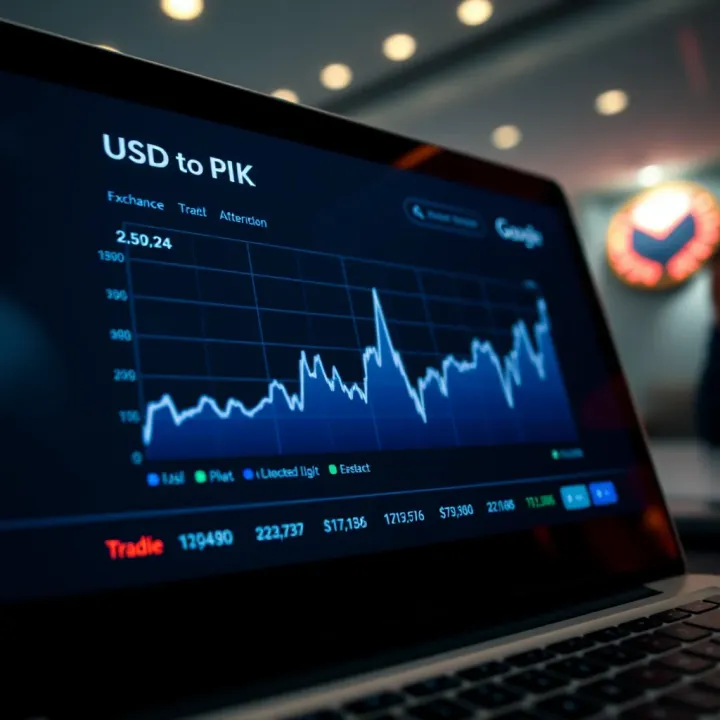
Google’s conversion box goes beyond a basic rate. It includes options to swap currencies instantly, lets you manually enter amounts, and refreshes rates regularly throughout the day. You can see historical trends with a graph summarizing recent changes, helping you spot patterns without leaving the page.
For example, if you enter $500 USD and want to see how it’s valued in PKR, the tool instantly displays the converted amount, updating dynamically with market shifts. This keeps you from second-guessing conversions based on stale data, a common pitfall when relying on older sources.
Besides quick conversions, Google links to financial news and market updates related to USD and PKR. When currency volatility spikes, news articles from trusted sources pop up alongside rates, helping you connect rate changes to real-world events like policy shifts or economic reports.
For instance, if the Pakistani rupee weakens amid political unrest, Google's news snippets right next to the conversion box will highlight these developments. This instant context is valuable for investors scanning multiple factors impacting currency values.
Google also offers interactive tools embedded within the search results. These let you explore conversion rates for different time frames or compare USD to other currencies besides PKR in the same interface. The visual charts are user-friendly, allowing quick toggling between days, weeks, or months to gauge volatility.
This kind of quick access to detailed info helps traders and financial analysts spot trends and make well-informed decisions fast — without having to jump between different platforms or apps.
The bottom line is, Google's exchange rate features are not just quick and easy; they provide enough depth to serve both casual users and professionals needing timely, on-demand currency info.
By knowing how to use these Google tools effectively, you stay ahead of market shifts affecting USD to PKR rates and position yourself better whether you’re trading, investing, or managing cross-border budgets.
Understanding the key factors behind the USD to PKR exchange rate helps traders and investors make smarter decisions. Exchange rates don't move randomly—they respond to economic realities and political shifts both in the U.S. and Pakistan. Knowing what's driving these fluctuations provides an edge when you check rates on Google or plan currency trades.
Inflation and interest rates in the US and Pakistan play a direct role in currency strength. If inflation rises faster in Pakistan than the U.S., the rupee tends to weaken because its purchasing power drops compared to the dollar. For example, if Pakistan’s inflation hits 12% in a year while U.S. inflation remains around 3%, the USD to PKR rate could increase, meaning one dollar buys more rupees. Interest rates influence this dynamic too. Higher interest rates in the U.S. attract capital flows, strengthening the dollar against the rupee, especially when Pakistan’s rates lag behind.
Balance of trade and foreign reserves also affect exchange rate movements. When Pakistan imports more than it exports, it needs more foreign currency to pay for goods, putting downward pressure on the rupee. If the trade deficit widens, the demand for dollars increases. Meanwhile, foreign reserves act as a buffer—large reserves allow Pakistan’s central bank to support the rupee by selling dollars when needed. For instance, if Pakistan drains reserves rapidly due to a persistent trade deficit, confidence may drop, weakening the rupee and pushing up the USD to PKR rate.
Government policies and stability in Pakistan and the U.S. have a clear influence on the exchange rate. Political uncertainty, like unresolved elections or changes in monetary policy, often makes investors wary. For instance, if Pakistan faces political unrest or inconsistent economic reforms, the rupee may lose value as foreign investors hold back. Conversely, stable, transparent policies can boost confidence, keeping the rupee steady or stronger.
Global economic trends and crises often shift the USD to PKR rate abruptly. A worldwide financial crisis, like the 2008 crash, typically prompts a flight to safety—investors pile into the US dollar, considered a safe haven. This inflow strengthens the dollar and pushes the rupee down. Similarly, rising oil prices can affect Pakistan heavily since it imports most of its oil, increasing its import bill and weakening the rupee. Therefore, global events ripple through local currency markets and can sometimes overshadow domestic factors.
Keeping an eye on these economic indicators and political developments enables savvy traders and investors to better anticipate currency moves instead of relying solely on daily rate snapshots.
By understanding these forces, you can use Google’s USD to PKR exchange information with more confidence and context.
When looking up the USD to PKR exchange rate on Google, knowing how accurate and timely the information is can save you from costly mistakes. Google’s rates offer a quick snapshot, but understanding their sources and limitations helps put that snapshot into proper context. For traders and finance pros, it's about balancing speed with trust in the numbers before making decisions.
Google pulls its currency exchange info from major financial data providers like Morningstar, XE, or Reuters. These companies gather foreign exchange rates from various market channels, including interbank data, which represent the rates large financial institutions use to trade currencies among themselves. This ensures Google's rates reflect a broad market perspective rather than a single exchange or money changer.
The involvement of these established providers means you’re generally seeing rates based on actual market activity, not just an average or guess. For instance, if Morningstar reports a USD/PKR rate of 285.45 at noon ET, Google’s displayed rate will closely match that figure, offering a reliable baseline for comparison.
Update frequency is another factor. Google's exchange rates update several times per minute during market hours, making them fairly close to real time. However, there’s always a slight lag due to data transmission and processing. In fast-moving markets, rates may vary a few ticks between Google's numbers and live trading platforms. This is particularly true during volatile periods, such as unexpected economic announcements or political events affecting Pakistan or the US.
Google's exchange rate can differ from rates set by central banks like the State Bank of Pakistan. Central banks often publish official rates used for government accounting and large institutional transactions. These rates might not move as frequently and sometimes include regulatory controls or intervention effects, making them less reflective of what you’d get in the open market.
For example, the State Bank of Pakistan may have an official USD/PKR rate of 283.00, while Google and the interbank market show 285.50. The discrepancy comes because central banks smooth rates to stabilize the market or control inflationary pressures. Traders relying solely on official rates might miss out on current market realities.
Then there’s the difference from money changers’ rates. These are retail rates for travelers or small businesses exchanging cash, often including a markup to cover operating costs and profit. You might find a money changer in Karachi quoting USD/PKR at 280, lower than Google’s rate, but with added fees or spread hidden in the transaction.
Bottom line: Google's rates offer a market-based benchmark close to interbank values but won't match official or retail cash exchange rates exactly. Knowing this helps you set realistic expectations when planning trades, investments, or currency exchanges.
Understanding these nuances enables you to use Google's data wisely — as one tool among several — rather than the sole source for financial decisions involving USD to PKR conversion.
Relying on a single USD to PKR exchange rate from Google can be misleading. Currency markets fluctuate constantly due to economic news, geopolitical events, and market sentiment. Monitoring trends over days or weeks helps you spot patterns and avoid making decisions based on a temporary spike or dip. For example, if you see the rate dropping steadily over a week, that might suggest a weakening dollar against the rupee, signaling you might delay converting funds if possible.
Timing your exchange is equally important. Rates vary during the day and across markets, often impacted by trading hours in the US and Pakistan. For instance, the Pakistani forex market tends to react to domestic news during its business hours, while US market movements reflect overnight developments. By watching Google’s currency data frequently, you can time your conversions to catch a more favorable rate. Say you’re sending money to Pakistan monthly; observing exchange rate cycles can shave off unnecessary losses from poor timing.
Incorporating Google’s USD to PKR exchange rate into your budgeting or accounting can streamline financial planning, especially if you deal with multiple currencies. Let’s say you run a small import business paying suppliers in dollars but selling in rupees. Tracking Google’s rates helps you forecast costs accurately and adapt your pricing to maintain margins. You can even pull daily rate snapshots during accounting to keep your books current without juggling multiple data sources.
Keep in mind, though, that the exchange rate you see on Google doesn’t include conversion fees, service charges, or spreads that banks and money transfer services apply. For example, if Google shows 1 USD equals 280 PKR, your actual rate might be closer to 275 PKR after fees. Understanding these hidden costs helps you budget better and avoid unpleasant surprises. It’s wise to compare rates from several providers and add expected fees before locking in any transactions.
The bottom line is Google’s exchange rate is a handy tool for quick insights, but smart users pair it with trend observation and cost awareness to make smarter financial moves.
Understand binary subtraction clearly 🧮, including the basic rules and step-by-step methods with examples. Perfect for students and tech professionals alike.

Explore binary search with practical examples 🔍. Learn how it works, its efficiency, variations, and pitfalls to improve your coding skills effectively.

🔢 Understand binary multiplication with clear examples and tips! Learn basics, signed numbers, and common issues in digital electronics and computing.

📘 Learn the binary number system basics, practical uses, reading and writing techniques, conversions, and its vital role in computing with helpful PDFs.
Based on 11 reviews