

Understanding Forex Trading Groups for Pakistani Traders
🌐 Learn how forex trading groups in Pakistan help traders share strategies, manage risks, and use social media for collective success in currency markets.
Edited By
Charlotte Davies
Gold has always been a favoured asset in Pakistan, seen as a hedge against inflation and currency devaluation. Today, many traders are looking at forex trading in gold as an alternative way to earn profits while managing risk. Unlike physical gold buying, forex trading in gold involves speculating on its price movements through contracts or digital platforms.
Understanding gold as a forex commodity is essential before investing. Gold prices do not just follow local trends—they respond strongly to global economic factors, geopolitical tensions, US dollar movements, and interest rate changes. For Pakistani traders, these external influences combined with domestic conditions such as rupee fluctuations or inflation create unique opportunities and challenges.
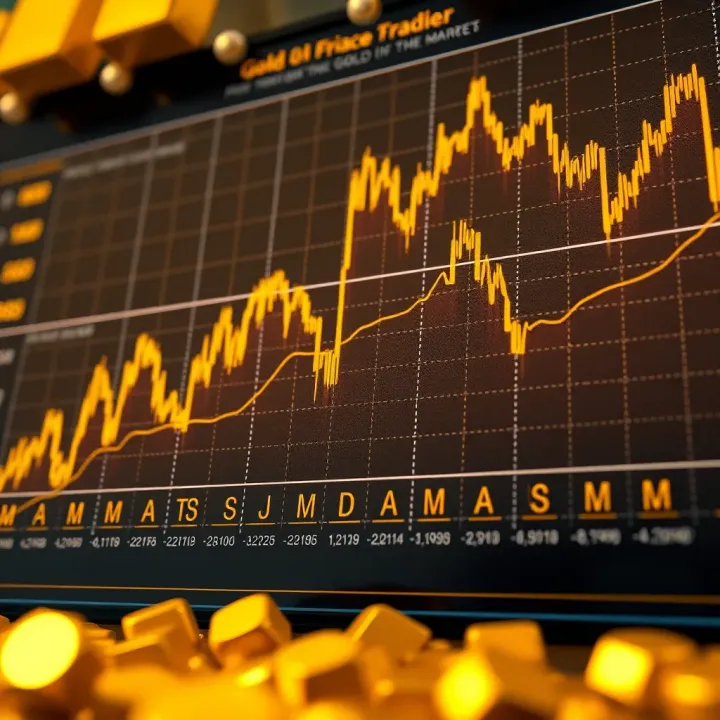
Trading gold in the forex market typically means dealing with XAU/USD or similar pairs where gold is priced against the US dollar. Since the US dollar and gold often move inversely, factors affecting one may cause opposite reactions in the other. This dynamic can be leveraged for trading strategies but requires careful study.
That said, forex gold trading is not for the faint-hearted. It calls for solid knowledge of global market trends, technical analysis, and risk management techniques. Pakistani traders must also keep in mind local regulations and ensure they use licensed brokers approved by the Pakistan Securities and Exchange Commission (SECP) and the State Bank of Pakistan (SBP) policies.
Forex trading in gold offers a way to engage with this precious metal without the hassle of storage or physical security, but it demands discipline and clear strategy to succeed.
In the sections ahead, we will break down the factors affecting gold prices, how to choose the right trading strategies in Pakistan’s context, and risk management essentials to protect your capital. The goal is to equip you with practical insights so you can approach gold trading in forex markets confidently and responsibly.
Gold trading in the forex market has grown into a significant avenue for Pakistani traders looking to diversify their investment portfolios. Understanding its mechanics is essential for making informed decisions and managing risks effectively. This section introduces the concept of gold as a forex commodity and outlines why it holds a special place for traders in Pakistan.
Gold trading in forex refers to buying and selling gold as a commodity through currency pairs, typically quoted against the US dollar (XAU/USD). Unlike physical gold, forex gold trading involves speculating on the price movements without owning the metal, enabling traders to take advantage of fluctuations with relatively small capital via leverage. For example, a Karachi-based trader may buy XAU/USD expecting a rise in gold prices due to geopolitical tensions overseas.
Gold behaves differently from traditional forex currencies. While a currency pair involves two national currencies influenced by economic policies and geopolitical factors, gold is a global commodity. Its price reacts not only to currency movements but also to factors like inflation expectations and central bank policies, making it a hybrid asset in the forex world.
Gold’s reputation as a safe-haven asset plays a major role in attracting Pakistani traders. In times of economic uncertainty or PKR weakness, many prefer gold to protect their savings. This trust stems from cultural values and historic use of gold as a store of wealth in Pakistan, where families often invest in physical gold to secure future financial stability.
Historically, gold prices have shown both stability and periods of volatility. While gold tends to hold value during currency devaluations or stock market dips, it also experiences sharp swings due to global events or policy announcements. This combination makes it an attractive option for traders seeking both steady and speculative opportunities.
Accessibility is another key factor. Traders in Pakistan can access gold trading through a range of platforms—local brokers authorised by the Securities and Exchange Commission of Pakistan (SECP) and international online brokers offering gold forex contracts. Payment systems like JazzCash and Easypaisa have also simplified funding accounts, making it easier for traders across Pakistan, from Lahore to Peshawar, to participate.
Gold trading in forex markets offers flexibility, liquidity, and a hedge against inflation, making it a practical choice for Pakistani traders navigating both local and international uncertainties.
By knowing what gold trading involves and why it appeals in the Pakistani context, traders can better plan strategies tailored to their financial goals and risk appetite.
Gold trading in forex markets doesn't operate in isolation; several external factors push and pull its price daily. For Pakistani traders aiming to navigate this market, understanding these forces helps in making informed decisions rather than relying on luck or guesswork. This section breaks down the main aspects affecting gold prices, focusing on global economic indicators, currency movements, and supply-demand dynamics relevant to both international markets and local realities.
Inflation rates and central bank policies play a decisive role in gold prices. When inflation rises, holding cash becomes less attractive, so investors often turn to gold as a store of value. For example, if the US inflation rate climbs meaningfully, the Federal Reserve may raise interest rates, indirectly influencing gold prices since higher rates increase the opportunity cost of holding non-yielding assets like gold. Pakistani traders should watch announcements from the US Federal Reserve closely, as these shifts ripple through global markets and affect gold’s demand.
Geopolitical tensions and market uncertainty also steer gold prices. Whenever conflicts escalate—whether in the Middle East, US-China trade discussions, or regional unrest—investors flock to gold for safety. This demand spike often causes price surges, as seen during moments like the COVID-19 pandemic’s early days or recent border tensions involving Pakistan’s neighbours. For local traders, keeping an eye on geopolitical news is essential since these events can cause sharp volatility swings within short periods.
The relationship between the US dollar and gold prices is inverse in most cases. Since gold is priced in dollars globally, a stronger US dollar generally pulls gold prices down, making it costlier for holders of other currencies to buy gold. Conversely, when the dollar weakens, gold gains appeal. Pakistani traders dealing in forex should track USD/PKR trends alongside gold prices to time their trades better.
When considering PKR fluctuations, the picture differs slightly. A falling Pakistani rupee usually pushes local gold prices higher because importers pay more in PKR for gold priced in dollars. This dynamic often leads to increased demand among retail buyers looking to hedge against local currency depreciation. Traders need to factor in PKR movements, especially when speculating on physical gold or trading gold contracts in local currency terms.
Gold supply constraints and mining output influence market availability. Globally, gold production is delicate and cannot be ramped up quickly, meaning any disruption in major mining countries like South Africa or Russia can limit supply, nudging prices up. For Pakistani traders, while physical stock availability domestically depends on these global supplies, any mining strikes or export restrictions abroad can ripple through price trends locally.
Lastly, physical demand in jewellery and investment sectors in Pakistan plays a big role, especially since gold holds cultural significance here. Seasonal spikes during festivals and weddings can temporarily boost demand, tightening supply and pushing prices upwards. Investment demand through coins and bars also remains strong, with people often shifting from bank deposits to gold amid economic uncertainty. Understanding this local demand cycle helps traders anticipate short-term price movements beyond just forex market factors.
Gold prices respond to a blend of international economic signals and local market behaviours. For Pakistani traders, decoding these influences offers a practical edge in timing entries and exits in gold forex trading.
Trading gold through forex requires solid strategies to handle its unique behaviour and volatility. Unlike regular currency pairs, gold prices respond strongly to global events, economic data, and market sentiment. Pakistani traders can greatly benefit by combining technical and fundamental analysis with suitable trading styles tailored for the gold market.
Technical analysis helps traders read market patterns and predict price movements in gold trading. Popular tools like moving averages, Relative Strength Index (RSI), and MACD (Moving Average Convergence Divergence) reveal whether gold's price is in an upward or downward trend. For example, when the 50-day moving average crosses above the 200-day moving average, it often signals a bullish trend—this is commonly called the ‘golden cross’.
Pakistani traders often use candlestick charts that show opening, closing, highest, and lowest prices within a time frame. This visual aid aids in spotting reversals or continuation patterns, useful during volatile periods like global economic announcements. Practically, combining several indicators avoids false signals and strengthens trade decisions.
Support and resistance levels mark price points where gold tends to stop falling or rising. Identifying these levels helps traders anticipate possible price rebounds or pullbacks. If gold regularly bounces off Rs 300,000 per tola as support, selling too close to that level might be risky since the price could go up again.
On the other hand, if Rs 310,000 repeatedly acts as resistance, breaking this level could signal a strong upward push. Traders in Pakistan often plot these levels on daily or weekly charts to decide entry and exit points. Recognising such levels also aids in setting stop-loss and take-profit targets, shielding investments from sudden flips in price.
Economic indicators, like inflation data or central bank decisions (particularly from the US Federal Reserve), directly influence gold prices. When inflation rises globally, gold often gains as it serves as a hedge. Pakistani traders should keep an eye on announcements such as US Consumer Price Index (CPI), Pakistan’s inflation rates, and State Bank monetary policy updates.
For example, if the US releases stronger inflation numbers than expected, the dollar might weaken, pushing gold prices up. By tracking these economic releases, traders can anticipate market movements rather than react chaotically.
Gold responds sharply to geopolitical tensions, economic crises, and even pandemics. Events like conflicts in the Middle East, trade wars between major countries, or global health emergencies increase market uncertainty. People tend to buy gold in such times, raising prices.
Pakistani traders need to be aware of such happenings through news outlets and market reports. For instance, recent tensions in Ukraine caused gold to surge worldwide. Having this awareness helps traders position their investments smartly, avoiding surprise losses.
Day trading involves opening and closing positions within a single day, capturing small price moves. Given gold’s volatility, day traders can profit from intraday swings using tight stop-losses to minimise risk. Swing trading, on the other hand, holds positions from a few days up to weeks, relying on medium-term price trends.
For example, a swing trader in Karachi might enter a gold trade anticipating a rising trend following a major economic announcement, holding on until resistance levels approach. Both styles suit active Pakistani traders who follow market developments closely and prefer quick reactions.
Some investors prefer holding gold positions over months or years, treating gold as a store of value rather than for frequent trades. This approach suits those expecting long-term economic uncertainties or currency depreciation in Pakistan, making gold a portfolio hedge.
An example is buying gold during periods of Pakistani rupee weakness against the dollar, expecting gold prices to rise as a safe asset. Long-term strategies require patience and tolerance for short-term price swings but offer stability against inflation and currency risk.
Combining well-grounded technical studies with awareness of economic and geopolitical factors enhances your trading success. Adapting trading style to match your goals and market understanding lets you manage risks better and seize gold’s opportunities effectively.
These practical strategies provide a clear roadmap for Pakistani traders to navigate gold trading in the forex market, balancing fast moves with deeper market insights.
Risk management and regulatory compliance are vital for any trader, especially when dealing with gold in the forex market. Gold prices can swing sharply within hours, which can lead to big gains or losses. Managing these risks protects your capital and helps maintain steady growth. At the same time, understanding the legal rules in Pakistan ensures you trade safely and avoid unnecessary penalties or scams.
Setting stop-losses and take-profit levels is a fundamental method to limit losses and lock in profits. A stop-loss automatically sells your position if gold dips to a certain price, protecting you from unexpected swings. On the flip side, take-profit locks gains once gold hits your target price, stopping you from losing an unrealised profit. For example, if you buy gold at $1,900 per ounce, setting a stop-loss at $1,880 limits losses if the price drops, while a take-profit at $1,950 secures profits if the price rises.
Using appropriate leverage ratios is another key factor. Leverage lets you control bigger positions with a smaller amount of capital, but it also magnifies risks. High leverage can wipe out your account rapidly if the market moves against you. Many Pakistani brokers offer leverage up to 1:100 or more, but a safer approach is to stick to lower ratios like 1:10 or 1:20. This helps you survive market ups and downs without blowing your account. Keep in mind, gold can be more volatile than currencies, so careful leverage usage is particularly important.
The Securities and Exchange Commission of Pakistan (SECP) acts as the watchdog for financial markets, including forex trading. SECP aims to ensure transparency and fairness by regulating brokers operating in Pakistan. Traders should check if their broker is registered with SECP to avoid unreliable or fraudulent platforms. SECP’s oversight gives Pakistani traders a layer of protection and helps maintain market integrity.
Regarding forex trading legality and authorised brokers, forex trading in Pakistan is legal but only through SECP-approved brokers. Trading with unlicensed brokers risks losing your money without any legal recourse. SECP keeps a list of authorised brokers who comply with Pakistani laws, maintain capital requirements, and conduct regular audits. You should always confirm that your broker is on this list to trade gold safely.
Using PTA-approved brokers and payment methods matters for smooth deposits and withdrawals. Approved brokers comply with Pakistan Telecommunication Authority (PTA) regulations related to financial transactions and data security. Payment methods like JazzCash and Easypaisa are popular in Pakistan and often integrated into these platforms, making fund transfers easier and safer.
Platform security and user reviews are equally crucial before committing funds. A secure platform uses strong encryption, offers two-factor authentication, and protects your personal data. Before signing up, read reviews from other Pakistani traders to get a sense of service reliability and withdrawal processing times. Trusted platforms reduce the risk of hacking or delays that can hurt your trading experience.
Effective risk management combined with regulatory compliance not only safeguards your investment but also builds confidence to trade gold wisely in Pakistan’s forex scene.
🌐 Learn how forex trading groups in Pakistan help traders share strategies, manage risks, and use social media for collective success in currency markets.

Learn how forex trading simulators help Pakistani traders practise risk-free, build skills, and gain confidence before real trading 📈💰, with practical tips and insights.
📊 Understand forex trading patterns to predict currency movements confidently. Learn key patterns, their importance, and how Pakistani traders can manage risks effectively.

📈 Understand live forex trading in Pakistan with this practical guide covering platforms, risk management, regulations, and steps to start trading confidently today.
Based on 8 reviews