

Effective Risk Management Strategies for Business
Learn top strategies for risk management in business and finance to protect assets, reduce losses, and make informed decisions in Pakistan's market ⚖️📊
Edited By
Liam Walker
Risk management plays a significant role in business and finance, especially in Pakistan’s often unpredictable economic climate. It means spotting potential problems before they hit and having a plan to handle them effectively. This helps safeguard investments and keeps business operations smooth even in tough situations.
Organisations use various tools to manage risk, ranging from simple checklists to complex software. Each tool serves a particular purpose, whether it’s identifying risks, evaluating their impact, or deciding what to do next. For finance professionals, it’s critical to choose tools that fit the business size, industry, and market conditions.

Here’s a brief overview of common risk management tools that Pakistani traders and investors can use:
Risk Assessment Matrices: These help map risks based on their likelihood and impact. For example, a supplier delay might be medium risk but a cyber attack might be high risk. Pakistani exporters often use these matrices to prioritise risks related to supply chain delays or foreign exchange fluctuations.
SWOT Analysis: Standing for Strengths, Weaknesses, Opportunities, and Threats, this tool offers a snapshot of internal and external factors affecting a business. It’s useful before launching a product or entering a new market.
Scenario Analysis: This tool explores different future scenarios—like sudden rupee depreciation or policy changes—and their effects on business. It’s especially useful for investment firms and banks anticipating regulatory shifts in Pakistan’s financial sector.
Risk Registers: A detailed log where organisations keep track of all identified risks, their status, and mitigation measures. It keeps the whole team on the same page.
Software Solutions: Advanced tools such as ERP systems with built-in risk modules or specialised platforms like SAP Risk Management provide real-time data to monitor risks continuously. Many Pakistani companies are now adopting these to better manage operational and financial risks.
Effective risk management is not just about avoiding losses but also spotting opportunities that others might miss. The right tools help build resilience and informed decision-making.
Selecting a combination of these tools ensures a practical and comprehensive approach to handling risks in Pakistani business and finance environments. Next, we will explore these tools in detail, with an emphasis on their applications and adoption in local contexts.
Effective risk management forms the backbone of smoother business operations and better financial health. Without a clear understanding, organisations may either overreact and waste resources or ignore risks until they trigger serious problems. This section breaks down the basics, explaining why risk management matters and how it shapes decisions, compliance, and asset protection.
Organisations face multiple types of risks that can disrupt their functioning or result in losses. Common categories include financial risks such as currency fluctuations and credit defaults; operational risks like supply chain interruptions or equipment failure; and strategic risks arising from market competition and regulatory changes. For example, a local textile business in Faisalabad could suffer from sudden cotton price hikes (financial risk) and government export policy shifts (strategic risk).
Ignoring these risks is a costly mistake. Unmanaged risks often cause unexpected financial losses, damage to reputation, and even legal troubles. Take the case of a company failing to secure IT infrastructure—without proper risk controls, it might fall victim to cyber theft, leading to confidential data leaks and loss of client trust. This illustrates how unchecked risks can ripple through many levels of a business.
Risk management tools sharpen decision-making by bringing clarity and evidence to uncertain situations. When traders or investors in Pakistan rely on risk assessment data, they avoid hasty choices based on guesswork. These tools help flag potential pitfalls early, allowing leaders to plan contingencies or adjust strategies. For instance, a financial firm assessing currency risk can hedge accordingly, preventing sharp losses due to rupee volatility.
Compliance with regulations becomes more straightforward with risk tools. Pakistani companies navigating tax rules prescribed by the Federal Board of Revenue (FBR) or following corporate governance guidelines from the Securities and Exchange Commission of Pakistan (SECP) benefit from systems that track compliance status and highlight gaps. This not only avoids penalties but builds credibility among partners and customers.
Protecting physical and intangible assets, including brand reputation, is another major benefit. Risk management tools help organisations spot vulnerabilities in processes or products before harm occurs. Consider how careful monitoring of product quality and supplier reliability can prevent recalls and bad reviews in Pakistan’s growing e-commerce sector. In the service industry too, managing risks around data privacy safeguards customer confidence.
Risk management isn’t just about avoiding losses — it enables businesses to operate confidently amid uncertainty and thrive over time.
In essence, understanding risk and using tools to manage it creates a strong foundation for sustained growth and resilience, especially in Pakistan’s dynamic business landscape.
Manual techniques remain fundamental for spotting and understanding risks, especially in smaller Pakistani firms or those new to formal risk management. They require little to no investment in software but demand structured thinking and discipline. These methods allow businesses to systematically track potential issues, helping decision-makers plan and prepare accordingly.
A risk register is essentially a detailed list capturing all identified risks a business faces, including descriptions, causes, and potential effects. For example, a textile factory in Faisalabad might list supply chain delays, power loadshedding, or currency fluctuations affecting import costs. Having this register ensures nothing slips through the cracks and helps prioritise attention. It is a living document, updated regularly as new insights emerge or situations change.

Once risks are listed, classifying them by how likely they are to happen and what damage they could cause helps focus resources effectively. This is often shown with a risk matrix—a grid showing probability on one axis and impact on the other. For instance, frequent loadshedding might be highly likely but moderate in financial impact, while a major regulatory change might be less likely but critical if it occurs. Pakistani businesses can use this approach to decide which risks need immediate action and which to monitor.
SWOT analysis—strengths, weaknesses, opportunities, threats—helps uncover both internal vulnerabilities and external risks. Strengths and weaknesses highlight internal factors like cash flow or skilled labour availability, while opportunities and threats focus on market conditions, competitors, or regulations. For risk management, threats expose external risks that could jeopardise business, while weaknesses reveal internal areas needing urgent attention.
Consider a small IT firm in Islamabad. A SWOT might show a strength in innovative team talent, but a threat in inconsistent internet service impacting project delivery. Similarly, a local wholesale distributor could spot weaknesses like dependence on road transport that gets delayed in monsoon floods, and opportunities such as expanding into e-commerce. Addressing these helps balance day-to-day challenges with longer-term risk plans.
Manual tools like risk registers and SWOT analysis provide clear, accessible starting points for businesses to understand and manage their risks without heavy reliance on technology. These basics keep risk management grounded and practical, especially for Pakistani startups and SMEs aiming to grow cautiously.
Risk registers capture all risks systematically.
Risk matrices display risks for easier prioritisation.
SWOT analysis connects internal weaknesses and external threats.
Local examples clarify how these apply in Pakistan's business environment.
Using these manual techniques offers a clear path towards building a culture of risk awareness and control in your organisation.
Digital tools have transformed the way businesses identify and handle risks. In Pakistan’s dynamic market, adopting software for risk management helps organisations stay ahead of threats that manual processes might miss. These platforms offer a systematic way to track, assess, and mitigate risks, often in real time. For finance professionals and traders, this translates into faster decision-making and smoother compliance with both local and international standards.
Leading risk management solutions usually share a set of core features that make them valuable for businesses. They include risk identification modules, which help spot potential issues early; risk assessment tools that evaluate impact and likelihood; and reporting dashboards for monitoring risks across departments. Tools like MetricStream and LogicManager, for example, come with automated alerts and audit trails that ensure nothing falls through the cracks.
Integration with other financial and operational systems is another critical feature. Good software connects seamlessly with accounting packages, ERP systems, and even market data feeds. This integration means risk managers get a complete picture without toggling between multiple apps. A Pakistani investor, for instance, can track currency fluctuations affecting import costs alongside internal compliance risks – all in one place. Proper integration cuts down manual errors and saves valuable time.
Cost is often a deciding factor for businesses here. Many global risk platforms require hefty subscriptions, which may not fit smaller Pakistani firms’ budgets. Local vendors or cloud-based solutions usually offer more affordable plans with relevant support services nearby. Having local assistance helps overcome language barriers and ensures faster help during implementation or troubleshooting.
Customisation is vital for addressing Pakistan’s unique industry risks. For example, textile exporters face different kinds of supply chain issues than tech startups. Risk tools that allow tailoring workflows, risk categories, and assessment criteria to these specific challenges add real value. This flexibility helps firms stay compliant with Pakistan’s evolving regulations while also managing business-specific threats effectively.
Choosing the right digital risk management software involves balancing features, budget, local support, and customisation to make it practical and beneficial for your business context.
Investing time in selecting suitable platforms ensures risk management becomes a true enabler rather than a paperwork burden. In Pakistan's ever-shifting economy, leveraging these digital tools promotes resilience and sharper risk awareness.
Quantitative tools provide a data-driven approach to managing risks in business and finance. They help professionals measure potential exposures numerically, enabling more precise decisions that reduce uncertainty. In Pakistan's fluctuating market, applying these tools gives traders and investors an edge by forecasting risks based on historical data and likely scenarios.
Using probability distributions to forecast risks means analysing past data to estimate how likely certain events are. For example, a Karachi-based export company might study the historical exchange rate fluctuations of the rupee against the dollar to predict potential currency risks. This method allows businesses to assign a probability to different adverse events, such as a 20% chance of the rupee dropping by 5% in a quarter.
Such forecasts guide decision-making by highlighting where to focus risk reduction efforts. For instance, a financial firm operating in Pakistan could use these distributions to allocate capital buffers according to predicted market volatility, rather than relying on gut feeling alone.
Stress testing and sensitivity analysis complement these models by examining how a business performs under extreme but plausible conditions. Stress testing might simulate scenarios like a sudden 15% hike in oil prices or an unexpected tightening of State Bank of Pakistan’s monetary policy. Sensitivity analysis, on the other hand, helps identify which variables—such as interest rates or commodity costs—impact profits most.
Together, these tools help firms prepare for shocks, ensuring liquidity and operational readiness. For example, a local textile mill might use stress tests to assess how prolonged loadshedding combined with supply chain disruptions would affect their cash flow.
Currency and commodity hedging are vital for Pakistani businesses exposed to international markets. A rice exporter in Multan, for instance, faces the risk of rupee depreciation that can erode profit margins when converting foreign earnings back to PKR. Using forward contracts or options, the exporter can lock in exchange rates ahead of time, shielding themselves from currency swings.
Similarly, commodity prices like cotton or wheat fluctuate widely. Farmers or processors can hedge through commodity futures to stabilise costs or revenues. This practice minimises surprises and helps maintain budget discipline.
Insurance also plays a crucial role as a risk transfer tool. Firms can protect against losses from fire, theft, or even political unrest common in some regions of Pakistan. For example, a Karachi-based manufacturing plant may insure machinery against damage caused by power surges or floods during monsoon season.
By transferring specific risks to insurers, businesses can focus resources on growth and operations without fear of sudden large expenses. Insurance coverage tailored to local conditions and industry needs remains an accessible and effective risk management tool.
Using quantitative tools like statistical models and hedging strategies helps Pakistani businesses turn uncertain markets into manageable challenges, improving resilience and financial stability.
Businesses operating in Pakistan face a unique mix of economic, political, and infrastructural risks. Implementing effective risk management tools helps companies identify and control these risks systematically. This approach is particularly vital for traders and investors who encounter currency fluctuations, regulatory changes, and market volatility on a daily basis. Using proper risk tools allows organisations to reduce losses, meet compliance requirements, and strengthen decision-making capabilities.
A significant hurdle in adopting risk management tools is the lack of awareness among business leaders and finance professionals. Many companies, especially SMEs, are unfamiliar with the benefits of formal risk management or consider it an unnecessary cost. This mindset limits the adoption of even basic tools like risk registers or SWOT analyses. In addition, available training programmes on risk management are often not tailored to local business contexts, making it hard for professionals to relate lessons to daily challenges.
Financial firms and larger enterprises in Pakistan sometimes invest in training only when regulation demands it. However, for a proactive culture, regular workshops and knowledge-sharing sessions need to be more widespread nationwide, including smaller cities and industrial hubs outside Karachi and Lahore.
Even when businesses recognise risk management's importance, infrastructure constraints limit tool adoption. Many organisations struggle with unreliable internet connections or outdated computer systems, which hampers the use of advanced software solutions for risk monitoring. This is especially true in smaller towns where access to technology suppliers is limited.
Moreover, high upfront costs and concerns about software compatibility with existing financial systems discourage local firms from investing in digital risk tools. For instance, many Pakistani exporters hesitate to adopt currency hedging platforms fully because of integration challenges with their accounting software.
Government-led initiatives can make a significant difference in spreading risk management culture. Incentives like tax rebates for companies that implement formal risk frameworks encourage wider acceptance. The State Bank of Pakistan's capacity-building workshops for banking and finance professionals can serve as a model for other sectors.
Additionally, public-private partnerships aimed at developing customised training programmes addressing local risks and industry needs can pave the way for more effective learning. For example, training modules focusing on commodity price risks for agribusinesses or regulatory risks for textile exporters would resonate more with the Pakistani market.
Collaborating with local risk management experts helps firms overcome technology and knowledge gaps. Local consultants understand Pakistan’s regulatory framework, market conditions, and business culture, offering more practical advice than generic international solutions.
Also, working with Pakistani software vendors ensures better after-sales support and software customisation. Solutions designed for the Pakistani market typically consider factors like electricity outages, limited bandwidth, and local accounting practices, making implementation smoother.
Building local partnerships and leveraging government support creates a conducive environment for risk management adoption, ultimately leading to more resilient Pakistani businesses in finance and trade.
In summary, while challenges exist, practical strategies focusing on education, infrastructure improvements, and local collaboration can boost the use of risk management tools in Pakistan’s business landscape.
Learn top strategies for risk management in business and finance to protect assets, reduce losses, and make informed decisions in Pakistan's market ⚖️📊
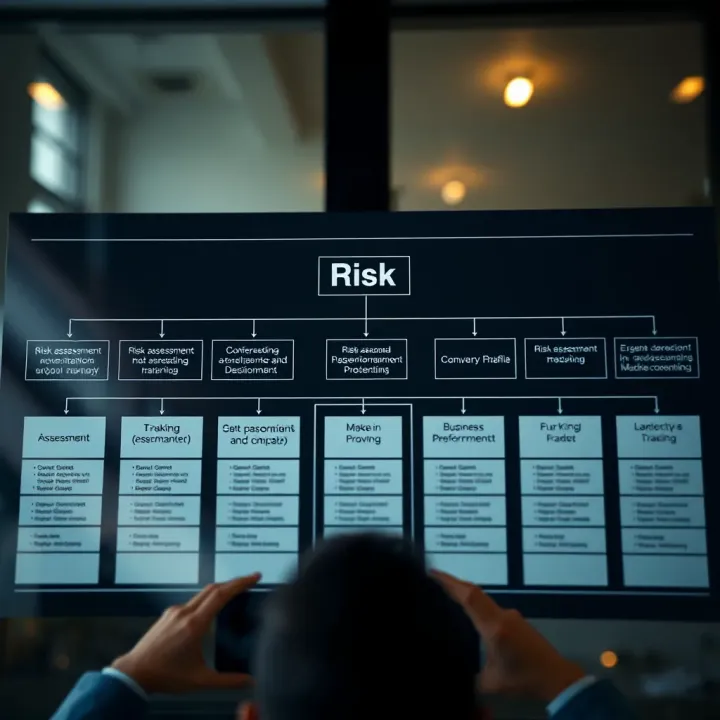
🔍 Learn how risk management tools help Pakistani businesses spot, assess, and reduce risks effectively. Make smarter decisions and protect your investments today.

📊 Risk management guides businesses and individuals to spot and tackle uncertainties, reducing losses and seizing chances for long-term stability in Pakistan’s changing climate.

🔐 Effective risk management in information security helps Pakistani businesses identify, assess, and reduce cyber threats, protecting sensitive data through strong policies and practical strategies.
Based on 14 reviews