

Understanding Binary Quotes in Trading
🔎 Learn how binary quotes work in trading binary options, their impact on market analysis, key strategies, and essential risks for Pakistani traders 📊💡
Edited By
Sophie Mitchell
Risk management tools are essential for traders, investors, and finance professionals who want to make well-informed decisions in Pakistan's dynamic markets. These tools help you identify potential risks, assess their impact, and take steps to reduce or eliminate them. Proper use of such tools can safeguard your investments against uncertainties like market volatility, political shifts, or sudden regulatory changes.
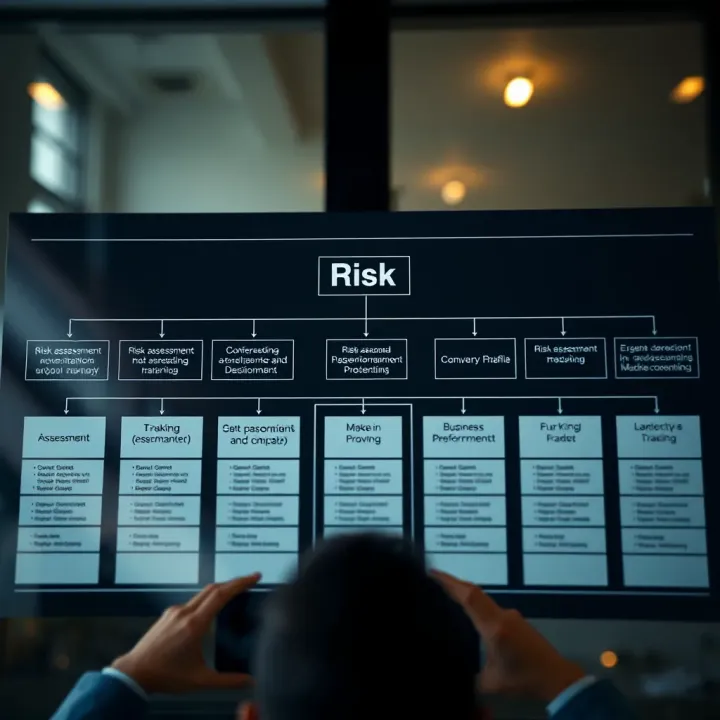
Without a systematic approach to risk, businesses and individuals often face unforeseen losses. Even a savvy investor can get caught off guard if they don’t regularly evaluate risks tied to their portfolios or operations. For example, a textile export company in Faisalabad might rely heavily on international shipping schedules. If global trade tensions rise or there is sudden currency devaluation, they could lose millions. Risk tools help spot such vulnerabilities early and prepare countermeasures.
Risk Assessment Matrix: This visual tool rates risks based on their likelihood and impact, helping prioritise which risks need urgent action. A Karachi-based SME can use this to manage credit risk from clients.
Value at Risk (VaR): Frequently used by traders and banks, VaR estimates potential loss in investments under normal market conditions over a certain time period, such as one day or one month.
Scenario Analysis: This involves imagining different economic or political situations and their effects on investments.
Stress Testing: Goes beyond typical scenarios to evaluate how extreme events, like a sudden interest rate hike by the State Bank of Pakistan, could affect assets.
Risk Registers: A simple log where all identified risks are recorded with their causes, consequences, and mitigation measures. This is easy to maintain and update regularly.
Using multiple tools together provides a clearer risk picture and stronger defence against surprises.
Finance professionals dealing in PSX stock portfolios often use VaR to keep their downside in check. Meanwhile, SMEs compensate for loadshedding problems and supply chain delays by conducting scenario analysis. Banks frequently maintain risk registers to comply with SBP regulations and to track credit defaults.
In short, understanding and applying these tools improves decision-making by converting guesswork into measurable data. Whether you are investing Rs 10 lakh or managing a multi-crore business, smart risk management is the difference between staying afloat or getting sunk.
Risk management tools form the backbone of effective decision-making in today’s fast-moving business environment. Particularly for traders, investors, and finance professionals, understanding these tools helps in spotting potential pitfalls early on and planning responses smartly. These basics guide users in selecting the right methods to identify, evaluate, and control risks in various contexts.
Risk management tools are methods or instruments used to identify, assess, and mitigate risks that might affect an organisation’s objectives. Their main purpose is to provide a structured approach to foresee possible problems before they happen, helping businesses avoid losses or costly surprises. For example, a risk register—common in Pakistani firms—helps track threats alongside their likelihood and impact.
These tools play a practical role in turning uncertain situations into manageable challenges. They provide data and insights that support better judgment by quantifying risks or categorising them, so decision-makers don’t rely on gut feeling alone. Without these tools, many risks remain hidden until they cause serious damage.
By offering clear frameworks to analyse risks, these tools help leaders weigh options carefully. For instance, a stock trader can use scenario analysis to understand how economic changes might influence portfolio returns. This reduces knee-jerk reactions and promotes more calculated strategies.
Moreover, risk management tools aid in prioritising where to focus time and resources. They highlight which risks require immediate attention and which ones are less threatening, ensuring decisions align with a company’s capacity and goals. This is vital in sectors with tight budgets, such as small or medium Pakistani enterprises.
Financial risks involve any threats to a company’s cash flow, revenue, or assets, such as currency fluctuations or credit defaults. Operational risks relate to breakdowns in day-to-day activities, like equipment failure, supply chain delays, or staff shortages. For example, a textile factory in Faisalabad facing frequent power outages (loadshedding) experiences operational risks that can halt production.
Managing these risks means protecting both the balance sheet and the workflow. Tools like cash flow forecasts or process mapping help spot vulnerabilities early, so mitigation plans—such as backup generators—can be put in place.
Strategic risks arise when changes in market conditions or competitor actions threaten long-term business goals. For example, a Pakistani exporter might risk losing clients if trade policies shift unexpectedly. Compliance risks deal with legal and regulatory requirements; failing to meet these can lead to fines or license cancellations.
Risk management tools help businesses adjust their strategies on time or maintain adherence to laws. Compliance software aids in tracking requirements, while strategic risk assessments guide management in adapting plans to evolving environments.
Environmental risks include natural disasters or pollution incidents that can disrupt operations or harm communities. Given Pakistan’s vulnerability to floods and earthquakes, these risks are significant. Reputational risks involve damage to a company’s image due to negative publicity, poor service, or ethical lapses.
Employing risk tools allows organisations to develop contingency plans for emergencies and manage public relations proactively. For example, a food company might use risk registers to plan for contamination scares, maintaining consumer trust and reducing financial damage.
Effectively using risk management tools not only safeguards assets but also strengthens decision-making confidence in uncertain times, especially for stakeholders operating in Pakistan’s dynamic markets.
Effective risk management depends on the right tools and techniques. These help traders, investors, and finance professionals spot, assess, and take action on risks with more certainty. Choosing between qualitative and quantitative methods depends on the nature of risks, available data, and decision-making needs.
A risk matrix visually categorises risks based on their likelihood and potential impact. For instance, a trader might map market volatility as 'high likelihood' and 'high impact', signalling urgent attention. This tool helps prioritise risks clearly, avoiding overlooked threats.
Meanwhile, the risk register acts as a detailed log capturing identified risks, their causes, consequences, and mitigation plans. This record keeps teams aligned and ensures no significant risk is missed during decision-making. In Pakistan’s fluctuating markets, maintaining an updated risk register helps firms respond swiftly to sudden policy changes or currency fluctuations.
SWOT stands for Strengths, Weaknesses, Opportunities, and Threats. This tool gives a rounded picture of internal and external factors influencing an investment or business plan. An investor considering a textile firm might list ‘strong export network’ as a strength but note ‘dependence on imported raw materials’ as a weakness.
The analysis also highlights opportunities like expanding into new markets, while threats could include rising cotton prices or import restrictions. SWOT helps connect risk assessment with broader strategy, supporting more effective decisions.

Statistical modelling uses historical data to estimate probabilities and measure risk variables quantitatively. For example, a portfolio manager might calculate the Value at Risk (VaR) using past price movements to understand potential losses under normal market conditions.
These models provide numbers that make risk tangible, allowing better comparison and prioritisation. However, the quality depends on reliable data, which can sometimes be a challenge with limited market transparency in Pakistan.
Monte Carlo simulation goes beyond straightforward statistics by running thousands of scenarios to see a range of possible outcomes. For instance, an investor assessing a new project could simulate various revenue and cost scenarios considering market volatility and political risks.
This technique shows not only the average expected outcome but also less likely extremes, helping decision-makers prepare for worst-case situations realistically. It adds depth to the risk evaluation process.
Scenario analysis involves imagining specific future situations to test how decisions hold up under different conditions. Suppose a finance professional examines how a change in SBP's policy rate might affect lending portfolios; scenario analysis would build best-case, worst-case, and most-likely scenarios around this.
By examining these scenarios, firms can adjust strategies proactively. This keeps them flexible in Pakistan's often unpredictable economic landscape.
Using a mix of qualitative and quantitative tools provides a balanced view. While qualitative tools focus on understanding and prioritising risks, quantitative methods give measurable insights to support data-driven decisions. This combination helps finance professionals in Pakistan navigate uncertainty with greater confidence and clarity.
Businesses today face a wide range of risks that can threaten their operations and profitability. Risk management tools offer practical ways to tackle these challenges by identifying, assessing, and mitigating potential threats. For traders and investors in Pakistan, using these tools improves decision-making quality and ensures a more secure financial position.
Early detection of potential threats enables businesses to spot problems before they escalate. For example, a textile exporter in Faisalabad using a risk register can track supplier delays or currency fluctuations early, allowing quick corrective action. Early warning not only reduces financial loss but also helps maintain client trust.
Prioritising risks effectively means focusing on the most critical threats first. With many risks competing for attention, not all deserve the same level of resources. Tools like a risk matrix help rank risks by likelihood and impact, ensuring major issues—such as political instability affecting supply chains—get addressed before minor hiccups like small equipment failures. This targeted approach prevents wasting time and money.
Informed decision-making is the backbone of sound business strategy. By using quantitative tools like scenario analysis, investment firms in Karachi can anticipate market movements and prepare accordingly. This reduces guesswork and supports making choices backed by data, which is vital in Pakistan's volatile economic environment.
Optimising operational costs becomes simpler once risks are properly understood. For instance, a manufacturing unit in Lahore that uses Monte Carlo simulations to predict machine downtime can plan maintenance schedules efficiently, avoiding costly emergency repairs or production halts. Cost control through better risk management safeguards profits and increases competitiveness.
Risk management isn’t just about avoiding losses; it’s about making smarter, more confident decisions that prepare your business for whatever comes next.
Using risk management tools helps Pakistani businesses stay ahead of problems, allocate their resources wisely, and reduce needless expenses. This strategic edge is essential in today's uncertain markets, especially for traders and investors seeking stability amid rapid changes.
Implementing risk management tools is a vital step for Pakistani businesses to shield themselves against the uncertainties common in today’s market. Given the country's unique economy, regulatory environment, and frequent challenges like currency fluctuations and energy shortages, tailored risk management helps companies anticipate issues and avoid costly setbacks. Beyond just identifying risks, applying these tools supports smarter decisions and more efficient resource use, which is crucial for businesses operating on tight budgets.
Many Pakistani businesses still lack sufficient knowledge about sophisticated risk management tools. Small and medium enterprises (SMEs), especially, may rely on gut feeling or informal methods rather than structured approaches. This gap often stems from a shortage of skilled professionals trained in modern risk assessment, making it hard to analyse complex financial or operational risks effectively. For example, firms in Faisalabad’s textile sector sometimes overlook potential supply chain disruptions due to this lack of expertise.
Accurate risk management requires reliable data and supportive infrastructure, both of which can be scarce. Consistent electricity and internet outages hamper access to cloud-based tools or real-time monitoring systems. Additionally, many businesses struggle with incomplete or outdated data, which leads to ineffective risk assessments. In Karachi's manufacturing hubs, limited digitisation slows the ability to gather and analyse operational risks promptly.
Several Pakistani firms showcase how adapting risk management tools pays off. For instance, some large banks use statistical models to monitor credit risks, reducing defaults. Meanwhile, agribusinesses in Punjab have adopted weather scenario analysis to better prepare for monsoon variations, mitigating crop losses. These examples prove that even resource-limited sectors can benefit by strategically applying the right tools.
For risk management tools to be effective here, businesses must customise them considering local challenges. This might mean simplifying complex software interfaces or focusing more on operational risks like loadshedding and supply delays rather than just financial risks. A Karachi-based logistics company, for example, uses a modified risk register emphasising fuel price volatility and route disruptions common in Pakistan's urban areas.
Software solutions, including local platforms and international products adapted for Pakistan, play a growing role in risk management. Automated tools can track risks in real time and generate insightful reports, saving time and reducing human errors. For example, several Pakistani exporters use cloud-based tools to monitor foreign exchange exposures, which helps them hedge against rupee volatility effectively.
To maximise benefits, risk management tools need to integrate smoothly with companies’ current systems like ERP or accounting software. This integration avoids data duplication and ensures accurate, up-to-date information feeds into decision-making. A Lahore manufacturing firm streamlined its risk management by linking its ERP with a dedicated risk dashboard, which helped spot production bottlenecks early.
Effective implementation means choosing the right tools for your business size, sector, and challenges, while ensuring staff understand and trust these systems. Local adaptation and technology use can make a significant difference in managing risks in Pakistan's complex business environment.
Choosing the right risk management tools is essential for making sound decisions in any business. It prevents wasted time and money on solutions that don’t suit your specific needs. For traders and finance professionals in Pakistan, the choice impacts how well you can spot risks early and allocate resources effectively. Selecting tools that fit your context improves accuracy and efficiency.
The size of your business shapes the kind of risk management tools you need. A small trading firm in Lahore might manage risks differently from a large manufacturing unit in Faisalabad. Smaller businesses often require simpler, cost-effective tools with less technical overhead. Larger firms may benefit from advanced software integrating multiple risk factors across departments.
Sector-specific risks also play a major role. For example, financial sector firms face market and credit risks, while textile exporters confront supply chain and compliance risks. Recognising these differences helps pick tools that address your sector’s unique challenges, such as tools focused on market volatility or regulatory compliance.
Some businesses deal with straightforward risks, such as fluctuating currency rates or fuel prices. Others face multifaceted risks involving operational, strategic, and reputational aspects all at once. The complexity affects tool choice. Firms encountering complex risks, like conglomerates operating internationally, may require multi-dimensional risk assessment software.
For instance, a Karachi-based investment firm handling diverse portfolios will benefit from tools capable of scenario analysis and predictive modelling. Simpler setups might only need risk registers with clear risk rating systems. Aligning tool capabilities with risk complexity ensures no gaps in detection or mitigation.
Financial constraints must guide your decision. Many Pakistani small and medium enterprises (SMEs) operate with tight budgets, so free or low-cost tools with basic features can be a good start. Examples include spreadsheet-based risk matrices or free versions of project risk management apps.
In contrast, established corporations in Islamabad with dedicated risk teams can invest in comprehensive platforms offering real-time analytics and automated reporting. Keep in mind the costs of training and maintenance too. Tools that are affordable upfront but need extensive upkeep may not be practical in the long run.
Selecting a tool that your team can use confidently is critical. Complex interfaces can discourage frequent use, undermining risk monitoring. Look for software with intuitive dashboards, local language support if needed, and accessible help resources.
Hands-on training is equally important. Without sufficient training, even the best tools remain underutilised. Investing time in training enhances your team’s ability to interpret results and respond swiftly, which is vital in fast-moving markets.
Reliable data forms the backbone of effective risk management. Choose tools that offer robust data validation and error-checking features. Poor data quality leads to wrong conclusions and bad decisions.
The reporting function should allow customised reports that reflect what matters most to your business. For example, an export company might want detailed risk exposure reports on currency shifts and export regulations. Good reporting helps stakeholders grasp the risk picture clearly.
Your risk landscape will evolve. Tools you pick today should scale as your business grows or as new risks emerge. If you begin with a simple risk register, ensure it's possible to upgrade to advanced analytics without completely switching systems.
Scalable solutions save you hassle and money over time. For instance, a financial firm planning to expand into new markets will benefit from tools able to integrate additional data sources and users easily.
Choosing the right risk management tools tailored to your business’s size, risk complexity, and budget ensures smarter decision-making and safeguards your investments effectively.
Selecting tools carefully helps Pakistani traders and finance professionals stay ahead of risks, optimise resources, and build resilience in a fluctuating market environment.
Risk management tools are evolving quickly, shaped by new technologies and changing business needs. For traders, investors, and finance professionals, staying ahead means understanding these trends to make sharper decisions, reduce losses, and capitalise on opportunities. Advanced methods such as artificial intelligence (AI) and cloud computing have started changing how organisations spot and handle risks, offering speed, accuracy, and collaboration like never before.
Predictive analytics uses historical data and algorithms to forecast future risks before they materialise. For example, Pakistani financial firms can use predictive analytics to monitor stock market shifts or currency fluctuations, helping avoid sudden losses. It allows decision-makers to anticipate patterns—like seasonal demand changes or emerging fraud trends—and plan accordingly.
Besides spotting trends, AI-driven predictive models can adjust as new data comes in, improving their accuracy over time. This dynamic approach means firms can respond quickly to uncertain conditions instead of relying solely on past experiences or static models.
Real-time risk monitoring involves continuous scanning of risk indicators using automated systems. Unlike traditional reports that come after the fact, real-time tools provide instant alerts on suspicious transactions, market volatility, or cyber threats. In Pakistan’s financial sector, where fast-changing situations can have outsized impacts, real-time monitoring helps in swiftly managing exposures.
For instance, a bank can flag irregular customer activity immediately, reducing fraud-related losses. Traders can also get up-to-the-minute updates on market swings, allowing faster responses on buy/sell decisions. This immediate insight lowers reaction time and minimises damage.
Accessibility and flexibility have improved with cloud-based risk management platforms. These solutions eliminate heavy upfront costs and allow firms—big or small—to access powerful tools via internet from anywhere. For Pakistani businesses spread across cities, cloud platforms enable flexible risk assessments without needing expensive infrastructure.
Cloud systems also scale with your needs. If market conditions demand more intensive data analysis, you can upgrade easily without overhauling your entire setup. This adaptability means businesses do not get stuck with outdated or limited tools.
Improved communication among teams comes naturally from cloud platforms that support real-time collaboration. Different departments—like compliance, finance, and operations—can work together smoothly on the same risk reports and dashboards. This reduces disconnects often seen in traditional setups where information gets stuck in silos.
Teams can comment directly on findings, share updates instantly, and assign responsibilities, speeding up risk mitigation efforts. In Pakistan’s fast-moving markets, better communication helps avoid costly misunderstandings and ensures everyone is aligned on the latest risks.
Embracing these future trends enhances decision-making by combining smarter data use with seamless teamwork. Pakistani professionals should explore AI and cloud-based tools that fit their business needs to stay competitive and manage risks effectively.
🔎 Learn how binary quotes work in trading binary options, their impact on market analysis, key strategies, and essential risks for Pakistani traders 📊💡

📘 Learn about binary relations with clear examples, types, and everyday applications in math and computer science, tailored for curious minds in Pakistan.

📊 Explore practical binary options trading tips for Pakistani traders! Learn strategies, manage risk, avoid common errors, and trade smarter today.

Explore binary options trading in Pakistan 🇵🇰 Understand how it works, legal status, risks, and get practical tips to trade wisely in the local market 📈
Based on 5 reviews