
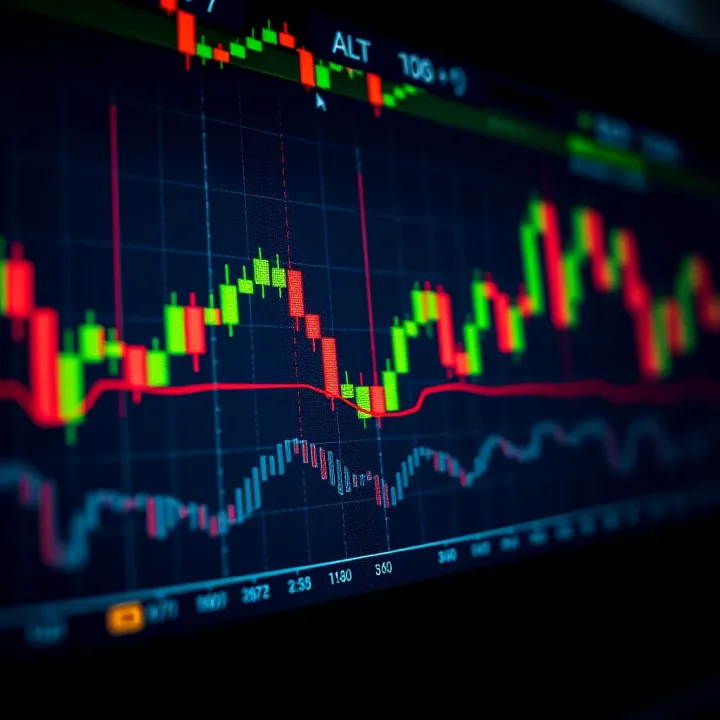
Guide to Common Candlestick Patterns in Trading
📊 Master candlestick patterns with our detailed guide! Learn key setups for stock trading plus get handy PDF resources to sharpen your skills today.
Edited By
Charlotte Hughes
Candlestick chart patterns form the backbone of technical analysis for traders active in stocks, forex, and commodities markets. These patterns reveal price movements visually, giving you a practical edge in anticipating market shifts. Pakistani traders, whether dabbling in the PSX or forex pairs like USD/PKR, benefit greatly from mastering these charts.
Unlike line graphs, candlestick charts display the opening, closing, high, and low prices within a given timeframe, making it easier to spot trends and reversals. For instance, a bullish engulfing pattern could indicate a potential rise in a stock's price, while a shooting star might warn of an impending drop.
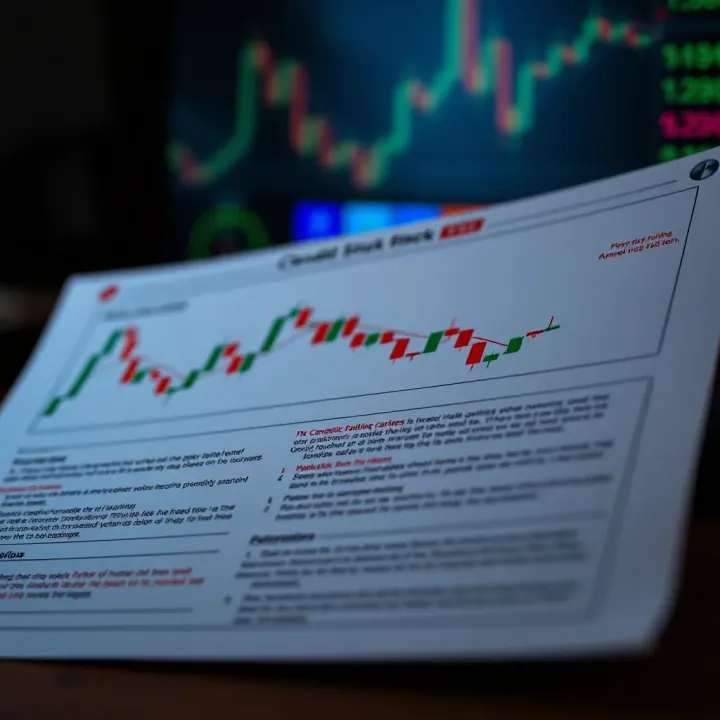
Learning these patterns isn't just about spotting shapes; it's about understanding market sentiment behind them, such as buyer or seller strength. That's why having a reliable PDF guide focused on candlestick patterns can streamline your study process, letting you review and practise trading strategies even offline.
A PDF resource tailored for Pakistani traders should include examples relevant to our markets, such as KSE-100 index movements or popular forex pairs, along with Urdu transliterations or explanations where helpful. This ensures the concepts stick better and are easier to apply.
Successful trading depends on quick recognition and accurate interpretation of candlestick patterns, so consider using well-structured PDFs for constant reference and practice.
Many PDFs will also highlight key considerations like volume confirmation and the impact of news events, which are crucial when dealing with volatility seen during Eid seasons or election cycles here.
To get the most from these resources, focus on:
Basic candlestick components and terminology
Common patterns like Doji, Hammer, and Harami
How patterns align with overall market trends
Practical trading setups derived from these patterns
Risk management tips paired with pattern recognition
Equipped with this knowledge and a comprehensive PDF at hand, you can deepen your technical analysis skills and make informed trading decisions suited to Pakistan's dynamic financial markets.
Candlestick charts serve as a vital tool for traders, especially in markets like Pakistan’s stock exchanges and forex trading, where price movements can be quite volatile. Understanding these charts helps traders read market behaviour quickly and make informed decisions.
Definition and origin of candlestick charts
Candlestick charts originated in Japan during the 18th century, developed by rice traders to visualise price actions efficiently. They provide a clear view of price fluctuations within a set period, capturing open, close, high, and low prices in a single visual unit known as a “candlestick”. Their introduction changed trading worldwide by making price trends easier to spot at a glance.
Components of a candlestick: body, wick, and shadows
A candlestick comprises three parts: the body, which shows the difference between opening and closing prices; the wick or shadow, which extends above and below the body indicating the highest and lowest prices during the period. A filled or coloured body usually means the closing price was lower than the opening (bearish), while a hollow or lighter body shows the opposite (bullish). For instance, in the Karachi Stock Exchange, spotting longer upper shadows could hint at resistance levels, helping traders plan entry or exit points.
How candlesticks display price movements
Each candlestick gives a mini story of market behaviour for a specific timeframe—daily, hourly, or even minutes. Rapid price jumps show as long shadows, while steady trends produce consistent body sizes. This immediate snapshot allows Pakistani traders to react swiftly to changes, for example, identifying reversal points during volatile sessions influenced by SBP announcements or election news.
Visual clarity and ease of interpretation
Candlestick charts use colour and shape to make data easier to digest compared to line charts or bar charts. A trader can spot bullish or bearish trends quickly without crunching numbers. For example, during Pakistan’s market openings, a trader can notice a cluster of bullish candlesticks signalling momentum without analysing each price point individually.
Comparison with other chart types used in Pakistani markets
Unlike line charts that only track closing prices or bar charts offering less visual contrast, candlestick charts present complete price action details in a compact form. This contrast is especially useful for traders at brokers like AKD Securities or Arif Habib Limited, where quick reaction to emerging trends can significantly affect returns.
Role in identifying market sentiment
Candlesticks tell us more than price—they reflect trader psychology. Patterns like Doji suggest indecision, while engulfing candles indicate strong sentiment shifts. Recognising these helps navigate Pakistan’s often news-driven markets. For instance, following an SBP interest rate cut, bullish engulfing patterns may emerge, suggesting growing investor confidence.
Mastering candlestick charts sharpens a trader’s ability to anticipate market moves, combining price information with trader emotions in a single glance.
Understanding these basics equips traders to use candlestick charts effectively, increasing their chances of better timing in buying or selling assets across Pakistan’s diverse financial markets.
Candlestick patterns form the backbone of technical analysis for traders. Recognising key patterns allows traders to anticipate market moves, manage risk, and make informed trades. While there are many candle patterns, focusing on the most reliable ones helps in clearer decision-making, especially in volatile markets like Pakistan’s stock and forex scenes.
The Doji candle reflects indecision in the market when the opening and closing prices are nearly equal. This pattern suggests a balance between buyers and sellers, often signalling a potential trend reversal or pause. For example, in Pakistan's stock market during a period of cautious trading due to political uncertainty, spotting a Doji after a strong uptrend could hint that the buying pressure is weakening.
Different Doji forms like the Long-Legged Doji indicate stronger hesitation, while the Dragonfly Doji suggests possible bullish reversal when found at the bottom of a downtrend. Traders should watch for confirmation from the next candles before acting.
Both the Hammer and Hanging Man have small bodies with long lower shadows but appear in different contexts. The Hammer appears after a downward move and signals a bullish reversal as buyers step in after initial selling pressure. On the other hand, the Hanging Man emerges after an uptrend, warning about a possible bearish turn. In Pakistan’s forex market, say watching the USD/PKR pair, a Hammer at crucial support could be a sign to consider a buy position.

These patterns also suggest potential reversals but differ in shadow placement. The Inverted Hammer comes at the bottom of a decline, hinting at a bullish reversal when buyers start to fight back despite initial selling. The Shooting Star shows up after an uptrend with a long upper shadow, warning of a possible bearish reversal. Applying this to commodity trading in Pakistan, a Shooting Star near resistance on a crude oil chart could indicate a short-term price drop.
Engulfing patterns involve two candles where the body of the second completely covers or "engulfs" the first. A Bullish Engulfing pattern after a downtrend signals strong buyer interest, often marking the start of an upward move. Conversely, the Bearish Engulfing pattern at the top of an uptrend warns of sellers taking over.
For instance, in the PSX during volatile sessions, spotting a Bearish Engulfing near the peak of a rally can save traders from potential losses by indicating a pullback.
These three-candle patterns provide clear reversal signals. The Morning Star starts with a bearish candle, followed by a small-bodied candle showing indecision, and then a strong bullish candle signaling a trend reversal upward. The Evening Star is the inverse, indicating potential downward reversal. Traders in Pakistan’s equity markets often use these patterns at critical support or resistance levels for entry or exit decisions.
These are powerful continuation or reversal patterns. Three White Soldiers consist of three consecutive long bullish candles closing progressively higher, suggesting sustained buying strength. Three Black Crows show the opposite with three bearish candles signalling strong selling pressure.
In practical terms, if a trader sees Three White Soldiers forming in a heavily traded stock like Pakistan Petroleum Limited (PPL), it may encourage holding long positions. Meanwhile, Three Black Crows appearing on the same stock could warn to tighten stop-losses.
Mastering these key candlestick patterns simplifies analysing charts and supports smarter trading decisions. It’s essential to combine pattern recognition with market context and volume to confirm signals."
Candlestick chart patterns offer valuable clues about market behaviour, but their true potential is realised only when applied correctly in specific contexts. For Pakistani traders, understanding how to read these patterns amid local market conditions and combining them with other technical tools can improve decision-making and reduce risks.
Local market volatility in Pakistan often reflects political uncertainties, currency swings, and economic indicators released by the State Bank of Pakistan (SBP). This means candlestick patterns may behave differently here compared to developed markets. For example, during times of rupee depreciation, a bullish engulfing pattern might show hesitation rather than strength, since traders factor in fundamental concerns alongside price signals.
Daily Pakistan Stock Exchange (PSX) volatility can also affect pattern reliability. Traders should watch for sharp upswings or downswings caused by sudden news, like Federal Board of Revenue (FBR) tax announcements or budget policies, which can produce candlesticks with long wicks or gaps. Recognising these influences helps avoid false signals and better interpret the underlying market sentiment.
Integrating candlestick analysis with fundamental elements is essential. Rupee fluctuations directly impact foreign investment sentiment and local trading volumes, which in turn shape candlestick formations. Similarly, SBP decisions on interest rates or monetary policy can trigger immediate market shifts detected early via candlestick patterns. For instance, after an unexpected SBP policy rate hike, bearish candle formations across multiple sessions may indicate selling pressure ahead.
Traders should stay updated on macroeconomic reports and link them to observed patterns. This approach avoids making trades based on chart shapes alone, adding a layer of confirmation through fundamental awareness.
Support and resistance levels serve as vital reference points alongside candlestick patterns. When a bullish hammer forms near a known support level on PSX or forex charts, it carries more credibility as buyers defend that price. Conversely, a shooting star near resistance might signal sellers stepping in, confirming reversal chances. Identifying these levels using past price highs and lows or pivot points enhances pattern reliability.
Volume indicators supply context missed by candlestick shapes alone. Rising volume during a bullish engulfing pattern suggests genuine buying interest, while weak volume signals cautious traders. Moving averages, like the 20-day or 50-day simple moving average (SMA), help spot trends. A candlestick pattern occurring above or below these averages aligns with trend continuation or reversal signals, making for better trading entries and exits.
The way candlestick patterns apply differs by trading timeframes. Intraday traders on platforms like the Karachi Stock Exchange may rely heavily on short-term patterns combined with fast-moving averages and volume spikes, capturing quick price moves. On the other hand, long-term investors might focus on weekly or monthly candles, using patterns to confirm trends backed by fundamental factors such as SBP monetary policies or fiscal events.
The understanding of when and how to use candlestick patterns, especially in tandem with other analysis tools and market context, greatly sharpens trade timing and risk management for Pakistani traders.
Candlestick patterns alone don’t guarantee profitable trades; success lies in their smart integration with broader market insights and technical signals.
Always check candlestick signals against local market events and fundamental data.
Use support and resistance levels to validate pattern strength.
Consider volume and moving averages for trend confirmation.
Adapt pattern use according to your trading timeframe, whether intraday or long-term.
This balanced approach helps you make more informed, confident trading decisions in Pakistan’s dynamic markets.
For traders, having easy access to well-organised PDF guides on candlestick chart patterns can significantly enhance their learning curve and day-to-day trading decisions. These PDFs serve as ready references that help understand patterns clearly, especially in the fast-moving Pakistani stock and forex markets. The consistency of content across PDFs also builds a reliable knowledge base that traders can consult anytime.
Many Pakistani traders face intermittent internet issues or loadshedding, making online resources unreliable at times. PDFs allow you to download materials once and study without internet access, which is handy during commuting or market hours. For instance, you can keep a PDF on your mobile or laptop and check candlestick formations quickly when analysing stocks on the Pakistan Stock Exchange (PSX).
Quickly flipping through bullet points or pattern illustrations in a PDF works better than scrolling multiple webpages when you need an immediate refresher. This convenience makes PDFs a practical tool, especially for beginners who want to build confidence before risking capital.
Many PDF guides present candlestick patterns in clear, standardised layouts that simplify complex information. Some are even available in Urdu or bilingual formats, which widen accessibility in Pakistan’s diverse trader community. These formats often include colour-coded charts, step-by-step explanations, and local examples, making concepts easier to grasp.
Using standardised PDFs ensures that you’re following tried-and-tested methods rather than scattered or inconsistent online notes. This helps prevent confusion, especially when you compare terms and interpretations commonly used across Pakistani brokerages and educational institutes.
Platforms like the Pakistan Stock Exchange website and regulatory bodies occasionally share educational PDFs that cover fundamental and technical analysis, including candlestick patterns. These are trustworthy sources since the information aligns with local market regulations and trading norms.
Similarly, respected trading education sites often offer free or paid PDFs authored by experienced Pakistani traders or market analysts. These resources reflect real market conditions, such as the impact of SBP policies or rupee fluctuations, which global materials may not cover adequately.
Several local brokers provide downloadable PDF guides as part of their client services. For example, brokers in Lahore or Karachi might offer PDFs explaining candlestick patterns with examples from PSX or forex pairs popular among Pakistani investors. Following such broker recommendations helps to get resources that suit regional trading styles and regulatory requirements.
Besides brokerages, financial news portals and trading forums within Pakistan also share or review quality PDFs. These channels often highlight recent updates or new analysis techniques relevant to the local market, which you won’t easily find abroad.
Mobile phones are the primary device for many Pakistani traders, making PDF organisation essential. Traders should use file management apps to categorise their downloaded PDFs by topic or market segment. For example, create folders for ‘Forex Patterns’, ‘PSX Analysis’, and ‘Commodity Charts’ to avoid confusion.
Some PDF readers also allow you to highlight, add notes, or bookmark pages. This feature is useful for quickly revisiting complex candlestick formations or marking sections you want to explore during live trading sessions. With efficient organisation, PDFs become more than static documents—they turn into interactive learning tools tailored to your trading journey.
Keeping reliable, well-structured PDF resources on candlestick patterns lets traders sharpen skills and make informed decisions even when offline or under time pressure. In Pakistan’s dynamic markets, this practical edge can make a significant difference.
Candlestick patterns are valuable tools, but traders often fall into traps that can cost them dearly. Recognising common mistakes helps sharpen your analysis and improves trading decisions, especially in volatile markets like Pakistan’s stock, forex, and commodity markets. Avoiding these pitfalls is vital to apply patterns effectively.
Over-reliance on single signals can lead traders astray. For example, spotting a bullish engulfing pattern might tempt you to buy immediately, but relying solely on this signal without additional validation increases risk. Single candlestick patterns alone can sometimes give false signs during choppy or low-volume conditions, which are quite common on Pakistan Stock Exchange (PSX) during uncertain times. Experienced traders know not to jump in based on one candle; instead, they wait for further evidence.
Confirmation by other technical indicators or subsequent price action reduces the chances of false signals. For instance, seeing a hammer candlestick forming near a known support level, coupled with rising volume, strengthens the case for a trend reversal. Without confirmation, you might enter too early and face unexpected losses.
Importance of volume and trend confirmation cannot be overstated. Candlestick patterns show price action but say little about participation. Volume acts as the voice behind these patterns. For example, when a morning star pattern forms with above-average trading volume on PSX, it suggests genuine buying interest, making the bullish prediction more trustworthy.
Similarly, recognising the broader trend context matters. If a bullish pattern appears during a strong downtrend without signs of trend weakening, the pattern’s reliability drops. Traders ignoring this may get stuck in losing trades. Confirming a candlestick pattern with moving averages or RSI (Relative Strength Index) helps align trades with overall market momentum.
Impact of macroeconomic announcements on candlestick signals is significant. Pakistan’s market often reacts to SBP’s policy decisions, inflation data, or geopolitical events. A candlestick pattern forming just before a major SBP announcement might be invalidated immediately after, as news can trigger sharp moves that override technical patterns.
For example, a bearish shooting star might suggest a reversal, but if the next day SBP unexpectedly cuts interest rates, the market may surge regardless. Traders must watch economic calendars and avoid heavy reliance on candlestick signals during such periods.
Considering regional events like election outcomes or SBP policies is equally important. Pakistani markets react strongly around election times with unpredictable volatility. A traditional bearish pattern might fail amid political optimism, or a classic bullish setup might falter due to uncertainty.
Similarly, changes in tax policies by FBR or shifts in rupee value following foreign aid announcements can disrupt usual price patterns. Using candlestick charts without factoring these external events can mislead traders into wrong trades. Always combine pattern analysis with timely local news to avoid surprises.
Successful trading with candlestick patterns requires reading beyond the candles themselves. Confirmation using volume, trends, and awareness of macro events helps avoid common errors and greatly improves your chances of consistent profits.
By steering clear of these common mistakes, Pakistani traders can use candlestick chart patterns more reliably and confidently in their decision-making.
📊 Master candlestick patterns with our detailed guide! Learn key setups for stock trading plus get handy PDF resources to sharpen your skills today.

📊 Explore detailed chart patterns in trading with PDF resources. Enhance technical analysis skills for Pakistan traders & investors with this comprehensive guide.

Master key candlestick patterns 📈 to improve trading decisions in Pakistan. Learn practical tips & download a PDF guide with 35 strong patterns today!
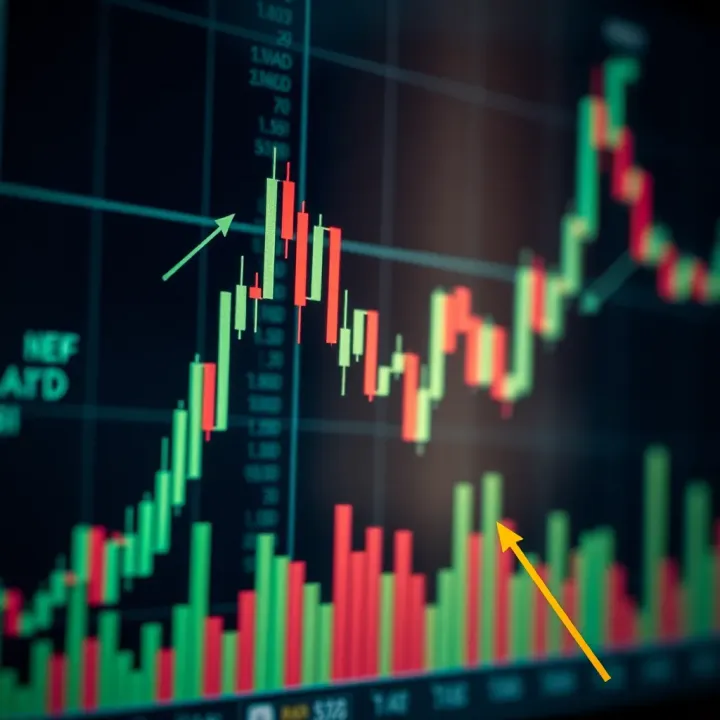
📉 Learn to spot bearish candlestick patterns and improve your trading game in Pakistan. Get practical tips for technical analysis and market insights.
Based on 13 reviews