
Best Forex Trading Platforms for Pakistani Traders
Find the best forex trading platform for Pakistani traders 🇵🇰. Learn about features, costs, regulations, usability & tools to make smarter trades! 💹
Edited By
Mark Evans
Forex trading graphs form the backbone of market analysis for traders in Pakistan and worldwide. These graphs provide a visual summary of currency price movements over time, making it easier to spot trends and potential entry or exit points. Without understanding these charts, even experienced traders may miss vital signals that affect profitability.
Most forex traders rely on three key types of charts: line charts, bar charts, and candlestick charts. Each offers different levels of detail:
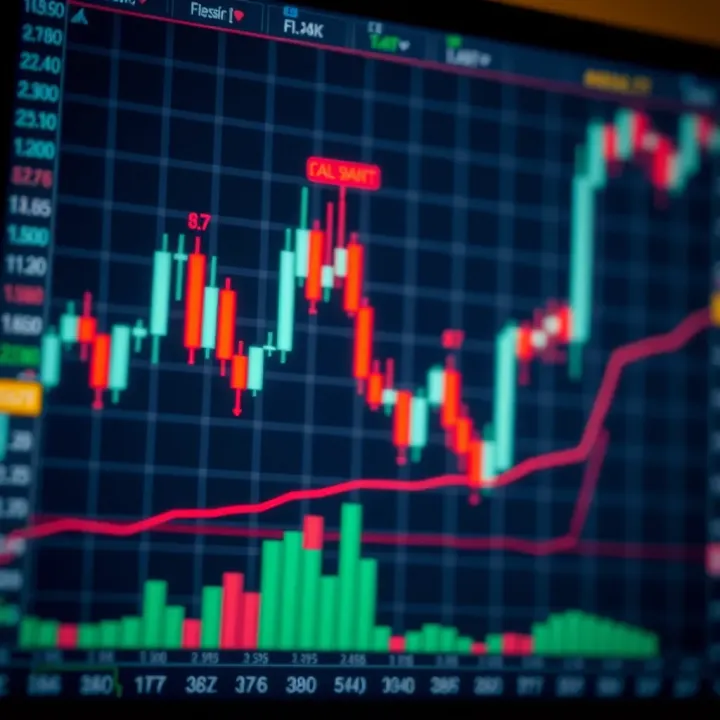
Line charts connect closing prices over a period, giving a clear picture of overall direction but limited insight into daily price fluctuations.
Bar charts display opening, closing, high, and low prices, helping traders recognise volatility and price range during a specific time frame.
Candlestick charts combine price information with colour-coded bodies and shadows, making it straightforward to see bullish or bearish sentiment. This format is popular among Pakistani traders for its clarity and ease of pattern recognition.
Learning to read and interpret these charts allows traders to anticipate market behaviour, manage risks effectively, and make informed decisions promptly.
Besides chart types, understanding key indicators is essential. Tools such as Moving Averages, Relative Strength Index (RSI), and Bollinger Bands provide quantitative support to the visual data. For example, a trader using RSI can detect overbought or oversold conditions, helping avoid poor timing in trades.
Integrating graphs with these indicators equips traders to spot common chart patterns such as head and shoulders, double tops, or triangles. These patterns often signal potential reversals or continuation of trends, valuable for choosing when to enter or exit the market.
In summary, mastering forex trading graphs means more than reading lines and bars; it requires combining visual data with analytical tools to navigate the forex market's ups and downs confidently. This knowledge helps Pakistani traders avoid common pitfalls and improves their chances of consistent success.
Forex trading graphs give traders a clear picture of how currency prices change over time. These charts are fundamental tools in forex trading, helping traders track market trends and make well-informed decisions. Without them, understanding the ebb and flow of currency values like the Pakistani rupee against the US dollar would be a shot in the dark.
Forex charts display price movements in a visual format, which is much easier to interpret than raw numbers or tables. For example, a trader watching the USD/PKR pair can see how it reacts to events like State Bank of Pakistan (SBP) policy announcements or geopolitical developments at a glance. This visual insight helps traders notice long-term trends and short-term swings, assisting in better forecasting.
Charts also support technical analysis—a method that uses past price data to predict future movements. Indicators like moving averages or Relative Strength Index (RSI) are overlaid on these graphs to spot strength or weakness in a currency pair. For instance, if the RSI for EUR/PKR shows overbought levels, a trader might consider it a signal to sell.
Understanding when to enter or exit a trade can make or break profits. Forex trading graphs provide real-time information, enabling traders to time their moves precisely. For example, watching candlestick formations during Pakistan Stock Exchange (PSX) market hours can indicate ideal points to buy or sell, reducing guessing and improving risk management.
Every forex chart has a vertical price axis (usually on the right side) and a horizontal time axis at the bottom. The price axis shows the currency price, while the time axis tracks the period—minutes, hours, days, or weeks. This layout lets traders see how prices fluctuate within any chosen timeframe, whether seconds during a volatile session or months for long-term trends.
Volume indicators on charts show the amount of trading activity during each time period. In forex markets, volume can highlight the strength behind price moves. For example, a sharp price rise with increasing volume suggests strong buying interest, while rising prices with low volume may hint at a weak rally. Pakistani traders often consider volume when assessing the impact of local economic news.
Candlesticks and price bars depict price action within a set period, showing the opening, closing, high, and low prices. Candlesticks are particularly popular because their body and wicks visually display market sentiment. A long green candle on USD/PKR after an SBP rate cut signals bullish momentum, while a red candle indicates selling pressure. Understanding these basics prepares traders to interpret more complex patterns.
Mastering the basics of forex trading graphs forms the backbone of effective trading strategies, helping traders in Pakistan navigate market moves with confidence.
Forex trading graphs come in various formats, each serving a unique purpose for traders. Understanding these basic types can help you pick the right chart for your trading style and analysis needs. In forex markets, where prices change rapidly, the clarity and detail provided by the type of graph you use can directly influence your decision-making.
Line charts are the simplest form of forex charts. They connect closing prices over a certain period with a single continuous line, giving you a quick snapshot of the price trend. For beginners getting acquainted with market movements, line charts present a clear, uncomplicated picture without the clutter of too much data.
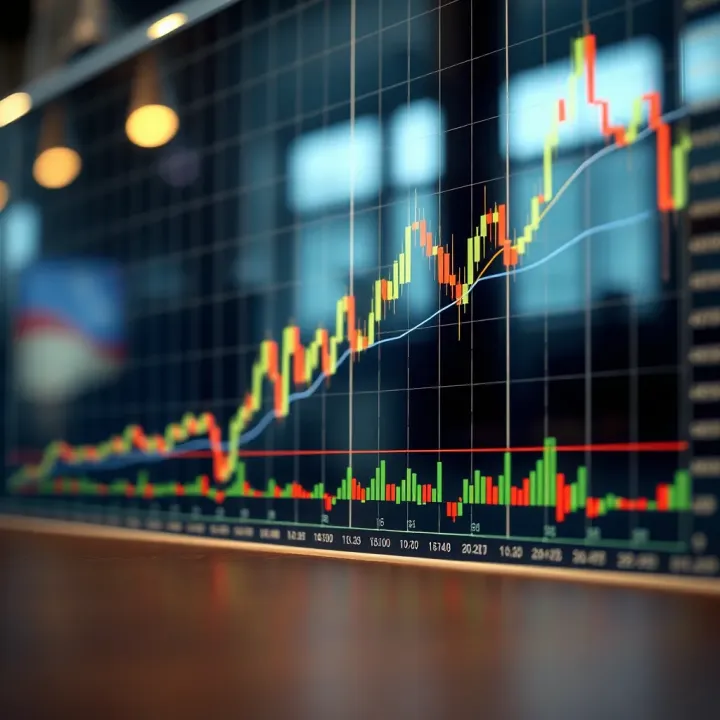
These charts are particularly useful for spotting long-term trends easily, like the overall direction of the USD/PKR over several months. However, their simplicity comes at a cost. Since they ignore open, high, and low prices, they can miss vital price action details that more advanced charts reveal.
Bar charts offer more detailed price information by displaying the open, high, low, and close (OHLC) prices for each trading period. Each vertical bar represents the range between the highest and lowest price, with horizontal ticks indicating open (left) and close (right) prices. This format enables traders to better understand price volatility within a session.
For example, in a volatile session where USD/PKR swings dramatically, a bar chart shows these fluctuations clearly. This granularity helps traders spot potential reversals or breakouts more reliably than simple line charts.
Interpreting OHLC data on bar charts allows for better market timing. If the close is near the high of the bar, it suggests buying strength; if it’s near the low, selling pressure may dominate. Recognising such subtle cues can improve entry and exit strategies.
Candlestick charts build on bar charts but offer visual clarity through colour coding and shape, making market sentiment easier to read at a glance. Each candlestick consists of a body (the open-to-close range) and wicks (the high and low prices), which together tell a story of market behaviour during the chosen timeframe.
Common candlestick patterns — like dojis, hammers, and engulfing bars — are powerful indicators of potential trend shifts or continuations. For instance, a hammer pattern forming in the USD/PKR chart near a support level can indicate a possible reversal upwards, signalling traders to consider buying.
Candlestick charts combine detailed price information with intuitive visuals, making them the most widely used tool among forex traders worldwide. Their patterns act like a language that, once learned, helps you read the market's next move with more confidence.
In summary, each type of forex trading graph has its strengths and weaknesses. Line charts provide simplicity, bar charts offer depth, and candlestick charts deliver both detail and visual insight. Choosing the right chart depends on your trading approach, but a good trader tends to explore multiple types to get a well-rounded market perspective.
Indicators turn raw price data into meaningful insights for forex traders. They help make sense of confusing market movements by highlighting trends, momentum, and volatility. Without indicators, spotting entry or exit points purely by eyeballing charts can be tricky, especially in Pakistan’s fast-moving currency market. Traders often combine several indicators to confirm signals and reduce risk.
The Simple Moving Average smooths out price data by averaging closing prices over a chosen period. For example, a 20-day SMA adds up the last 20 days’ closing prices and divides by 20. This creates a line that shows the average price trend, filtering out random daily ups and downs. SMA helps traders spot general direction—whether the currency pair is trending up, down, or sideways.
Unlike SMA, the Exponential Moving Average gives more weight to recent prices, reacting faster to new information. This is useful when the market changes quickly, such as during Pakistan’s interbank trading hours or after SBP policy announcements. An EMA can reveal early signs of trend shifts that an SMA might miss.
Moving averages help traders identify bullish or bearish trends. When price stays above the moving average, it points to an uptrend, while staying below suggests a downtrend. Crossovers are common signals—if the short-term moving average crosses above the long-term one, it may signal a buying opportunity. Conversely, a downward crossover might warn to sell or stay out.
RSI measures momentum and indicates if a currency is overbought or oversold on a scale from 0 to 100. Typically, readings above 70 suggest overbought conditions, hinting the price might drop soon. Readings below 30 indicate oversold conditions, implying a possible price bounce. For instance, when the PKR shows oversold RSI due to sudden political unrest, traders may anticipate a rebound.
Besides overbought/oversold zones, RSI divergence—where price moves opposite to RSI—can warn of reversals. If price forms new highs but RSI doesn’t, it may signal weakening momentum. Traders use these clues to decide when to enter or exit trades, improving timing.
Bollinger Bands consist of a moving average with two bands above and below, representing standard deviations. When bands widen, it shows increased volatility; when they contract, markets are calmer. In Pakistan’s forex market, volatility often spikes around major events like SBP rate decisions or FBR tax deadlines, noticeable as bands expanding.
Price touching or breaking the bands can signal breakouts or reversals. A move above the upper band may hint at strong buying pressure but also potential overextension. Conversely, price dropping below the lower band can indicate selling exhaustion or start of a reversal. Traders combine Bollinger Bands with other indicators to avoid false signals.
Indicators are tools to understand market mood; however, they’re not foolproof. Using them in combination—and considering Pakistan-specific factors like market hours and political news—can help you trade forex graphs more confidently.
Recognising key forex chart patterns equips traders with insights into possible price movements, helping to make smarter decisions. These patterns often signal either the continuation of current trends or potential reversals. Understanding them enables better timing for entry and exit points, especially in a market as volatile as forex.
Flags and Pennants are short-term price consolidation patterns appearing after a strong price move, typically signalling the trend will continue. Flags look like small rectangular boxes slanting against the prevailing trend, while pennants resemble tiny symmetrical triangles. For example, if the Pakistani Rupee is strengthening against the US Dollar with a sharp rise followed by a flag, it usually indicates the uptrend will resume once the consolidation ends. These patterns are useful for traders who want to ride a trend without jumping in at its initial volatile stages.
Triangles come in different shapes—ascending, descending, and symmetrical. They represent periods where price volatility narrows, and traders await a breakout. In an ascending triangle, buyers gradually push prices higher despite sellers resisting at a fixed level, often hinting at a bullish breakout. If the forex pair like USD/PKR forms this, traders may prepare to buy once the price breaks above resistance. Similarly, descending triangles usually signal bearish continuation. Triangles help traders anticipate and prepare for strong price moves, improving risk management.
Head and Shoulders is a classic reversal pattern identified by three peaks, with the middle one (head) higher than the others (shoulders). It signals a shift from bullish to bearish trend when confirmed by a break below the 'neckline'—the support line connecting the lows between peaks. In forex, spotting this pattern on the EUR/PKR chart could warn traders about an impending decline, allowing them to adjust or close long positions in time.
Double Top and Double Bottom patterns occur when price tests the same resistance or support level twice but fails to break through decisively. A double top, shaped like an 'M', indicates two failed attempts to move higher, suggesting a bearish reversal. Conversely, a double bottom, resembling a 'W', shows solid support holding up twice, forecasting a potential bullish move. For instance, if PKR/USD stalls near a price level twice and drops, it could signal a double top, pointing to a downward move ahead. These patterns offer simple yet effective signals for traders seeking to capture trend reversals.
Understanding and acting on these patterns can greatly sharpen your trading edge, especially when combined with indicators and volume data to confirm moves.
Mastering these key forex chart patterns helps traders anticipate market behaviour and align their strategies accordingly, improving chances of consistent profits in the forex arena.
Forex traders in Pakistan face unique challenges and opportunities due to local market hours, economic conditions, and geopolitical events. Understanding how to adapt forex trading graphs according to Pakistan Standard Time (PKT) and incorporating local factors can give traders a distinct edge. This includes aligning chart data with active trading sessions and integrating real-time economic announcements to time entries and exits effectively.
Pakistan’s market hours, generally aligned with regional forex centres like Dubai and limited overlap with London or New York sessions, influence when currency volatility peaks. Most active trading hours fall between 12 noon and 5 pm PKT when global markets intersect. Traders should set their chart times to PKT to accurately identify these volatility windows, allowing better decision-making about when to open or close positions.
For example, during Pakistan’s afternoon hours, USD/PKR pairs may show sharp moves as regional banks adjust to overnight global fluctuations. Missing this alignment can cause misreading of support and resistance levels on charts.
Economic events such as SBP monetary policy releases or inflation data often arrive at scheduled times during PKT working hours, triggering sudden price swings. Integrating these announcements on trading platforms helps prevent surprises.
Marking dates of Federal Board of Revenue (FBR) tax reforms, remittance trends, or government budget sagas on your charts enables traders to anticipate volatility. Ignoring these timings can lead to unexpected slippage or losses as the market rapidly re-prices currency pairs.
The Pakistani rupee is sensitive to local political stability, foreign investment flows, and remittance inflows. These factors cause recurring patterns in price action that can be seen on forex graphs.
For instance, ahead of major election results or IMF programme reviews, the rupee usually exhibits cautious consolidation with sudden breakouts post-announcement. Traders can use these chart behaviours alongside news feeds to better time their trades, avoiding choppy market conditions.
SBP policy rates directly affect forex supply-demand balance; a rate hike tends to strengthen the rupee, influencing trend direction on charts. Similarly, FBR announcements regarding import duties or currency controls impact overall market liquidity.
Traders should track these closely and correlate policy changes with forex graph shifts to validate technical signals. This approach helps distinguish genuine trend reversals from short-term noise.
Aligning technical analysis with Pakistan-specific market hours and economic updates improves accuracy and risk management for local forex traders.
By paying close attention to these practical factors, traders in Pakistan can enhance the effectiveness of their forex graphs, making smarter and timely decisions in a volatile environment.
Find the best forex trading platform for Pakistani traders 🇵🇰. Learn about features, costs, regulations, usability & tools to make smarter trades! 💹
Looking for the best forex trading broker in Pakistan? Learn to evaluate regulation, fees, platforms & customer support to trade smartly. 💹💼
Learn how binary quotes work in financial trading 📊. Understand their impact on binary options & forex, plus tips to interpret quotes effectively before trading.
Discover how to evaluate and use binary free signals for trading effectively 📊. Learn the risks, benefits, and tips to trade smart in Pakistan and beyond 🇵🇰.
Based on 13 reviews