
Best Forex Trading Platforms for Pakistani Traders
Find the best forex trading platform for Pakistani traders 🇵🇰. Learn about features, costs, regulations, usability & tools to make smarter trades! 💹
Edited By
Oliver Hughes
Keeping a detailed forex trading log is one of the most effective ways to sharpen your trading skills and improve your results. In simple terms, a forex trading log is a record where you note every trade you make—entry price, exit price, position size, strategy used, market conditions, and results. This document becomes your personal guide for reviewing what works and what doesn’t.
Why bother with a trading log? Well, the forex market moves fast, and emotions can cloud judgment. When you write down your trades and the reasons behind them, it forces discipline and gives you a clear picture of your performance. Over time, you'll spot patterns in your wins and losses that might otherwise go unnoticed.
Think about a trader in Karachi who buys USD/PKR at 280 and sells at 285, logging the economic news and technical indicators he followed. Reviewing that trade weeks later helps determine if his strategy holds consistently or if the win was just luck. That hindsight is invaluable.
Maintaining this log isn’t complicated. You can use simple spreadsheets or dedicated trading journal software tailored for forex. The key is consistency and honesty. Always document the trade details and your emotional state—were you confident or doubtful? This helps in understanding how psychology affects your decisions.
An effective trading log transforms scattered trade entries into a clear roadmap for improvement.
Here’s what you should track regularly:
Currency pair and trade dates
Entry and exit prices
Lot size and direction (buy/sell)
Stop loss and take profit levels
Reason for taking the trade (strategy, news, analysis)
Outcome and profit/loss in PKR
Personal notes on market behaviour and your mindset
By keeping such records, you empower yourself to adjust strategies based on real data, avoid repeating mistakes, and build confidence in your trading approach. This simple habit can make a real difference on the forex market, especially given the unique price swings and regulatory factors faced by Pakistani traders.
A forex trading log acts as a detailed diary of your currency market activities. It records everything from trade entries and exits to emotions felt during a trade. This log offers traders a practical way to monitor performance, spot trends, and avoid repeating mistakes.
A forex trading log captures key details about each trade, such as the currency pair, entry price, exit price, trade size, stop loss and take profit levels. It goes beyond mere numbers by including notes on market conditions and personal feelings while trading. For example, a trader might note heavy volatility on USD/PKR due to political news or express hesitation during a particular trade that eventually went south.
Having such thorough records provides a clear snapshot of trading activities, allowing you to see how your decisions play out over time. Without this, it’s easy to forget what worked or why a trade failed, making improvement difficult.
Traders who keep a consistent log gain an edge by analysing their behaviour and strategies objectively. It helps prevent emotional decisions driven by greed or fear, common pitfalls in forex trading. Say you notice losing trades often occur after skipping preparation or during certain market hours; you can adjust your plan accordingly.
Moreover, a log serves as a personal accountability tool. Knowing you'll review your trades encourages discipline—no quick, impulsive moves without reflection. Especially for Pakistani traders navigating volatile markets and fluctuating rupee exchanges, this discipline can protect capital and build confidence.
A trading log gives you a real sense of your success rate by showing wins and losses in clear terms. Rather than relying on memory or gut feeling, you have hard data revealing which trades were profitable. You might find, for instance, that trading EUR/USD during London market hours yields better results than other times.
By comparing different approaches logged over weeks or months, you can pinpoint what works best. Perhaps a strategy involving tight stop-losses on GBP/JPY performs better than a more relaxed one. The log shows these patterns, guiding you on which method to refine or abandon.
Logging stop loss and take profit levels alongside outcomes lets you assess if your risk-reward ratio is appropriate. If trades frequently hit stop losses but rarely reach take profit, it may signal you are risking too much or targeting gains too optimistically. For example, keeping risk within 1-2% of your capital per trade is a smart rule, which your log can help enforce.
Keeping a detailed forex trading log is more than record-keeping—it’s a tool that sharpens your decision-making and turns lessons from mistakes into stepping stones for success.
Having a good grip on these aspects through your trading log is the first step toward disciplined, informed trading that steadily improves your results.
A forex trading log works best when it captures all the critical details of each trade, helping you review and refine your strategies realistically. Missing key data can lead to unclear insights and poor decision-making. Let's go through the essential parts you should always record to keep your trading disciplined and data-driven.
Logging the exact date and time of each trade gives context to your decisions. Market conditions change quickly, so knowing when a trade occurred helps you link performance to specific events or sessions, such as the London or New York open. For example, a trader may notice they perform better during the Asian session due to lower volatility.
Recording which currency pairs you trade is crucial because each behaves differently. Factors affecting USD/PKR are not the same as those influencing EUR/USD or GBP/JPY. Tracking pairs helps spot patterns in your profitability for certain currencies and decide which ones to focus on.
Entry and exit points define your trade’s success or failure. Recording these prices precisely enables calculation of pip gains or losses and overall returns. For example, entering USD/JPY at 110.25 and exiting at 110.75 means a 50-pip gain, which is essential for performance review.
Logging how many lots you trade and whether your position is long or short is vital for risk assessment. A 0.5 lot short on EUR/USD carries different risk than a 1 lot long. This data clarifies exposure and position sizing, key elements for consistent money management.
Noting your stop loss and take profit gives insight into your risk-to-reward ratio per trade. It shows whether you are consistent with your risk limits or adjusting based on emotions. For example, setting a stop loss 50 pips away and take profit at 100 pips illustrates a 1:2 risk reward, a good benchmark.
Context matters—recording market conditions (trending, ranging, news releases) helps connect your trade outcomes to environment variables. A trade entered right before a major economic announcement might explain unexpected losses. This awareness aids strategy adjustments for future.
Your feelings when placing trades impact decisions. Jotting down emotions such as confidence, fear, or impatience provides a reality check during review. For example, recognising you traded impulsively after a losing streak helps to avoid repeating mistakes.
Writing why you took or closed a trade adds transparency and discipline. Was it based on a technical pattern, economic data, or gut feeling? This promotes accountability and prevents trading based on vague impulses.
Keeping a detailed, honest log builds a foundation for better forex trading. The precision and observations you note will sharpen your strategies and improve your bottom line over time.
Setting up a forex trading log correctly sets the foundation for effective tracking and analysis of your trades. Without a clear, organised log, even the best strategies can get lost in the clutter. A well-structured log allows you to spot patterns, understand your strengths and weaknesses, and make better trading decisions based on solid evidence rather than guesswork.
Spreadsheets are a popular choice among traders because they offer flexibility and ease of use. Tools like Microsoft Excel or Google Sheets let you quickly enter data, perform calculations, and create graphs to visualise your performance over time. For example, you can set formulas to calculate your win/loss ratio or average profit per trade automatically. This makes it easy to adjust your strategy based on real numbers. Plus, spreadsheets can be saved and accessed on multiple devices, handy for traders using PCs, laptops, or mobiles.
Dedicated trading journal software takes logging to another level by offering specialised features focused on forex trading. These programmes often include automatic trade import from brokers, detailed analytics, and reminders to review trades. For instance, software like Edgewonk or TraderSync guides you to record not just basic trade details but also emotions and market context, which can improve self-awareness and emotional control in trading. Such software usually includes options customised for Pakistani traders, recognising local market sessions or popular currency pairs.
Handwritten logs, though less high-tech, have their own appeal. Writing trade details by hand can help some traders remember lessons more clearly and stay engaged with the trading process. In places where internet access is unreliable or digital devices aren’t always available, a paper log is a simple, effective tool. You can customise it fully per your needs, carry it anywhere, and there's a certain satisfaction in flipping through physical pages when reviewing past trades.
Not all traders operate the same way, so your log template should reflect your trading style. Whether you focus on scalping or swing trading, day trading or position trading, your log must capture the information you find most useful. For example, a scalper may prioritise exact entry and exit seconds, while a swing trader might note larger market trends or weekly economic news. Tailoring the template helps you avoid recording irrelevant data that clutters your log, making analysis slower and less precise.
Clarity and ease of use matter most when creating your log template. If the template is complicated or cluttered, you’ll likely avoid using it consistently. Fields should be clearly named, arranged logically, and use straightforward formats (date, time, price, etc.). A clean structure encourages you to log every trade immediately, which greatly improves the accuracy and usefulness of your records. Remember, a log that’s easy to update is a log you’ll keep using day after day.
A trading log’s usefulness depends heavily on how well it fits your style and how simple it is to maintain. Invest time in setting yours up properly to save effort and improve results over the long run.
Creating and sticking to a routine for logging trades is vital for any forex trader who wants to improve consistently. Recording trade details at the right time and regularly analysing them turns data into actionable insights, preventing repeated mistakes and sharpening strategies. Without a disciplined logging habit, even the most sophisticated trading plans can lose track of what works and what doesn’t.
Logging trades immediately after execution is a practical step that helps capture details while they’re fresh. The moment a trade is placed or closed, a trader’s memory is clear about market conditions, emotions, and reasons behind the decision. For example, consider a day when sudden news impacted the PKR/USD pair—the immediate record would note this exceptional factor, which might get forgotten by nightfall. Delaying the entry risks missing such context or entering inaccurate prices.
On the other hand, reviewing trades daily or weekly builds awareness about overall performance and recurring trends. Daily reviews help identify whether the strategies followed each day are yielding the expected results or if deviations occur under certain market conditions. A weekly review, meanwhile, gives a bigger picture and allows for spotting nuances like how the trader's performance varies on Mondays compared to Fridays or during different sessions like London and New York.
Spotting patterns and recurring mistakes becomes easier when logs are kept systematically. If a trader consistently records trades where emotions like fear or greed influenced decisions, they can pinpoint those situations—for instance, rushing to close a profitable EUR/GBP trade too early during volatile Pakistan market hours. Once identified, these habits can be consciously managed or replaced with rules that prevent emotional trading.
After recognising such patterns, adjusting strategy based on insights is the logical follow-up. A trader might discover that trades using specific technical indicators work best during certain market hours or that high leverage increases losses under particular market volatility. Armed with this knowledge, they can refine entry points, set tighter stop losses, or adjust position sizes. For example, a Pakistani trader using Easypaisa to monitor funds might realise that trading more conservatively during political events improves consistency.
Developing a habit to log trades regularly and analyse them creates a feedback loop crucial for ongoing improvement. Without this, even skilled traders may miss chances to enhance performance and control risks better.
Consistent logging combined with mindful review is the backbone of disciplined forex trading. Traders in Pakistan and beyond benefit from forming this routine, as it supports clearer decision-making and helps weather market ups and downs with greater confidence.
Maintaining a forex trading log brings the most benefit when done consistently and with accuracy. However, many traders make mistakes that diminish the value of their log. Addressing common pitfalls can improve the usefulness of your records and ultimately boost your trading performance.
Skipping entries in your trading log reduces its reliability and makes it hard to see long-term trends. For example, if you miss logging trades during volatile market days, you lose essential data that could highlight weaknesses or strengths in your strategies. Over time, inconsistent logging turns your journal into a patchy record rather than a clear reference.
The habit of logging every trade can be built gradually. Start by setting aside a fixed time daily, maybe right after market hours, to input details. Using alarms or reminders on your mobile can push you to maintain this discipline. Also, keep your log easily accessible—whether on your phone or a nearby notebook—so procrastination doesn’t creep in. Traders who commit to timely and regular logging often report greater clarity in performance reviews.
Vague or incomplete notes cloud your ability to analyse trades effectively. For instance, writing "entered trade" without noting the reason or market conditions offers little insight later. Such sketchy entries make it difficult to pinpoint what influenced your decisions, leading to repeated mistakes or missed improvement opportunities.
To ensure accurate data capture, be specific and thorough. Record exact entry and exit points, reasons for taking the trade, emotions felt, and external market factors. Consider adopting checklist-style prompts in your log template to cover critical fields every time. Using dedicated trading journal software can also enforce completeness by requiring all necessary inputs before saving. Accurate and detailed logging sharpens your ability to learn and adapt your strategy over time.
Consistency and clarity in your trading log will transform it from a simple record into a powerful tool for growth and profit optimisation. Make avoiding these common errors your priority to maximise benefits.
Maintaining an effective forex trading log requires the right set of tools and resources that can handle the volume and complexity of your trades. Without these, your logging could become tedious and prone to errors, limiting your ability to analyse performance and make informed decisions. For traders in Pakistan, specific tools that align with local market conditions, internet connectivity, and platform compatibility are particularly valuable.
Many Pakistani traders rely on spreadsheet templates as they offer flexibility and ease of customisation. Microsoft Excel and Google Sheets are widely used thanks to their accessibility and built-in functions. For instance, an Excel template pre-configured to calculate profit/loss, risk ratios, and win rates can save time and reduce mistakes. Some traders prefer Google Sheets for its cloud access, allowing updates from any device, which is useful amid frequent load-shedding.
Besides general spreadsheet tools, dedicated Forex journal software like TraderVue and Edgewonk caters to serious traders aiming for deeper analysis. These platforms often feature automated charts, trade tagging, and performance reports. However, not all features may be fully accessible to Pakistani traders due to regional restrictions or subscriptions; checking local availability before commitment helps avoid wasted effort.
Look for software and templates that include:
Easy-to-use interfaces that reduce manual errors
Support for importing/exporting trade data
Customisable fields to match your trading approach
Built-in analytics for spotting trends and mistakes
Linking your trading platform directly with your trading log eliminates repetitive data entry. Many popular brokers used in Pakistan, such as FXTM and IG, offer export options for executed trades. Some platforms even provide APIs that allow traders to automate data transfer into spreadsheets or trading journal software.
Automated record-keeping ensures accuracy and timeliness. When trades automatically populate your log, you spend less time entering data and more time reviewing meaningful insights. This saves you from common pitfalls like missed entries or inaccurate records, which hamper performance evaluation.
Additionally, automated logs can provide real-time feedback on your trading patterns and risks. For example:
Instant calculation of cumulative P&L (profit and loss)
Alerts on adherence to stop-loss limits
Visualisation of win/loss streaks over days or weeks
Automation in maintaining forex logs doesn't just save time; it sharply improves the reliability of the data, leading to better trading decisions.
Using these tools and automation features allows Pakistani traders to maintain comprehensive, accurate logs with less effort, enabling a professional approach to forex trading that supports consistent improvement.
Find the best forex trading platform for Pakistani traders 🇵🇰. Learn about features, costs, regulations, usability & tools to make smarter trades! 💹
Looking for the best forex trading broker in Pakistan? Learn to evaluate regulation, fees, platforms & customer support to trade smartly. 💹💼
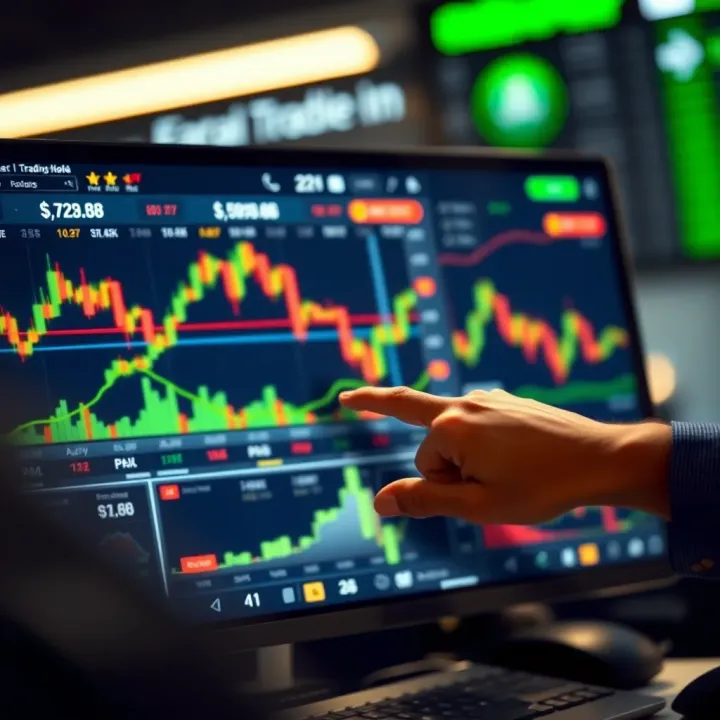
Discover key tips for Pakistani traders on choosing forex platforms 🌐 Compare fees, usability, currency options, and tools to fit your trading style ✔️
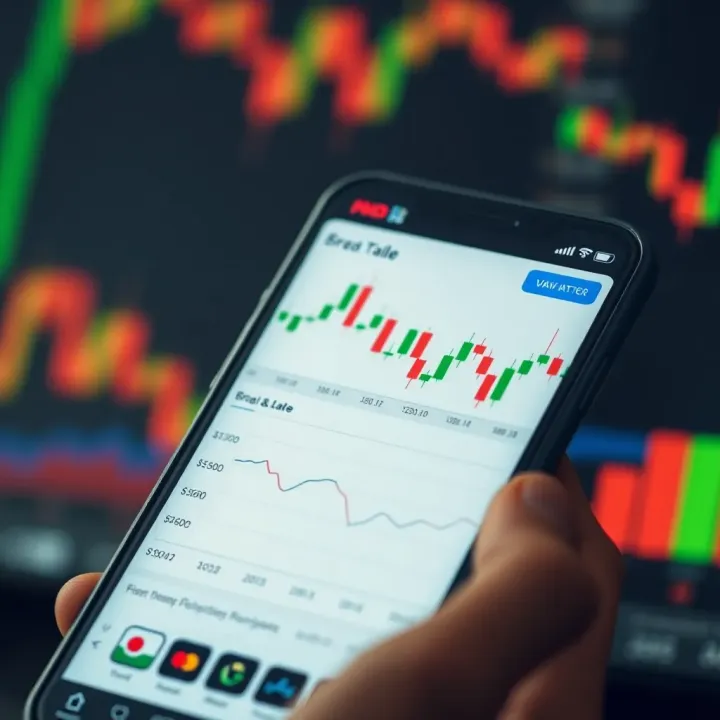
Discover the best forex trading apps in Pakistan 📈. Compare features, security, costs & usability to pick the perfect app for your trading needs!
Based on 7 reviews