
Best Forex Trading Platforms for Pakistani Traders
Find the best forex trading platform for Pakistani traders 🇵🇰. Learn about features, costs, regulations, usability & tools to make smarter trades! 💹
Edited By
Liam Walker
In Pakistan's forex trading market, news events often act like the weather—unpredictable yet hugely influential. Currency values respond quickly when headlines drop, and savvy traders know how to read these shifts to their advantage. Understanding which news impacts forex prices, and why, lets you make better decisions rather than chasing after market reactions blindly.
News can come from many sources: government economic reports, central bank decisions, international developments, and even local political changes. For example, when the State Bank of Pakistan (SBP) adjusts the policy rate or announces changes in foreign exchange reserves, the PKR (Pakistani Rupee) often reacts immediately. Similarly, political uncertainty ahead of elections can cause volatility in currency pairs involving the rupee.
Traders should keep an eye on the timing and context of news releases. A misleading headline or delayed reaction can cost dearly.
Economic Indicators: Data such as inflation rate, trade balance, and GDP growth directly influence currency strength. For instance, higher inflation typically weakens the rupee, making imports costlier.
Monetary Policy Announcements: SBP's decisions on interest rates or liquidity affect forex liquidity and investor sentiment.
Political Developments: Statements from political leaders, government stability, or policy reforms can shake confidence in the PKR.
Global News: International tensions, oil prices, or decisions by the US Federal Reserve also trickle down to Pakistan's forex scene.
Successful traders combine news analysis with technical charts. They don't just react; they anticipate moves by understanding market sentiment. For example, if inflation data comes better than expected, traders may expect a stronger rupee and position accordingly before the market fully adjusts.
Monitor scheduled news like SBP rates or Pakistan Bureau of Statistics reports.
Use economic calendars specifically tailored to Pakistan to plan trades.
Avoid overexposure during highly volatile events.
Employ stop-loss orders to limit downside risks.
This approach helps manage the wild swings news can cause, making forex trading less of a gamble and more of a calculated endeavour.
News is a major driver of currency value changes in the forex market. For traders in Pakistan, understanding the kinds of news that move the market helps make better trading decisions. News can cause sudden shifts or signal long-term trends, affecting how the Pakistani rupee trades against the US dollar or other currencies.
Inflation reports and interest rate decisions by the State Bank of Pakistan (SBP) are closely watched by forex traders. Higher inflation often forces the SBP to raise rates, which typically strengthens the rupee as investors seek higher returns. For example, when inflation surged beyond 10% in recent years, SBP raised the policy rate to 13.75%, causing temporary rupee appreciation.
Conversely, unexpectedly low inflation or rate cuts can weaken the rupee, prompting quick moves in forex pairs like USD/PKR. Traders need to monitor SBP announcements and Consumer Price Index (CPI) data carefully to anticipate these shifts.
GDP growth reflects the overall health of Pakistan's economy and can influence investor confidence. Strong GDP numbers typically boost the rupee as foreign investors trust the economy's potential.
Employment figures, though less frequently reported, affect consumer spending and economic strength. A stable or improving employment situation supports currency strength because it signals economic resilience. For instance, better employment readings after fiscal reforms can trigger positive sentiment in forex markets.
Pakistan's trade deficit or surplus plays a direct role in forex demand. A growing trade deficit means more imports than exports, putting downward pressure on PKR due to higher foreign currency outflows.
Current account reports summarise the country's cross-border financial flows. Widening current account deficits, like during high oil prices or increased imports, can lead to rupee depreciation as demand for dollars rises. Traders watch these figures for clues about PKR direction.
Political stability impacts forex markets through investor confidence. Elections in Pakistan often lead to currency volatility because uncertainty about government policies can cause foreign investors to pull back or delay decisions.
For example, around the 2018 general elections, PKR faced higher volatility as traders adjusted positions anticipating policy changes. A stable government reassures investors, often leading to PKR strength.
Announcements like tax reforms, subsidy cuts, or trade agreements influence currency perceptions quickly. Positive policy moves can trigger PKR gains, while controversial measures may cause declines.
Diplomatic ties also matter. Improved relations with key trading partners such as China or the UAE often boost market sentiment and PKR value due to expectations of trade benefits and investment. On the other hand, tensions like border disputes tend to spook markets and weaken the rupee.
Events such as floods or geopolitical crises can shake the forex market unexpectedly. For instance, heavy monsoon floods disrupt agriculture and exports, causing short-term pressure on PKR.
Similarly, tensions with neighbouring countries can cause sudden investor withdrawal and rupee dips. Forex traders need to stay alert for such surprises that create sharp market moves.

Sometimes, the SBP intervenes directly by buying or selling foreign currency to stabilise PKR. These interventions can ease volatility or reverse swift trends temporarily.
For example, when the rupee faces sharp depreciation pressures, SBP may auctions dollars to support the market. Traders track these moves closely as they impact liquidity and short-term price action.
News influences forex markets in multiple ways, from scheduled economic data to sudden political events. Pakistani forex traders who grasp these dynamics improve their timing and risk management, essential in a market that reacts quickly to both local and global news.
Interpreting news is a vital skill for anyone trading forex in Pakistan. News events, both domestic and international, can cause sudden shifts in currency values, so understanding how to read and react to these developments helps traders make informed decisions rather than just guessing. It is not enough to just know the news; recognising the impact and timing that effect is key to seizing profitable opportunities or limiting losses.
The State Bank of Pakistan (SBP) is the official authority responsible for monetary policy and currency management in the country. Regular updates from SBP—including policy rate changes, foreign exchange reserves data, and economic outlooks—directly influence the PKR's strength and stability. Traders relying on SBP’s official announcements can anticipate shifts in exchange rates, especially when the central bank intervenes to stabilise the rupee or adjusts interest rates.
For example, an unexpected hike in the SBP policy rate usually strengthens the PKR, as higher interest rates attract foreign investment. Missing such updates could mean delayed reactions, costing traders potential gains or exposing them to risks. Therefore, keeping a close eye on SBP press releases and monetary policy statements is essential.
Global economic news also plays a pivotal role for Pakistani forex traders. Agencies like Reuters, Bloomberg, and CNBC provide real-time reports on geopolitical developments, commodity prices (like oil), and major economic indicators from economies connected to Pakistan through trade or investment. Such information affects not only the USD-PKR pair but also crosses involving GBP, EUR, and other currencies.
For example, a sudden announcement about US tariffs, or shifts in China's economic policy, can cause ripple effects that impact Pakistan's exports and currency valuation. Traders who monitor these international sources can plan ahead, adjusting their positions before the market moves dramatically.
Certain economic news releases happen at regular intervals, such as quarterly GDP figures, inflation reports, or SBP's monetary policy meetings. These scheduled events are often preceded by speculation and can trigger volatility in the forex market. Seasoned traders watch economic calendars closely, planning their trades just before or right after such announcements to benefit from price momentum.
Take the monthly Consumer Price Index (CPI) data, for instance. If inflation rises more than expected, it may prompt the SBP to consider tightening monetary policy, potentially strengthening the rupee. Traders ready for these results can quickly enter or exit trades based on the figures.
Markets also react to unexpected news—such as sudden political crises, natural disasters, or emergency economic measures—that can cause immediate and sharp currency movements. Handling such situations requires quick decision-making, but also caution to avoid emotional trading based on panic.
For example, if a sudden diplomatic tension escalates between Pakistan and a major trading partner, the PKR might weaken sharply in minutes. Traders should have predefined risk limits, like stop-loss orders, to protect their positions. Also, maintaining discipline during volatility is crucial to avoid overtrading or following unreliable rumours.
Traders who develop a clear system for interpreting news and timing their trades around both scheduled and sudden events can improve their chances of success in Pakistan’s forex market. Monitoring trusted sources like SBP alongside international reports, while respecting market timing nuances, truly makes the difference.
This approach helps Pakistani traders react wisely and position themselves optimally, balancing risk and reward amid a news-driven environment. Understanding the sources and timing of news is a practical edge every forex participant should cultivate.
Forex trading based on news events can offer opportunities for significant gains, but it also demands swift decision-making and a clear plan. By tailoring strategies to news releases, traders in Pakistan can respond effectively to market volatility. This section explains straightforward approaches suited for different trading styles and time horizons, helping traders make the most of news without falling into avoidable traps.
Scalping and day trading rely heavily on reacting quickly to news events that cause sudden price swings. For instance, when the State Bank of Pakistan announces an unexpected change in the policy rate, the immediate effect on the PKR can be sharp. Traders who scalp try to capture small price movements within minutes or seconds, benefiting from the initial spike or dip. This demands staying glued to live news feeds and having execution-ready setups to enter or exit trades with minimal delay.
In the Pakistani market, financial announcements or political developments can trigger brief but intense volatility. Traders using this strategy must focus on liquidity and tight spreads to make scalping viable. Platforms providing real-time updates and fast order execution, such as those integrated with local brokers, become crucial.
Fast markets mean higher risk of sudden price swings and slippage. A key part of news-based trading is protecting your capital through stop-loss orders placed strategically, accounting for increased volatility. For instance, during an unanticipated political event, prices might gap beyond typical stop limits. Traders should anticipate wider stop ranges and avoid over-leveraging to prevent outsized losses.
Additionally, setting position sizes smaller than usual helps manage risk when trading volatile news. Discipline is essential to avoid chasing the market or making emotional decisions after sharp moves. Having a pre-defined risk limit for each trade helps traders maintain control despite the temptation to react impulsively.
Beyond immediate price moves, major news affects long-term currency trends. Traders focusing on position trading analyse how news like IMF programme renewals, trade agreements, or inflation reports fit into broader economic conditions. For example, if Pakistan’s trade deficit widens consistently, alongside adverse currency policies, a trader might consider maintaining a short PKR position anticipating depreciation over weeks or months.
This approach requires combining recent news with historical data and economic indicators to build a comprehensive view. Traders often consult reports by the State Bank of Pakistan and international financial institutions to verify trends before committing to long-term positions.
Market sentiment plays a big role after major news events. Even if fundamentals suggest one direction, shifts in trader psychology can cause price drifts. For instance, during political uncertainty or talk of sudden budget changes, sentiment might turn cautious, leading to temporary PKR weakness despite no immediate economic impact.
Traders adjust their positions by tracking sentiment through news outlets, social media chatter, and market volumes. Reacting to these cues by trimming or adding to positions helps mitigate risks tied to opinion swings. This dynamic management supports a balanced stance that adapts to evolving narratives, reducing exposure to surprises.
Trading news effectively in Pakistan means matching your approach to your risk tolerance, time frame, and access to reliable information. Whether trading quickly on price spikes or positioning for long-term trends, clear strategies combined with disciplined risk control offer the best chance of consistent results.
By following these targeted methods, forex traders can navigate news-driven markets with more confidence, turning the chaos of breaking headlines into actionable opportunities.
News events often bring sudden price swings in the forex market, especially in a volatile environment like Pakistan's. Managing risks linked to these news-driven moves is essential to protect your trading capital and avoid costly mistakes. When headlines trigger sharp volatility, prices may gap or move too fast for orders to execute as expected. Understanding how to handle this is key for any trader focused on the Pakistani rupee or major currency pairs.
A protective stop loss order acts like a safety net in fast-moving markets. By setting a stop loss, you tell your broker to exit a trade once the price reaches a certain level, helping limit losses if the market moves against you. For example, if you buy USD/PKR at Rs 280 and place a stop loss at Rs 275, your maximum loss is capped if the rupee suddenly strengthens due to unexpected news from the State Bank of Pakistan. This discipline prevents small losses from turning into larger ones, especially during news announcements that can cause wild price swings.
In Pakistan’s forex market, news such as sudden changes in policy rates often trigger rapid price shifts where protective stops become vital. However, be aware that during extreme volatility, stops might not always execute at exactly the preset level, which leads us to slippage.
Slippage happens when your order executes at a different price than expected, usually worse, because the market moved quickly. For instance, after a surprise Pakistan Bureau of Statistics inflation report, the USD/PKR price can jump from Rs 280 to Rs 283 instantly, causing a stop loss intended at Rs 275 to execute at Rs 277 instead. This difference, although unwanted, is common during breaking news.
Execution delays also contribute to slippage, especially if your internet connection or broker platform lags amid high traffic. Traders using local brokers in Pakistan sometimes face this during peak news hours. To reduce slippage, use brokers with good execution records and ensure your internet is stable. Remember, slippage is part of trading during volatile news events, so position sizing and risk management should consider this.
A well-defined trading plan keeps your decisions rational even when news causes upheaval. It outlines entry and exit points, risk limits, and strategies for various scenarios. For example, if you plan to trade only during the release of Pakistan’s monetary policy statement and set a maximum risk of 2% per trade, you avoid chasing every headline or reacting impulsively to rumours that might arise in social media channels like Twitter or WhatsApp groups.
Following your plan protects you from making emotion-driven trades – the very reason traders often blow accounts when unexpected news causes fear or greed. Having a clear checklist for news events keeps you disciplined and focused.
The forex market can feel overwhelming when news breaks suddenly. Stress and excitement may tempt traders to double down on losing positions or open trades without analysis, which rarely ends well. Maintaining discipline means walking away from the screen if emotions rise too high and returning only when calm.
In Pakistan, the rush to trade after major announcements from the State Bank, political developments, or geopolitical tensions can test discipline. Traders who keep records of past trades and review their outcomes tend to develop better self-control. Practising mindfulness and sticking to risk parameters helps keep emotions from clouding judgment.
Managing risk through stop loss orders and emotional discipline is not optional in news-driven forex trading—it’s what separates successful traders from those who face heavy losses.
By combining technical tools with psychological control, you enhance your chances of navigating Pakistan’s dynamic forex market without getting caught off guard by sudden news shocks.
Tracking news effectively is vital for forex traders in Pakistan to stay ahead of market movements. With rapid information flow, utilising the right tools and resources makes a difference between timely trades and missed opportunities. These tools provide real-time updates, help identify key events, and offer context relevant to the Pakistani forex market.
Economic calendars are indispensable for forex traders as they outline scheduled announcements like interest rate decisions by the State Bank of Pakistan (SBP), inflation reports, and trade balance updates. Platforms like Investing.com and Forex Factory include Pakistan-specific events alongside global releases, giving traders a clear picture of when volatility is likely to spike.
Setting notifications for these key events lets traders prepare their strategy instead of reacting hastily. For example, a timely alert about an upcoming SBP policy rate announcement enables proper position adjustment or risk management. Most platforms offer customisable alerts via email or mobile apps, ensuring traders never miss vital data that could affect PKR trading pairs.
Trusted financial news sites such as Bloomberg, Reuters, and Dawn Business provide credible forex market coverage including Pakistan-specific developments. Following official SBP announcements and updates from the Federal Board of Revenue (FBR) solidifies information reliability. These sources help traders interpret complex news in the right context.
Verifying information quickly is essential, especially during breaking news. Cross-checking reports between multiple trusted sources reduces the risk of acting on rumours. Social media channels can offer instant updates but require caution; verifying through official websites or reputed news portals prevents misinformation from disrupting trading decisions.
Effective use of economic calendars and verified news sources helps Pakistani forex traders navigate market volatility with confidence and precision.
By combining economic calendars, customised alerts, and reliable news sources, traders gain a well-rounded approach to tracking news. This not only improves decision-making but also safeguards against sudden unexpected moves in the forex market.
Find the best forex trading platform for Pakistani traders 🇵🇰. Learn about features, costs, regulations, usability & tools to make smarter trades! 💹
Looking for the best forex trading broker in Pakistan? Learn to evaluate regulation, fees, platforms & customer support to trade smartly. 💹💼
Discover key tips for Pakistani traders on choosing forex platforms 🌐 Compare fees, usability, currency options, and tools to fit your trading style ✔️
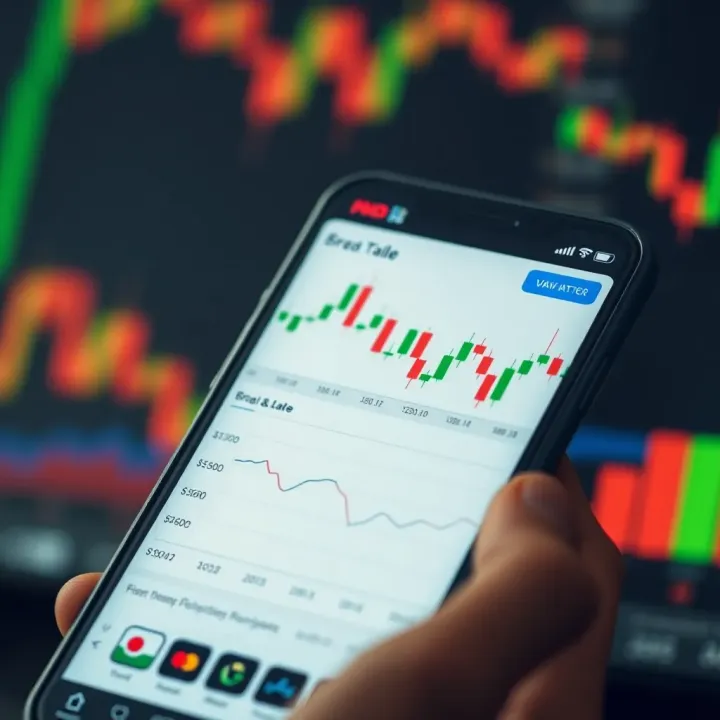
Discover the best forex trading apps in Pakistan 📈. Compare features, security, costs & usability to pick the perfect app for your trading needs!
Based on 14 reviews