

Understanding Binary Numbers and Their Uses
🔢 Explore the binary number system: its basics, structure, and role in computing and electronics, with practical examples and applications in everyday tech.
Edited By
Sophie Harrington
Binary trees form a backbone in computer science, especially when it comes to storing and managing data efficiently. Knowing how to traverse these trees is essential for tasks like searching, sorting, and even processing complex algorithms. Traversal refers to the process of visiting all the nodes in a tree in a specific order, which helps programmers access or manipulate data systematically.
There are four main traversal techniques commonly used:
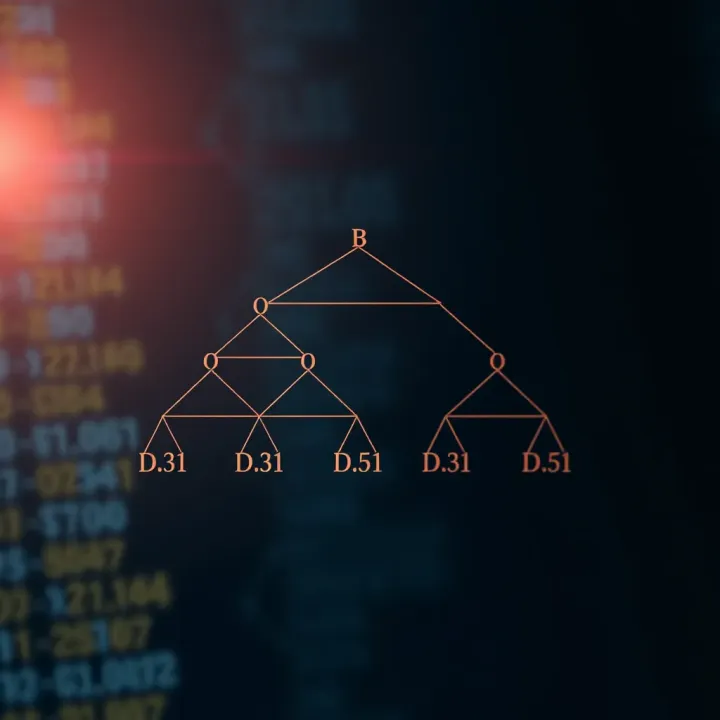
Inorder traversal: Visits the left subtree, the node itself, then the right subtree. This method sorts data in ascending order for binary search trees, making it handy in financial data analysis where order matters.
Preorder traversal: Processes the current node before its subtrees. This approach is useful for tasks like duplicating trees or saving their structure, which could be applied in archiving hierarchical financial records.
Postorder traversal: Visits all subtrees first, then the node. It's especially helpful in scenarios where you need to delete or release resources in a specific order, such as closing financial transactions cleanly.
Level order traversal: Explores nodes level by level, left to right. This breadth-first approach is practical when dealing with prioritising tasks or analysing data layers like customer or market segmentation.
Efficient traversal of binary trees underpins many data processing operations, especially in algorithm design that traders, investors, and finance professionals rely on for quick and reliable decision-making.
In practice, these traversal methods are implemented through recursive algorithms or using data structures like stacks and queues. For instance, inorder traversal can be achieved by recursive calls visiting left, node, then right, while level order requires a queue to track nodes at each level.
Understanding these traversal methods empowers professionals to optimise databases, improve search algorithms, and process hierarchical financial data more effectively. It also enables the creation of smarter tools for risk assessment, portfolio management, or real-time market data analysis.
Each traversal style offers unique benefits, and recognising where to apply them can save significant computing time and resources, which ultimately impacts financial outcomes and operational efficiency.
Understanding binary tree traversal is essential for anyone involved in algorithm design or software development, especially in areas like data processing, search optimization, and financial modelling. Traversal techniques determine the order in which nodes in a binary tree are accessed. For traders and investors, this knowledge can translate into efficient handling of hierarchical data, such as price movement trees or decision trees used in algorithmic trading.
A binary tree is a data structure consisting of nodes, where each node holds a value and points to at most two child nodes—commonly termed the left and right child. This structure forms a hierarchy that mimics family trees or organisational charts. For instance, a financial asset’s options chain can be represented as a binary tree, where each node breaks down into possible price moves or expiry choices. This simple yet powerful structure allows quick retrieval and manipulation of complex datasets.
Binary trees are not just abstract concepts; they underpin many applications, including databases, indexing systems, and decision-support software used in finance. The shape of the tree affects the speed and efficiency of data retrieval, making traversal a critical operation.
Traversal is the process of visiting each node in the binary tree systematically. Without traversing, it would be impossible to perform meaningful operations on the data stored in the tree. Traversal methods vary in how they navigate the tree, which affects the order in which data is processed and can influence algorithm performance.
For example, inorder traversal is used in binary search trees to extract data in a sorted sequence, ideal for ranking stocks or assets by price. Preorder traversal helps in scenarios where the root node (decision point) must be evaluated before diving into children nodes—useful for predictive models. Postorder traversal, on the other hand, visits child nodes first, which aids in operations like deleting nodes in memory management or evaluating expressions.
Efficient traversal techniques reduce complexity and save computation time, both key in high-frequency trading and financial simulations where speed is critical.
In short, traversal not only ensures access to every node but also shapes how data from binary trees can be exploited in practical, real-world contexts. With these fundamentals clear, exploring specific traversal types and their applications will become more intuitive and purposeful.
Depth-first traversal (DFS) remains one of the most practical ways to navigate binary trees, particularly in scenarios where exploring as far as possible along a branch matters. For investors and finance professionals dealing with data trees, understanding DFS can help in optimising searches, parsing complex data structures, and implementing efficient algorithms. This method is essential for situations where the entire subtree must be examined before moving elsewhere.
Definition and Process
Inorder traversal processes a binary tree by visiting the left child, then the root, and finally the right child. This left-root-right sequence especially suits binary search trees, where inorder traversal yields sorted data. It’s like scanning account transactions in chronological order, ensuring that data is reviewed systematically.
Use Cases in Data Processing
This traversal method proves vital when dealing with sorted operations or range queries in databases. For instance, in algorithmic trading algorithms, using inorder traversal on a search tree can quickly extract stock prices in ascending order without extra sorting.
Recursive and Iterative Implementations
Inorder traversal can be implemented using recursion, which is straightforward but may strain the call stack in large datasets. The iterative method utilises an explicit stack to simulate recursion’s flow, making it more memory-efficient. Choosing between these depends on the data size and system constraints, much like selecting between manual and automated trading systems.

Traversing Root Before Children
Preorder traversal visits nodes starting from the root, then the left child, and finally the right child. This top-down approach is like reviewing a company’s organisational structure: start with the CEO, then move through department heads, and so on.
Practical Applications
This method suits scenarios where the structure itself matters, such as serialising trees in software or reconstructing data sequences. In financial modelling, preorder traversal helps in building and exporting decision trees used for risk assessments.
Implementation Approaches
Like inorder traversal, recursive preorder is conceptually simpler but iterative approaches with stacks offer better control in constrained environments. The iterative method is preferred in production-grade financial software for its predictability and performance.
Visiting Children Before Root
Postorder traversal visits the left child, right child, and then the root. This bottom-up approach ensures all dependencies are handled before processing the parent, much like reconciling branch accounts before closing the head office ledger.
Use in Memory Management and Deletion
It is widely used for safely deleting or freeing tree nodes, as child nodes are processed before parents. In financial systems, this ensures cleanup of subsidiary dataset entries before main records are removed, preventing orphan data.
Code Structure and Techniques
Implementations often rely on recursion due to the complexity of managing visited states iteratively. However, iterative postorder traversal exists with two stacks or modified approaches to balance memory use and execution time. Selecting the right approach depends on dataset size and time-critical application needs.
Depth-first traversal methods provide structured ways to explore data hierarchies critically used in algorithm design and financial data processing. Familiarity with inorder, preorder, and postorder traversals equips you with tools to handle complex tree-based data efficiently.
Breadth-First Traversal, commonly known as Level Order traversal, is a method where the nodes of a binary tree are visited level by level, from the root downwards. This approach is particularly important when the hierarchical structure of data requires processing on a per-level basis. In contexts like financial data trees or organisational charts, level order traversal helps ensure information is accessed in a natural, top-down sequence.
Using Queues for Traversal
Level order traversal relies heavily on a queue data structure to keep track of nodes at each level. Starting with the root node, we enqueue it, then repeatedly dequeue a node, process it, and enqueue its children. This ensures nodes are handled first in, first out, moving across each level before descending further. This method avoids unnecessary repetition and is efficient for wide trees, such as market data trees where sibling nodes represent peer stocks or assets.
Queues simplify traversal by providing a clear mechanism for organising nodes as per their depth. This technique, therefore, proves vital in cases where you want to process or summarise data level-wise — say, evaluating portfolios grouped by risk tiers level-wise or processing transaction batches arranged by time intervals.
When to Use Level Order
Use level order traversal when the relative position of nodes matters or when processing data layer by layer is necessary. For instance, in a financial decision tree, evaluating the immediate options available at each step requires examining all nodes at a level before diving deeper. In algorithmic trading, it might help simulate how decisions ripple through different layers of the strategy.
Additionally, level order traversal suits scenarios involving shortest path detection in unweighted trees or graphs since it accesses nodes in increasing order of their depth. This can translate into quickest communication paths between branches of a financial network or hierarchies within an institution.
Comparisons with Depth-First Traversal
Unlike depth-first traversals (inorder, preorder, postorder), which dive deep into branches before backtracking, level order covers breadth first. Depth-first methods may be more natural for recursive data operations or parsing expressions but can miss broader structural relationships visible only through simultaneous node layers.
For traders and investors analysing decision paths, depth-first may explore scenarios deeply, but level order offers a snapshot of all possible options at a given step. While depth-first suits calculations needing sequential depth (e.g., indicator chains), breadth-first works well when you need to assess immediate next steps collectively or allocate resources across levels.
Level order traversal emphasises processing nodes based on their distance from the root, making it essential when sequential depth is less important than immediate neighbour relations.
Overall, gaining familiarity with level order traversal equips professionals dealing with hierarchical financial or data models to select the right traversal tactics according to the analysis need.
When implementing binary tree traversal, the choice between recursive and iterative methods significantly impacts performance and resource use. Each approach brings distinct advantages and limitations, depending on the problem's size and the execution environment. Adopting best practices in this context ensures code reliability, easier debugging, and better memory management.
Recursive traversal methods often offer cleaner and more straightforward code because they naturally align with the tree's structure. For example, inorder traversal can be implemented with just a few lines using recursion. However, recursion risks stack overflow with very deep or unbalanced trees, leading to program crashes. On the other hand, iterative methods use an explicit stack data structure to simulate recursion. While the code may be more complex, iterative traversal avoids the overhead of numerous function calls and is safer for large or skewed trees.
Memory use differs notably between recursive and iterative approaches. Recursive calls consume stack space, which depends on the tree's depth. In worst cases with deep trees, this might exceed available stack memory, especially on systems with restricted limits. Iterative methods store nodes on a heap-allocated stack, often providing more predictable memory consumption. For instance, in breadth-first traversal (level order), a queue manages node processing efficiently without recursion, which suits scenarios with large or wide trees better.
Developers frequently overlook checks for null or empty binary trees, which can cause runtime errors. Always verifying if the root node exists before traversal prevents null pointer exceptions. Handling these cases gracefully improves robustness, especially when data inputs vary or come from external sources. In practice, this means starting with a simple condition like if (root == null) return; before proceeding with traversal logic.
Large binary trees require careful traversal design to avoid performance bottlenecks. Recursive depth-first traversals may hit limits, so switching to iterative methods helps. Furthermore, optimising practical elements like avoiding redundant node visits and pruning irrelevant subtrees can save time. In Pakistani IT solutions, where resource constraints often exist, such efficient handling is key. For instance, software managing large datasets such as client records or financial transactions should prefer iterative traversals and make use of efficient data structures like queues or stacks for smooth processing.
Careful implementation choices, especially between recursion and iteration, and attention to edge cases such as empty trees, can make a big difference in the reliability and scalability of binary tree traversal in real-world applications.
Implementing traversal methods thoughtfully allows for smoother handling of complex data structures while keeping resource use in check, best suited for Pakistan's growing software industry needs.
Binary tree traversal plays a vital role in various computing tasks by providing systematic ways to access and process hierarchical data. Traversal methods allow programmers to explore trees in different orders depending on the application’s requirements, leading to efficient algorithms and clear code structures. Understanding these applications helps in designing better data structures and optimising software solutions in multiple fields.
Expression trees represent arithmetic expressions where internal nodes store operators and leaf nodes contain operands. Traversing these trees correctly is essential for evaluating or parsing expressions. For example, postorder traversal fits naturally for computing the result of an expression because it processes operands before their operators, mimicking the way most calculators evaluate expressions.
Similarly, inorder traversal helps reconstruct the human-readable form of the original expression with correct operator precedence. These traversal techniques form the backbone of compilers and interpreters that translate or execute programming language statements efficiently.
Binary search trees (BST) and related structures depend heavily on traversal for proper searching and sorting. Performing an inorder traversal of a BST yields sorted data without additional sorting steps. This property simplifies many algorithms where maintaining sorted order during dynamic data insertion is required.
Traversal also assists in other sorting algorithms like heap sort, where level order traversal is used to convert binary heaps into sorted arrays. Efficient searching within tree structures greatly accelerates lookups in databases and file systems, which rely on these traversals for quick data retrieval.
Pakistani software firms increasingly apply binary tree traversal in fields like financial software, e-commerce platforms, and data analysis tools. For instance, local fintech startups use traversal algorithms to optimise transaction processing and fraud detection by quickly evaluating expression trees that represent transaction rules.
In e-commerce websites like Daraz, traversal helps manage product categories and filter options efficiently, allowing users to navigate through nested categories with minimal delay. These practical uses show how traversal algorithms integrate directly into Pakistani tech ecosystems, enhancing user experience and backend performance.
Developers in Pakistan often face resource limitations such as limited processing power and intermittent internet. Efficient traversal-based algorithms reduce computational load, saving precious system resources. This optimisation is particularly important for mobile apps like Careem and Bykea, where fast real-time processing affects user satisfaction.
Moreover, traversal algorithms contribute to better memory management in enterprise software and government IT projects. By implementing recursive or iterative traversals thoughtfully, developers can handle large data sets without crashing or excessive delays, which is a frequent challenge in Pakistani IT environments.
Traversal methods offer clear benefits in both frontend navigation and backend computation, proving essential for the performance and scalability of local and international software ventures.
Traversal aids in expression evaluation critical for compilers and financial rule engines.
Sorted data retrieval in BSTs relies on inorder traversal.
Pakistani startups benefit by integrating traversal for smoother UI navigation and faster backend processing.
Resource optimisation via traversal algorithms is crucial for mobile and government applications.
In summary, binary tree traversal methods form a backbone for many computing solutions in Pakistan and beyond, demonstrating their ongoing relevance in modern software engineering.
🔢 Explore the binary number system: its basics, structure, and role in computing and electronics, with practical examples and applications in everyday tech.

Explore binary's meaning and key role in computing 🖥️, from its origins to how it's used daily, shaping today's digital world 🌐 and tech advances.

Explore the meaning and uses of 'binary' in English, from everyday language to computing. Understand its impact with clear insights and examples 💻📚.

Explore the basics of binary files 🗃️—how they differ from text, common uses, ways to edit them, and challenges faced in computing contexts 💻.
Based on 9 reviews