

Understanding BCD to Binary Conversion
📘 Learn how to convert Binary Coded Decimal (BCD) to binary with clear explanations and practical methods for students and engineers in Pakistan.
Edited By
Thomas White
Binary to Binary-Coded Decimal (BCD) conversion plays a significant role in digital systems where human-readable numeric output is necessary. While computers internally operate using binary numbers, displaying these results directly in binary can be confusing for users and impractical for applications such as digital clocks, calculators, or banking terminals.
BCD represents each decimal digit by its own four-bit binary value, offering a straightforward mapping between human-friendly digits and machine language. For example, the decimal number 59 appears as 0101 1001 in BCD (5 as 0101 and 9 as 1001), distinct from its pure binary form (111011).
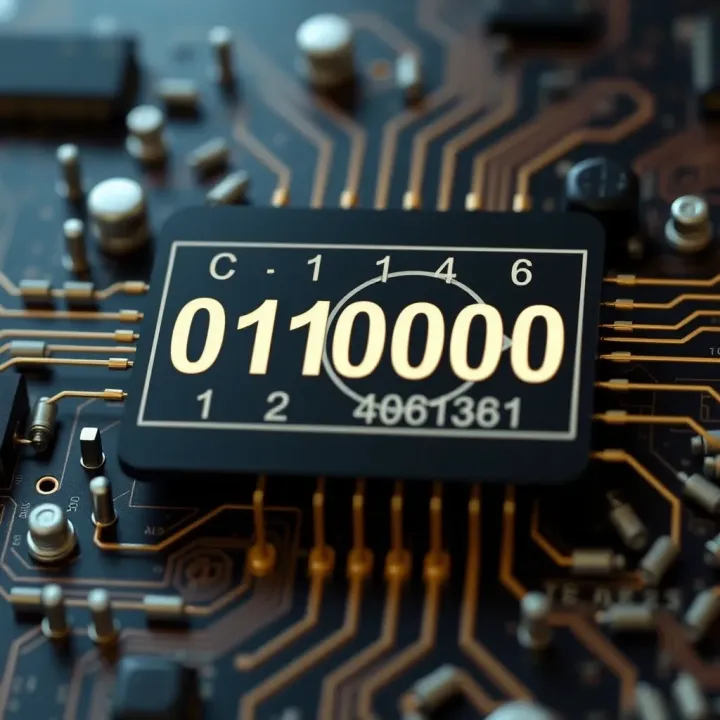
Most financial and trading applications require decimal display format for clarity.
BCD simplifies digital display circuits by directly driving seven-segment displays without complex binary decoding.
It reduces computational errors during human-computer interactions, especially in calculators and digital meters.
Binary to BCD converters take a binary input and output the corresponding BCD digits. There are several methods to implement these conversions, including:
Double Dabble Algorithm: A shift-and-add-3 approach frequently used in FPGA and microcontroller programming.
Look-up Tables: Practical for small binary ranges but inefficient for large numbers.
Combinational Logic Circuits: Hardwired digital circuits designed to convert binary inputs to BCD outputs.
In financial trading platforms, converting market data from binary to BCD ensures precise and clear presentation of prices and volumes to users, avoiding misinterpretation during fast-paced decision making.
Understanding the operation and implementation of binary to BCD converters is essential for engineers working in areas involving digital displays, embedded trading devices, or any system where numeric data must be presented clearly to users. Upcoming sections will explore these conversion techniques in detail, alongside practical applications relevant to digital electronics and computing.
Understanding binary and Binary-Coded Decimal (BCD) number systems is fundamental for anyone working with digital electronics, including traders and finance professionals who rely on digital displays and data processing. Both binary and BCD represent numbers using digits, but their structure and applications differ significantly, impacting how electronic systems handle and present information.
Binary is the language of computers, using only two symbols: 0 and 1. Each binary digit, or bit, represents an increasing power of 2, starting from the right. For example, the binary number 1101 translates to 13 in decimal—calculated as (1×8) + (1×4) + (0×2) + (1×1). This system is compact and efficient for internal computing processes but can be less intuitive when representing everyday numbers.
BCD encodes each decimal digit separately into its four-bit binary form. For instance, the decimal number 45 becomes 0100 0101 in BCD (4 is 0100, 5 is 0101), unlike pure binary where 45 is 101101. This distinction is practical; BCD preserves digit boundaries, making it easier to read and manipulate decimal numbers in digital systems.
Using BCD simplifies displaying numbers on digital devices, especially those requiring direct decimal output like calculators or scoreboards. Because each decimal digit converts independently, errors from binary rounding or conversion are avoided, ensuring accurate human-readable output. BCD also facilitates arithmetic operations suited to decimal accounting and financial calculations, which often demand exact decimal presentation and rounding.
Most digital instruments in financial offices, trading floors, or embedded business machines display figures in decimal form. Since microprocessors largely operate in binary, converting to BCD is essential for clear, accurate decimal readout. For example, point-of-sale terminals rely on binary to BCD conversion to show prices correctly without confusing users.
Presenting raw binary data directly to users is impractical. Converting to BCD bridges the gap between machine processing and human understanding, ensuring numbers on screens or printouts correspond exactly with expected decimal values. This clarity is crucial in environments where financial data accuracy directly affects decision-making, such as stock trading or accounting software.
Conversion from binary to BCD marries computer efficiency with human clarity, making it vital for many financial and digital applications.
By appreciating these differences and purposes in number systems, professionals can better grasp why binary to BCD conversion plays a key role in modern digital devices and financial technology.
Binary to Binary-Coded Decimal (BCD) conversion plays a vital role in bridging the gap between raw binary data in computers and the decimal format humans use daily. Understanding how this conversion works helps in designing better digital systems, especially in finance and trading, where precise decimal representation is essential for calculations and display.
The main idea behind converting binary to BCD involves splitting a binary number into groups representing decimal digits. In practise, a binary value, say 110110 (which is decimal 54), gets broken down into BCD groups like 0101 for 5 and 0100 for 4. This way, each 4-bit group corresponds exactly to one decimal digit, preserving clarity. This is crucial because financial numbers often need exact decimal digits rather than approximate binary values.
Maintaining digit integrity within BCD means ensuring that each 4-bit nibble stays within the range 0000 to 1001 (0 to 9). Unlike pure binary, BCD restricts digit values to decimal numbers only. This restriction avoids misinterpretation during display or arithmetic operations. For instance, while binary '1010' equals 10, BCD does not allow this since decimal digits cannot exceed 9. This prevents errors in applications like calculators or digital clocks where digit accuracy is essential.
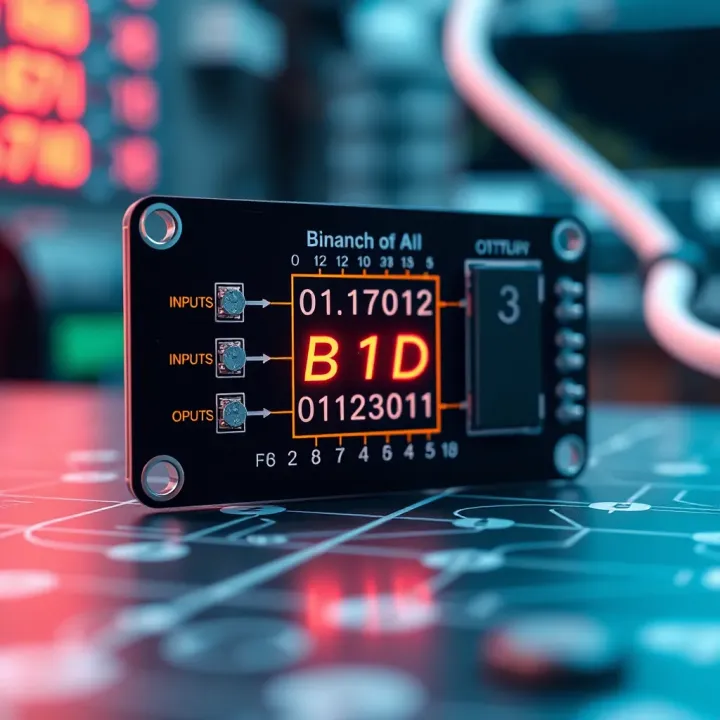
The double dabble algorithm is a straightforward method frequently used for binary to BCD conversion. It shifts binary bits left one by one while adding 3 whenever a 4-bit group reaches 5 or more. This adjustment ensures valid BCD digits stay within 0–9. The algorithm's simplicity makes it suitable for both software and hardware implementations. In a trading terminal showing shares or currency amounts, this algorithm helps present the correct decimal figures to the user.
Another prominent technique is the shift and add-3 method, closely related to double dabble. It works by shifting the binary number and adding 3 to any digit exceeding 4 before the next shift. This keeps the digits valid for BCD output. The method provides reliable, easy-to-follow steps for hardware design, particularly in sequential logic circuits. This method is popular in embedded devices where real-time decimal display matters, such as point-of-sale machines handling cash amounts.
Registers and shift registers form the backbone of the conversion hardware. Shift registers move bits serially or in parallel during the conversion process. For example, a shift register can hold the binary input and shift bits stepwise through the circuit. This mechanism keeps data ordered for processing by adders or control logic.
Adders and multiplexers come into play for arithmetic operations and selecting correct outputs during conversion. Adders facilitate the crucial 'add 3' step in methods like double dabble. Multiplexers route signals between various hardware parts, enabling flexible logic paths. In practical terms, these components ensure the converter works smoothly, whether in a calculator showing stock prices or a digital meter displaying precise quantities.
Accurate binary to BCD conversion simplifies the representation of numeric data for financial and digital display purposes, making it indispensable for any system involving human interaction with digital numbers.
The process of converting binary numbers to Binary-Coded Decimal (BCD) is essential in digital electronics, where human-readable output is needed despite internal binary data processing. Various methods and techniques exist, each suited to different applications depending on factors like speed, complexity, and hardware resources. Understanding these approaches helps in selecting the right method for systems ranging from calculators to embedded financial devices.
Software implementation considerations play a significant role when conversion happens within microprocessors or embedded software. Implementing binary to BCD conversion in software offers flexibility, allowing changes in algorithms or number formats without altering hardware. For example, in financial software that displays transaction amounts in BCD format, a reliable software routine can convert binary values before showing the output. However, this approach requires attention to processing speed and memory constraints, especially for real-time systems.
Efficiency and accuracy are critical, especially in finance and trading applications where each rupee and paisa counts. Algorithms such as the double dabble method or shift-add-3 provide trade-offs between execution time and correctness. Efficient code minimises CPU cycles while ensuring no errors occur during conversion, which could otherwise lead to incorrect display of monetary values. Accuracy is non-negotiable, as small errors in BCD conversion can produce faulty data on digital displays or printed reports.
Sequential circuit designs use clock-driven processes that convert bits over several cycles. This design is common in devices like digital meters or counters, where conversion speed of a few microseconds is acceptable. Sequential circuits typically use shift registers and adders to process binary inputs into BCD outputs. Their advantage lies in requiring fewer hardware resources compared to combinational designs, making them suitable for cost-sensitive applications.
Combinational logic designs, meanwhile, execute the conversion almost instantly by using dedicated logic gates. These designs translate an N-bit binary input to multiple BCD digits without clock cycles, useful when high-speed conversion is necessary—for instance, in high-frequency trading systems or real-time instrumentation. The downside is increased hardware complexity and power consumption, factors that engineers must weigh based on application needs.
Programming considerations for microcontrollers include selecting efficient conversion routines that fit within limited memory and processing power. These routines must handle overflow, input validation, and varying bit-length inputs. For example, a microcontroller-based billing machine must convert large amounts in binary to BCD to interface with a seven-segment display. Firmware updates may refine algorithms, so well-structured code is important.
Resource optimisation becomes crucial on Field Programmable Gate Arrays (FPGAs), where hardware logic blocks are limited. Designers often balance the number of logic elements used for converters against other functions on the same FPGA chip. Optimised designs reduce power consumption and cost, ideal for embedded devices controlling financial transactions or data logging. This optimization might involve sharing adder circuits or reusing shift registers dynamically during conversion.
Effective binary to BCD conversion depends on understanding these methods deeply to select solutions tailored to application constraints like speed, space, and cost.
The choice between software and hardware methods, and between sequential and combinational designs, shapes the performance and reliability of digital systems displaying or processing decimal information.
Binary to BCD converters play a vital role in translating binary data into a format that is easier for humans to interpret, especially on digital displays and interfaces. Their applications extend across various fields like instrumentation, embedded systems, and business machinery, making these converters essential for accurate and user-friendly data presentation.
Stopwatches and clocks rely heavily on binary to BCD conversion to show time accurately on seven-segment displays or LCDs. Since time is naturally represented in decimal form (hours, minutes, seconds), converting the internal binary count to BCD ensures each digit is displayed correctly. For instance, a stopwatch counting milliseconds in binary must convert those counts to BCD for the display to show readable time formats like 00:01:23.45.
Calculators and counters also use these converters to maintain precision and clarity. Internally, calculations are often performed using binary arithmetic for efficiency. However, the final results need to appear in decimal form for the user, making binary to BCD conversion indispensable. This allows calculators to present digits without confusion and supports functions like addition, subtraction, and percentage calculations in a user-friendly way.
In embedded systems, user interface display formatting demands clear numeric presentation, which is where binary to BCD converters come in. Devices such as digital thermostats, fuel meters, or portable measurement tools convert binary sensor data to BCD to drive their numeric displays. This seamless conversion helps users read exact values without grapple with complicated binary numbers.
Data communication protocols within embedded systems often require binary data to be packaged in decimal form for easier interpretation, logging, or transmission. Using binary to BCD conversion simplifies encoding numbers for baud rate generators, serial communication packets, or transmission over interfaces like UART or SPI. This practice improves interoperability between devices that read decimal-coded inputs.
Financial and business machines, such as point-of-sale (POS) terminals, billing machines, and currency counters, use binary to BCD converters to enforce accuracy and clarity in monetary transactions. Since these systems calculate amounts in binary, converting results to BCD ensures that displayed prices, totals, and other financial figures are human-readable and free from errors caused by direct binary display.
In measurement and control systems, binary to BCD conversion allows digital readings from sensors to be displayed accurately on control panels. Industrial equipment, water meters, and energy consumption monitors benefit from this conversion because operators rely on clear decimal values for decision-making. For example, a digital pressure gauge counts pulses in binary form, but converts those pulses to BCD to show pressure readings precisely.
Understanding these applications highlights why binary to BCD converters remain indispensable in devices where user interaction and clear numeric output matter. Their presence bridges the gap between machine-level binary processing and human-friendly decimal display.
Designing effective binary to BCD converters comes with specific challenges that can impact their performance and usability in practical applications. Engineers must carefully balance these issues to create converters that are both reliable and efficient in real-world environments.
A key challenge is managing overflow and conversion of large binary numbers. Since each BCD digit represents four bits, binary values exceeding the designed bit width require additional BCD digits to accurately represent the result. For instance, an 8-bit binary number can convert neatly into two BCD digits, but a 12-bit number demands at least three BCD digits. If the converter isn’t designed with scalability, overflow may result in incorrect output or data loss. This issue is crucial in financial calculations or instrumentation where precise decimal representation of large numbers is non-negotiable.
Balancing speed and circuit complexity presents another common obstacle. Faster conversions often rely on complex combinational logic, which increases circuit size and power consumption. On the other hand, sequential designs might be simpler and use less hardware but slow down the operation due to clock cycles needed for each step. For example, in microcontroller-based systems used for real-time displays like digital clocks or counters, slow conversion speeds can cause noticeable delays. Designers have to choose an approach that matches the performance requirements without unnecessarily inflating complexity or costs.
Minimising power consumption while controlling hardware costs remains a practical consideration, especially for battery-operated or large-scale embedded systems. Using large arrays of adders and multiplexers not only drives up manufacturing costs but also demands more power, which can become a bottleneck in mobile or portable devices. In Pakistan’s context, where power efficiency and affordability are important for industrial and consumer electronics, optimising these factors is essential for product viability.
Ultimately, addressing these challenges requires a trade-off analysis depending on the application. A digital stopwatch may prioritise speed and cost, whereas financial machines might lean towards accuracy and handling large numbers carefully.
By understanding these constraints clearly, developers can design binary to BCD converters that serve the intended purpose efficiently without compromising on key operational demands.
Technological advances are reshaping how binary to BCD converters perform, focusing on faster processing, reduced power consumption, and more compact designs. Traders and finance professionals benefit when conversion tools improve, especially for applications like digital displays in financial instruments or real-time data processing. Here’s a look at how integrated circuit design, software algorithms, and emerging technologies are pushing these converters forward.
Modern integrated circuit (IC) design has led to smaller, more efficient converter chips that handle binary to BCD conversion with lower latency. Using advanced fabrication methods such as FinFET technology, manufacturers can pack more transistors into a smaller area, improving speed and power efficiency. For example, converters embedded in smart card readers or handheld financial calculators now consume significantly less power while offering real-time responsiveness.
Additionally, custom ASICs (Application-Specific Integrated Circuits) designed for financial devices integrate binary to BCD conversion alongside other processing tasks. This approach lowers cost and complexity, proving especially useful in POS terminals or kiosks where fast, accurate decimal output matters.
Software-based binary to BCD conversion is evolving through optimised algorithms that reduce computational overhead. Algorithms like the double dabble have been refined to handle wider bit-widths with fewer steps, cutting down processing time. Efficient coding is vital in resource-constrained embedded systems, such as financial handheld terminals or portable meters, where each clock cycle saved impacts battery life and responsiveness.
Smart use of lookup tables and parallel processing in microcontrollers now speeds up conversion considerably. Pakistan’s growing electronics market is seeing microcontrollers equipped with enhanced firmware that runs these optimized algorithms, improving the overall user experience on devices common in banking or stock trading.
Artificial intelligence (AI) is making waves in digital signal processing (DSP), which includes binary to BCD conversion as a subtask in complex data handling. AI algorithms can predict and adapt conversion strategies dynamically based on input patterns or operational context, reducing unnecessary computation. In financial trading terminals, for instance, AI-powered DSP helps synchronise decimal data displays with fast incoming digital feeds, smoothing visual updates and reducing lag.
This approach also assists devices in managing signal noise or errors during data transmission — a frequent challenge in market data receivers. AI's adaptability means conversions remain accurate and timely even in fluctuating signal environments common in Pakistan’s crowded telecom spectrum.
Quantum computing remains largely experimental but holds the promise to revolutionise binary to BCD conversion by drastically cutting processing times for complex calculations. Quantum algorithms operate differently, using qubits that carry multiple states simultaneously, allowing a form of parallel processing impossible in classical circuits.
While practical quantum converters aren’t yet mainstream, financial institutions eye potential future benefits. For example, Pak-based fintech firms tracking large SPX transactions could leverage quantum-inspired processors to handle vast streams of numeric data with speed not achievable today. However, adapting quantum methods for standard binary to BCD conversion still faces hurdles in stability and error correction.
Keeping an eye on these trends helps traders and developers anticipate next-gen tools that combine speed, accuracy, and power efficiency. As Pakistan’s digital economy expands, such improvements will become increasingly relevant in financial technology and embedded systems.
In summary, integrated circuits are shrinking and growing smarter, software algorithms are leaner and faster, and technologies like AI and quantum computing hint at a future where binary to BCD conversion won’t slow down modern financial operations.
📘 Learn how to convert Binary Coded Decimal (BCD) to binary with clear explanations and practical methods for students and engineers in Pakistan.

🔢 Learn how binary transforms into ASCII text step-by-step, including manual techniques, automation tips, common errors, and real-world computing uses in Pakistan.

Learn how to convert binary numbers into hexadecimal with step-by-step guidance, practical examples, and real-world applications in computing 💻🔢.
🧮 Explore step-by-step decimal to binary conversion, understand number systems, and learn practical uses in computing and digital electronics for Pakistan's tech learners.
Based on 8 reviews